
If you are sourcing stainless steel tumblers — whether for your own brand, retail, corporate gifts, or Amazon FBA — the first technical decision you face is the steel grade. 304 vs 316 stainless steel is the most common question we receive from wholesale buyers, and the most commonly misunderstood topic in the drinkware industry.
This guide provides the definitive manufacturer's perspective. We produce tumblers in both grades daily at our factory in Yongkang, Zhejiang — China's drinkware manufacturing hub — and test them extensively. By the end, you will know exactly which grade to specify for your product line.
Chemical Composition: What the Numbers Actually Mean
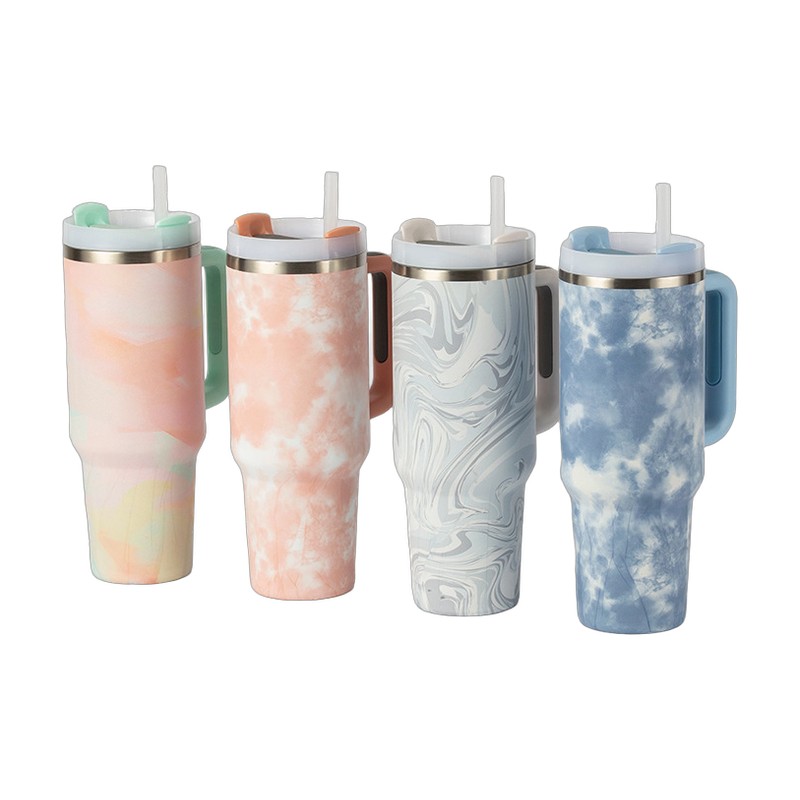
Both 304 and 316 are austenitic stainless steels from the 300-series family. They share the same base structure but differ in one critical element: molybdenum.
| Element | 304 (18/8) | 316 (18/10) | Why It Matters |
|---|---|---|---|
| Chromium | 18-20% | 16-18% | Creates the passive oxide layer that prevents rust |
| Nickel | 8-10.5% | 10-14% | Improves corrosion resistance and surface smoothness |
| Molybdenum | 0% | 2-3% | Key differentiator — resists pitting from acids/chlorides |
| Carbon | ≤0.08% | ≤0.08% | Low carbon prevents sensitization during welding |
| Density | 7.93 g/cm³ | 7.98 g/cm³ | Virtually identical weight per tumbler |
| Iron | Balance (~67%) | Balance (~62%) | Base metal |
That 2-3% molybdenum in 316 creates a more stable passive oxide layer on the steel surface, translating to significantly better resistance to pitting corrosion — the type of localized corrosion caused by chlorides (salt) and organic acids found in beverages.
Corrosion Resistance: Where It Actually Matters
In laboratory testing, the difference between 304 and 316 is dramatic. In real-world tumbler use, the difference is more nuanced. Here is our breakdown based on years of production and customer feedback:
Where 304 performs identically to 316:
- Plain water (hot or cold)
- Coffee and tea
- Milk and dairy-based beverages
- Normal cleaning with dish soap
- Standard dishwasher detergent
Where 316 outperforms 304:
- Acidic beverages: Lemon water, orange juice, kombucha, vinegar-based drinks (pH < 4.0)
- Salt exposure: Coastal environments, saltwater outdoor use, margaritas
- Prolonged contact: Beverages left overnight or 12+ hours in the tumbler
- Aggressive cleaning: Bleach-based cleaners, citric acid descaling
- Children's use: Kids leave juice/milk sitting for extended periods, increasing acid exposure time
Real-World Performance: Do You Actually Need 316?
Here is the honest answer: for 90% of tumbler applications, 304 is perfectly adequate. The corrosion difference only becomes meaningful with daily contact with acidic beverages, children's use patterns (juice sitting for hours), marine environments, or when "surgical-grade 316" is used as a marketing differentiator.
Every major tumbler brand — Stanley, YETI, Hydro Flask — uses 304 for standard adult product lines. This is not a cost-cutting decision; it reflects the engineering reality that 304 delivers identical daily performance for water, coffee, and tea.
Food Safety: FDA, LFGB, and Metal Ion Migration
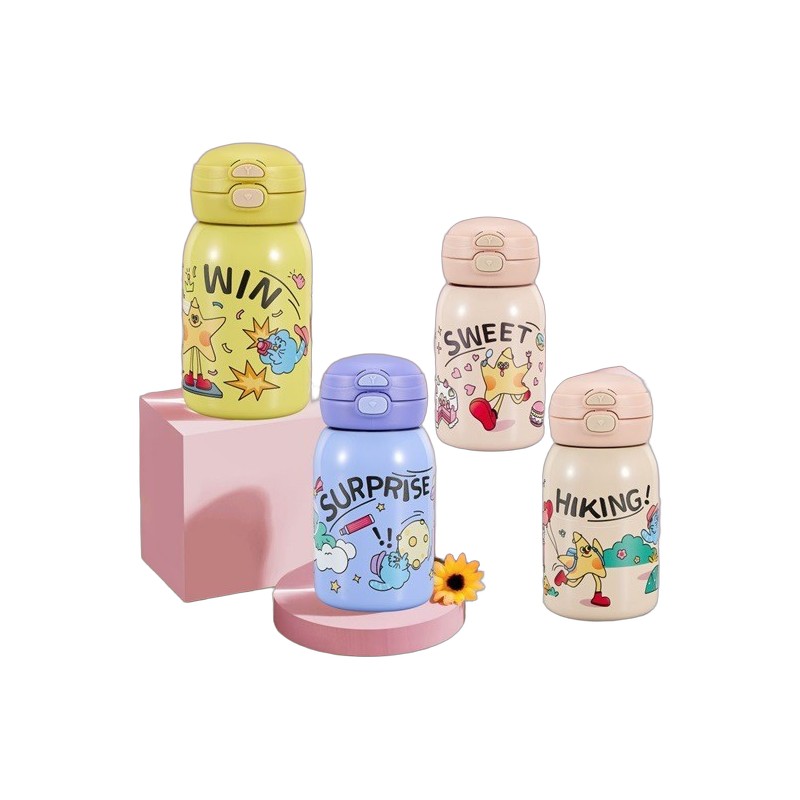
Both 304 and 316 are FDA-approved for food contact under 21 CFR 175.300. Both pass LFGB (EU food safety) and BPA-free testing. In terms of regulatory compliance, there is no difference.
The practical difference emerges in metal ion migration. When acidic beverages (pH below 4.5) sit in contact with stainless steel for extended periods, trace amounts of nickel and chromium can leach into the liquid. The levels are well below FDA safety limits for both grades, but published migration testing data shows that 316 releases 40-60% fewer metal ions than 304 under identical conditions.
For most adults drinking water or coffee, this difference is clinically insignificant. For parents choosing a kids water bottle for daily juice use, or for health-conscious consumers seeking low-migration products, 316 provides measurable peace of mind.
Price Impact: What 316 Actually Costs
The raw material cost difference between 304 and 316 stainless steel is approximately 30-35%. However, since steel represents only 40-50% of a finished tumbler's cost (the rest is vacuum brazing, powder coating, lids, labor, and packaging), the per-unit price impact is smaller than most buyers expect:
| Tumbler Size | 304 FOB Price | 316 FOB Price | Premium |
|---|---|---|---|
| 12oz kids cup | $2.40-$2.80 | $2.90-$3.40 | +$0.50-$0.60 |
| 20oz beer tumbler | $2.80-$3.30 | $3.40-$3.90 | +$0.60-$0.70 |
| 30oz car tumbler | $3.20-$3.80 | $3.90-$4.60 | +$0.70-$0.80 |
| 40oz car tumbler | $3.80-$4.50 | $4.60-$5.30 | +$0.80-$0.90 |
That $0.60-$0.90 per unit difference translates to $5-$10 higher retail pricing when you market it as "surgical-grade 316 stainless steel." For premium positioning, 316 offers one of the best ROI upgrades in drinkware manufacturing.
Insulation Performance: Does Steel Grade Matter?
This is a question we hear frequently: does 316 keep drinks colder or hotter than 304? The short answer is no. Both grades have nearly identical thermal conductivity (16.2 W/m-K for 304 vs 16.3 W/m-K for 316). The difference is negligible.
What actually determines insulation performance:
- Vacuum quality: The vacuum gap between inner and outer walls is the primary insulator. Better vacuum seal = better insulation, regardless of steel grade.
- Wall thickness: Standard is 0.5mm inner wall, 0.4mm outer wall. Thinner walls transfer less heat by conduction.
- Copper lining: Premium tumblers add a copper reflective coating inside the vacuum gap to reduce radiant heat transfer, improving performance by 10-15%.
- Lid design: The lid is the weakest point for insulation. A double-wall or insulated lid dramatically improves retention.
Our standard tumblers in both 304 and 316 deliver identical insulation: cold for 24 hours, hot for 12 hours — tested with boiling water and ice water under controlled conditions.
Durability and Longevity Comparison
For daily consumer use, both 304 and 316 will last essentially forever. The practical durability differences are subtle:
- Interior surface: 316 maintains a smoother interior longer with acidic beverages, resisting micro-pitting that can harbor bacteria and stains.
- Weld points: 316 welds are more resistant to crevice corrosion — relevant at the inner/outer wall junction where the vacuum seal is created.
- Dishwasher resistance: Both handle standard dishwasher detergent equally well. 316 better resists the chloride content in some commercial dishwasher detergents.
- Dent resistance: Identical. Both have similar hardness (Brinell 187 for 304, 183 for 316). Dent resistance comes from wall thickness, not steel grade.
Marketing and Retail Impact
Beyond engineering, the grade you choose affects how you market and price your product:
304 Stainless Steel Marketing Angles
- "18/8 food-grade stainless steel" — well-understood by consumers
- "Same grade used by Stanley, YETI, and Hydro Flask" — truthful and credible
- Competitive pricing ($25-$35 retail for 30oz tumblers)
- Ideal for promotional products, corporate gifts, Amazon volume sellers
316 Stainless Steel Marketing Angles
- "Medical-grade / surgical-grade stainless steel" — premium positioning
- "Safe for acidic beverages — juice, lemonade, kombucha" — a claim 304 cannot match
- "The same steel used in surgical instruments and marine hardware"
- Premium pricing ($35-$55 retail for 30oz tumblers)
- Ideal for kids brands, health-focused brands, premium DTC lines
How to Spot Fake Steel Grades (Beware of 201)
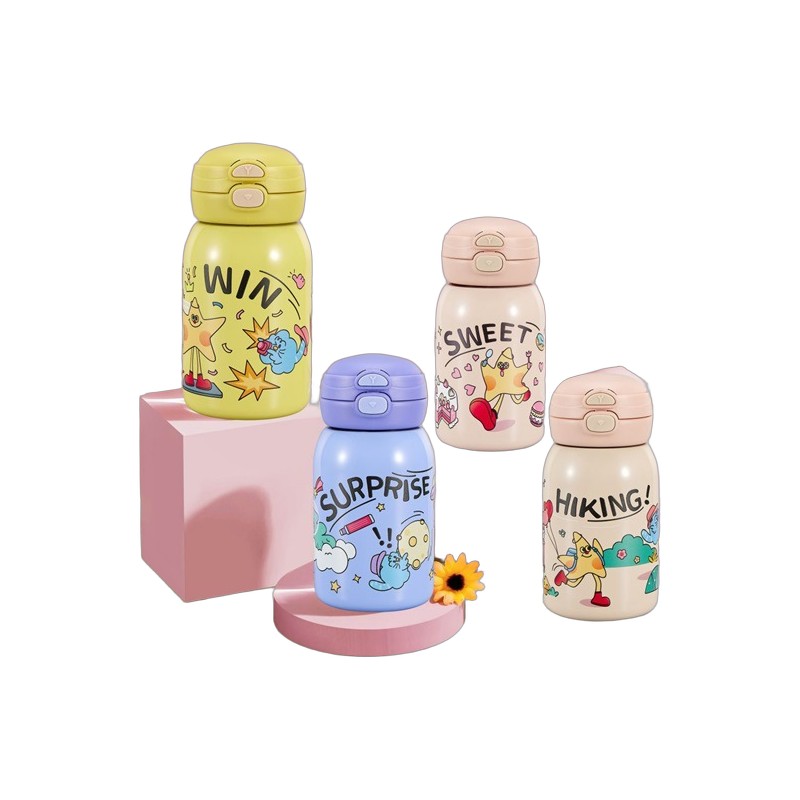
While 304 and 316 are both excellent choices, there is a third grade that some low-cost manufacturers use without disclosing: 201 stainless steel. This is the biggest quality risk in the tumbler industry.
201 replaces most of the nickel (expensive) with manganese (cheap). The consequences:
- Corrosion resistance: Significantly worse than 304. Rusts and pits within months of regular beverage use.
- Food safety: Higher manganese content raises health concerns with acidic beverages.
- Appearance: Yellows and dulls faster. Loses its shine within weeks.
- Magnetic behavior: More strongly magnetic than 304 or 316 — a quick magnet test can flag suspicious material.
Red flag: A 30oz tumbler priced below $2.50 FOB at 500 pieces almost certainly uses 201 steel. Always request SGS/TUV material composition reports or a Mill Test Certificate (MTC). At Hongming, we provide material certificates with every production batch and test incoming steel with XRF spectrometers.
How to Verify the Steel Grade You Receive
Trust but verify. When you order 316 stainless steel tumblers, here is how to confirm you received what you paid for:
- Mill Test Certificate (MTC): Request the steel supplier's certificate showing chemical composition. Any reputable factory will have this for every steel batch.
- Third-party testing: Send 2-3 samples to SGS, Intertek, or Bureau Veritas for XRF analysis. Cost: $150-$250. This definitively confirms the grade.
- Quick field test: 316 is slightly more resistant to magnets than 304 (both are weakly magnetic after cold working). Indicative but not definitive.
- Bottom stamping: Ask the factory to stamp "316" or "18/10" on the bottom. This adds accountability.
Our Recommendation by Product Line
| Product | Recommended Grade | Reason |
|---|---|---|
| Car tumblers | 304 | Cost-effective, same as Stanley/YETI, primarily water use |
| Kids cups | 316 | Safety premium, acidic juice exposure, marketing advantage |
| Beer tumblers | 304 | Short contact time, beer is mildly acidic but not aggressive |
| Office mugs | 304 | Handles coffee and tea well, cost-optimized |
| Outdoor bottles | 304/316 | 316 for marine/coastal use, 304 for general outdoor |
Use both grades in your product line when: You offer "standard" and "premium" tiers, sell both adult tumblers (304) and kids cups (316), or want to give retailers good-better-best options.
Bottom Line: Which Grade Should You Order?
If you are building a tumbler brand or sourcing for wholesale, here is the decision framework:
- Choose 304 if your customers primarily drink water, coffee, or tea; if you compete on price/volume; or if your target market is cost-sensitive (promotional items, mid-tier Amazon).
- Choose 316 if you market to parents, health-conscious consumers, or premium buyers; if your products will hold acidic beverages; or if "surgical-grade steel" strengthens your brand story.
- Choose both to cover the full market — 304 for your value line, 316 for your premium and kids lines.
At Hongming, our 316SS kids cups carry a "316" stamp on the base as standard. Contact us for samples in both grades so you can compare the material quality firsthand. We also offer material certificates and welcome third-party testing.
For a complete guide to sourcing tumblers from China, see our 40oz Tumbler Wholesale Guide and our Top Tumbler Manufacturers in China overview.