
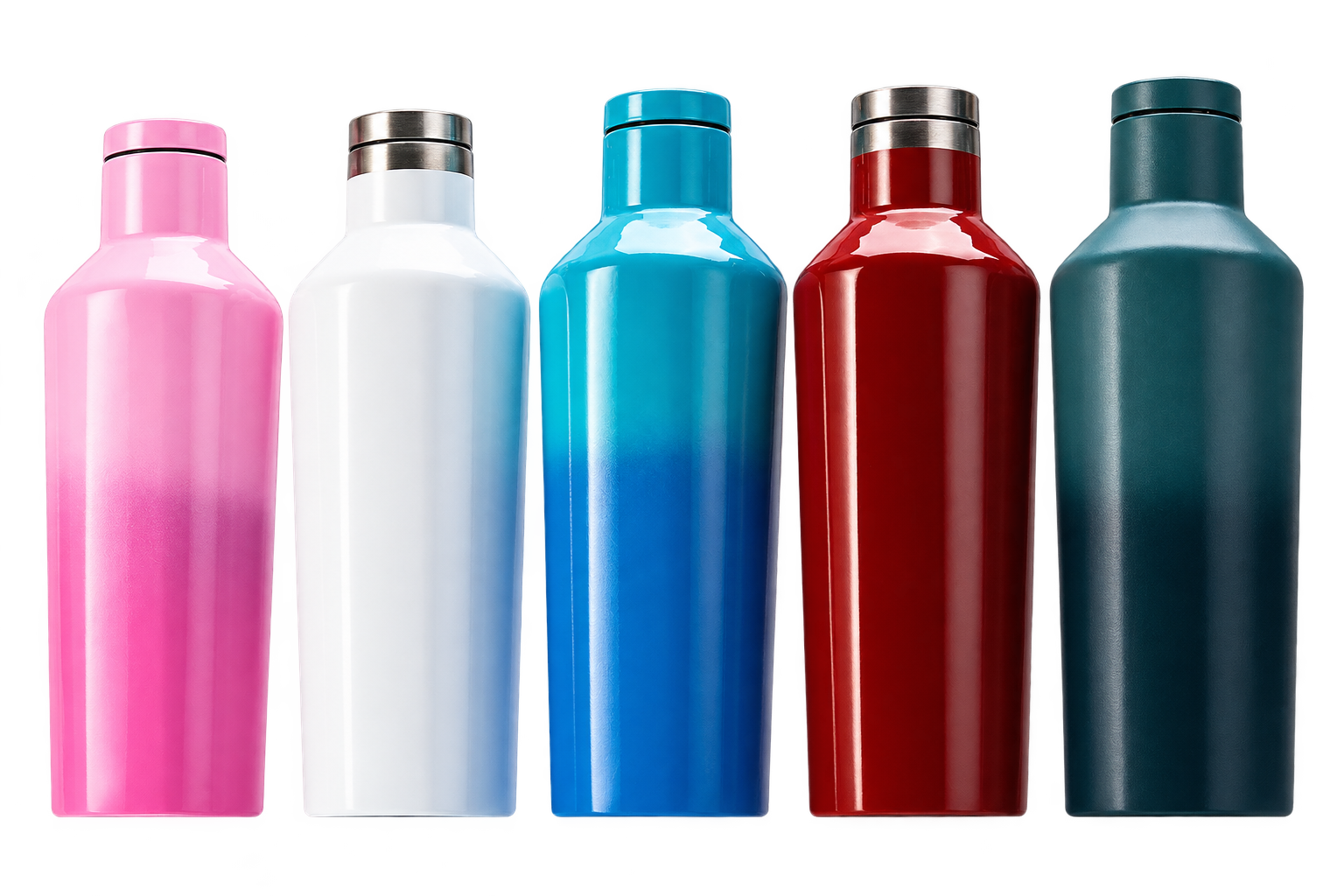
Finding the right stainless steel water bottle manufacturer in China can make or break your product line. The country produces over 80% of the world's stainless steel drinkware, which means you have access to the deepest manufacturing ecosystem on the planet — but it also means navigating thousands of factories, trading companies, and middlemen.
This guide gives you the insider knowledge to source directly from a factory, skip the middlemen, and get better quality at lower prices.
The Yongkang Advantage: Why This City Makes the World's Bottles
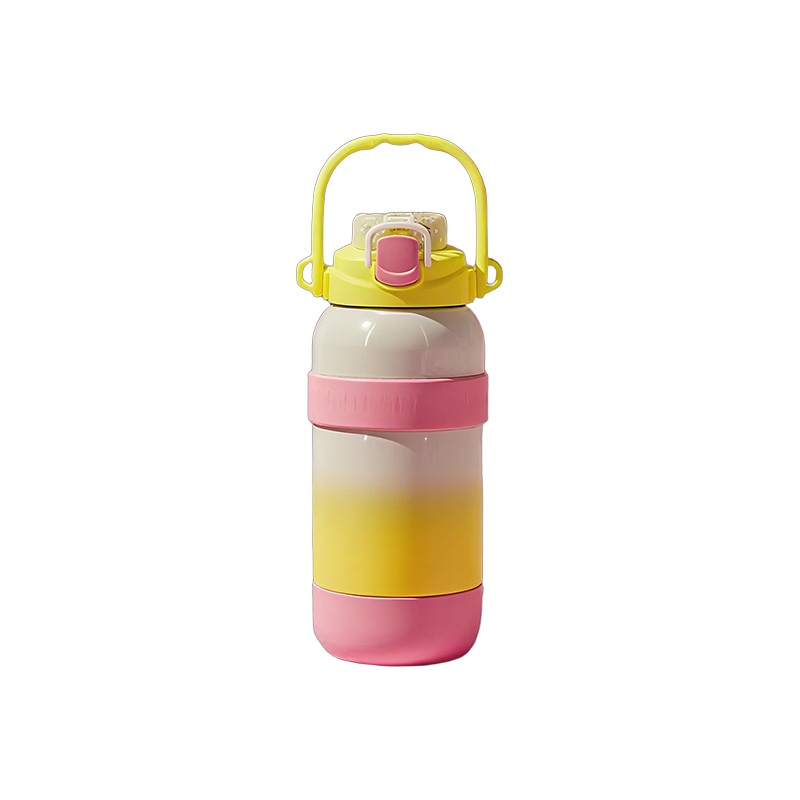
Yongkang, a city of 900,000 people in Zhejiang Province, is where the global insulated drinkware industry lives. The numbers are staggering: 3,000+ drinkware factories, over 100,000 workers in the sector, and production capacity exceeding 2 billion units per year.
What makes Yongkang special is not just scale — it is the complete ecosystem. Raw stainless steel coils come from Foshan and Wuxi. Lid and cap manufacturers, silicone gasket suppliers, packaging companies, and testing labs are all within a 30-minute drive. This concentration means shorter lead times, lower logistics costs, and faster problem-solving than anywhere else in the world.
Hongming has been manufacturing insulated drinkware in Yongkang since 2009. Our factory produces over 500,000 pieces per month across 100+ product models — from 12oz kids cups to 40oz car tumblers to 3L insulated jugs.
Factory vs Trading Company: How to Tell the Difference
One of the biggest mistakes buyers make is working with a trading company while thinking they are dealing with a factory. Trading companies add 15-30% markup and have no control over production quality or timelines. Here is how to identify a real factory:
Real factories have their own production lines and can show you live video of their welding machines, vacuum furnaces, polishing lines, and quality inspection stations. They quote in precise technical terms — "18/8 stainless steel, 0.5mm inner wall, 0.4mm outer wall, electrolytic polishing" — because they control every parameter.
Trading companies avoid factory tours, quote in vague terms, and often have much faster response times because they are not running a production floor. They serve a purpose for small, one-time orders, but for an ongoing brand, you want a direct factory relationship.
At Hongming, we welcome factory visits and provide live video tours for overseas buyers. Every quote includes exact material specifications, wall thickness measurements, and reference to our SGS test reports.
Materials: Knowing What You Are Actually Getting
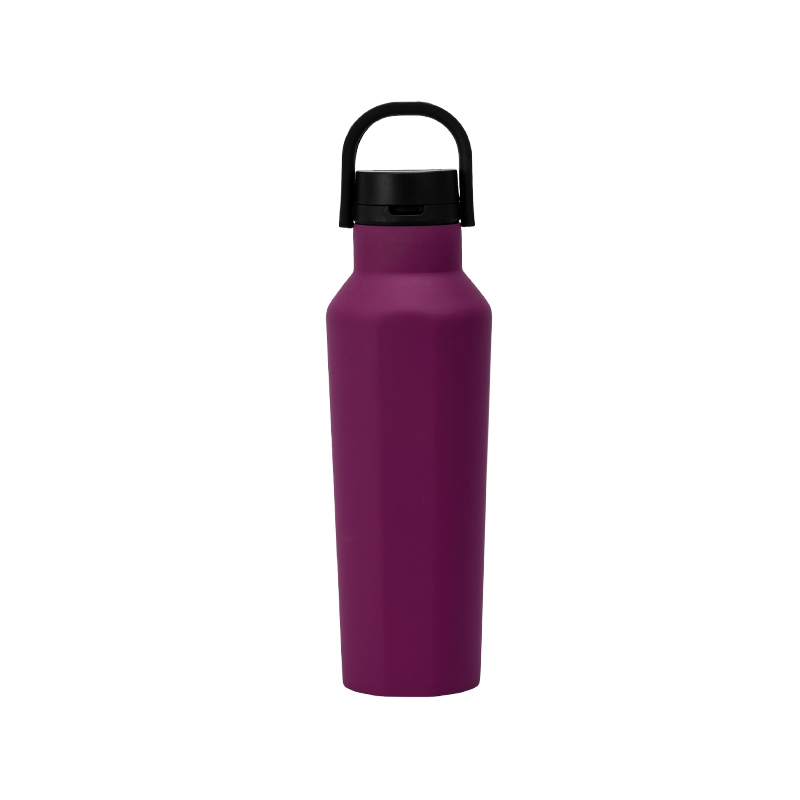
Stainless steel grade is the single most important quality factor. The three grades used in drinkware manufacturing are:
201 stainless steel is the cheapest option with higher manganese and lower nickel content. It corrodes faster, especially with acidic drinks. Some budget factories use 201 to undercut on price. We do not use 201 for any product.
304 stainless steel (also called 18/8) is the industry standard with 18% chromium and 8% nickel. Safe for all beverages. This is what we use for all adult drinkware.
316 stainless steel (surgical grade) adds 2-3% molybdenum for superior resistance to salt and acid corrosion. We use 316 for all kids cups and offer it as an upgrade on any model. Read our detailed 304 vs 316 comparison →
How to verify the grade: Ask the factory for an SGS or TUV material composition test report. The report should show exact percentages of chromium, nickel, and molybdenum. If a factory cannot provide this, walk away.
The OEM Process: From Inquiry to Delivery
Here is the typical timeline when working with a Chinese water bottle manufacturer:
Week 1-2: Inquiry and quotation. Send the factory your requirements: bottle size, material grade, finish type, lid style, logo design, target quantity, and any special features. A good factory will respond with a detailed quotation within 24-48 hours.
Week 2-3: Sample production. Order pre-production samples ($20-$50 per sample plus express shipping). Test vacuum insulation by filling with ice water — a quality bottle should maintain ice for 24+ hours. Check the lid seal by turning the filled bottle upside down for 30 minutes. Inspect the finish under direct light.
Week 4-7: Bulk production. After sample approval, production typically takes 15-25 days for orders of 500-5,000 pieces. The factory should send progress photos at key stages: raw material preparation, welding, polishing, coating, printing, and final assembly.
Week 7-12: Shipping and customs. Most Yongkang factories ship FOB Ningbo Port. Ocean freight to the US West Coast takes 25-30 days; to Europe, 30-40 days. For urgent orders, express air freight delivers in 5-7 days at higher cost.
Pricing: What Determines the Cost
Seven factors affect your per-unit cost:
Size: Larger bottles use more material. A 500ml bottle costs 40-60% less than a 1L bottle of the same design.
Material grade: 316 stainless steel adds $0.30-$0.80 per unit over 304.
Wall thickness: Standard is 0.5mm inner / 0.4mm outer. Thicker walls add durability and cost. Budget bottles use 0.4mm/0.3mm — they dent easily.
Finish: Plain polished is cheapest. Powder coating adds $0.30-$0.50. UV printing adds $0.50-$1.00. Electroplating adds $0.80-$1.50.
Lid complexity: A simple screw cap costs $0.15-$0.25. A straw lid costs $0.40-$0.70. A FreeSip-style dual-function lid costs $0.80-$1.20.
Quantity: A bottle that costs $5.00 at 500 pieces might cost $3.80 at 2,000 pieces and $3.20 at 5,000 pieces.
Packaging: Poly bag ($0.05-$0.10), white box ($0.20-$0.40), custom color box ($0.50-$1.00), premium gift box ($1.00-$2.00).
Manufacturing Insights Most Buyers Never Hear
Here are things we have learned from 17 years of producing water bottles that rarely appear in sourcing guides:
The welding seam determines the bottle's lifespan. Every vacuum-insulated bottle has an inner and outer wall joined by a welding seam at the mouth. Cheap factories use manual spot welding — fast but inconsistent. A single weak spot in the seam creates a micro-leak that slowly kills the vacuum over months. Your customer buys a bottle that keeps drinks cold for 24 hours, and six months later it only holds temperature for 4 hours. They blame your brand, not the weld. We use automated orbital welding with real-time current monitoring: the machine adjusts amperage 200 times per second to maintain a uniform seam. Defect rate drops from 5-8% (manual) to under 0.3%.
Electrolytic polishing vs mechanical polishing is a health issue, not just aesthetics. Mechanical polishing (buffing wheels) leaves microscopic grooves in the stainless steel surface where bacteria and metallic residue collect. Electrolytic polishing dissolves the surface at a molecular level, creating a mirror-smooth finish with 40-60% less surface roughness (measured in Ra value). For water bottles — especially kids bottles — this matters because it directly affects how much metal ions leach into the liquid. Our 316 kids cups achieve an Ra of 0.2 micrometers after electrolytic polishing, compared to 0.8-1.2 micrometers from mechanical polishing alone.
The "vacuum" in vacuum insulation is not actually a perfect vacuum. A laboratory-grade vacuum is 10⁻⁶ Pa. Drinkware factories typically achieve 10⁻¹ to 10⁻² Pa — still extremely effective but not absolute zero pressure. The real differentiator is the getter — a small disc of barium-aluminum alloy placed between the walls before sealing. The getter absorbs residual gas molecules over time, maintaining the vacuum for years. Cheap bottles skip the getter or use a smaller disc. Our bottles use a 12mm getter disc (industry standard is 8-10mm), which is why we guarantee 24-hour cold retention for the lifetime of the product.
Seasonal pricing matters more than most buyers realize. Yongkang factories run at 90-100% capacity from March through August (summer orders for Northern Hemisphere markets). Prices during this peak are 8-15% higher and lead times stretch to 30-40 days. If you place orders in October-January, you will get better pricing, faster production, and more willingness to negotiate on MOQ. The smartest brands we work with order their summer inventory in December.
Red Flags: When to Walk Away
Watch for these warning signs:
Prices 30-40% below market rate — likely using 201 steel, thinner walls, or skipping QC. A quality 500ml vacuum bottle cannot be manufactured for less than $2.00 in 2026.
No factory tour or live video — may be a trading company reselling from unknown sources.
No material certificates — every reputable factory can provide SGS or TUV test reports.
Pressure to skip samples — any factory that discourages samples is hiding something.
Ready to source stainless steel water bottles from a verified manufacturer? Contact Hongming for a detailed quotation — include your target size, quantity, and any design references. We respond within 24 hours.