
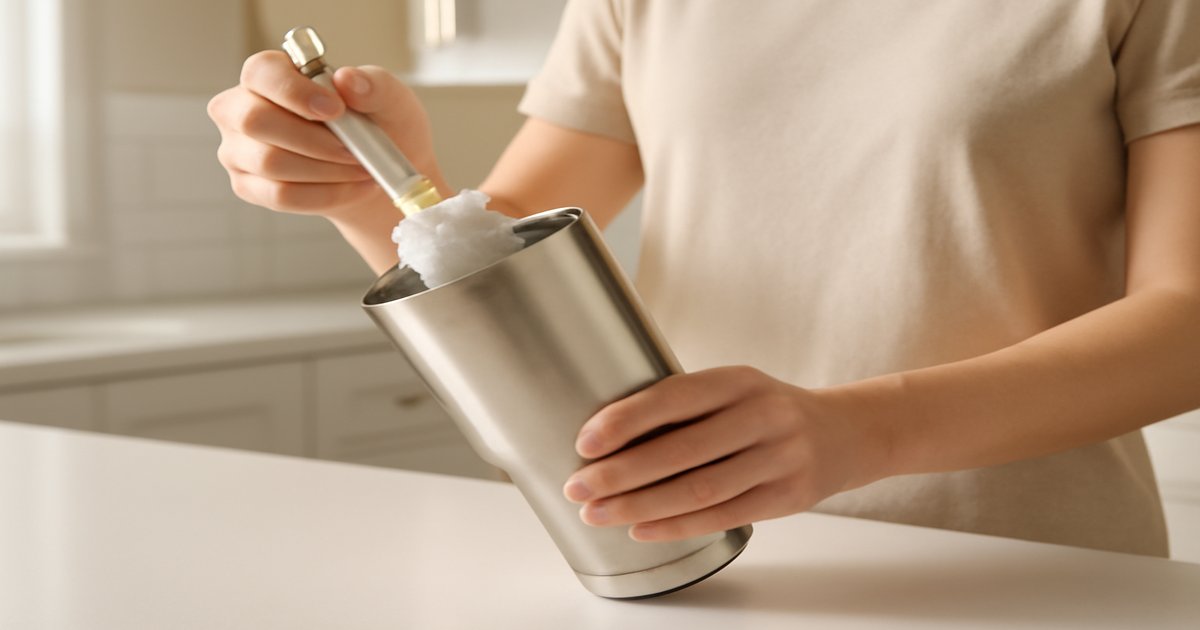
If you own a stainless steel water bottle or insulated tumbler, cleaning it properly is the single most important thing you can do to keep it safe, odor-free, and performing at its best. As a manufacturer that produces over 500,000 tumblers per month, we have tested every cleaning method — and we know exactly what works, what does not, and what can actually damage your drinkware.
This guide covers daily cleaning, deep cleaning, stubborn stain removal, and the common mistakes that shorten the life of your tumbler. Whether you have a 40oz insulated car tumbler, a slim coffee tumbler, or a kids' water bottle, these methods apply to all food-grade stainless steel drinkware.
Daily Cleaning: The 60-Second Routine
Daily cleaning prevents bacteria buildup and keeps your tumbler fresh. This should take less than a minute.
What you need: warm water, a drop of dish soap, and a bottle brush.
Steps: Fill your tumbler halfway with warm (not boiling) water. Add a small drop of dish soap. Use a bottle brush to scrub the interior walls, paying attention to the bottom where residue settles. Rinse thoroughly with clean water. Most importantly — disassemble the lid. Remove the gasket, straw, and any removable parts. Wash each piece separately under running water. This is where 90% of odor problems start.
After washing, leave all components upside down on a clean towel or drying rack. Allow them to air dry completely before reassembling. Trapping moisture inside a sealed lid is the number one cause of mold and bad smells.
Deep Cleaning with Baking Soda
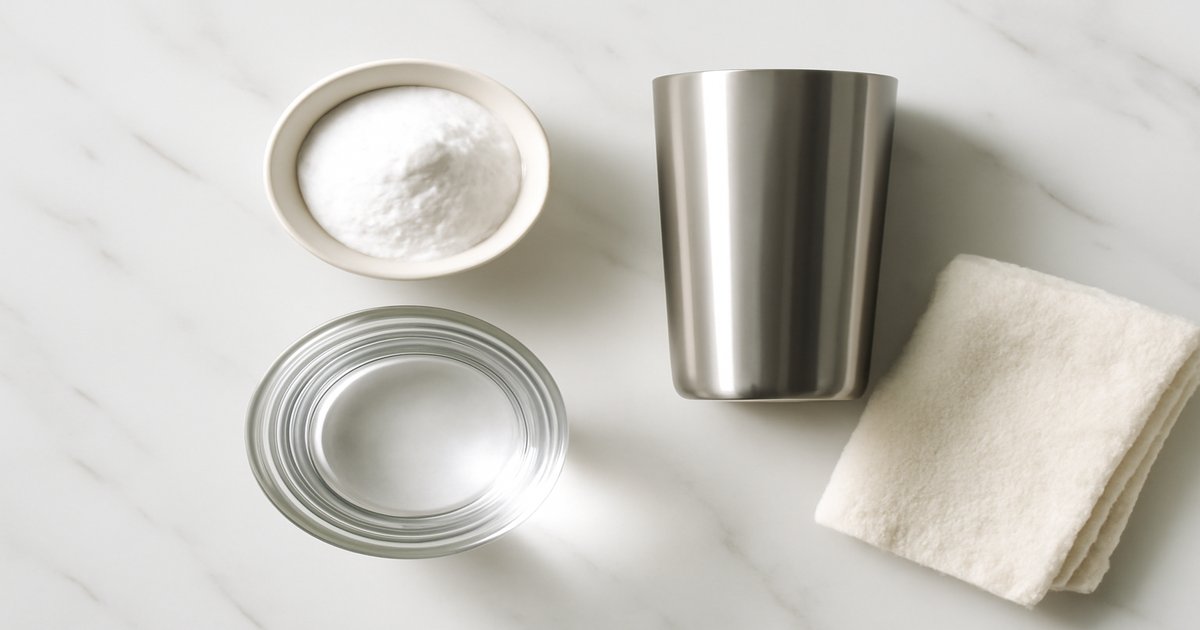
Do this once a week, or whenever you notice any odor. Baking soda (sodium bicarbonate) is mildly alkaline, non-toxic, and safe for all grades of food-grade stainless steel including 304 and 316.
Method: Add 2 tablespoons of baking soda to your tumbler. Fill with warm water (not boiling — hot water can damage vacuum seals). Stir until the baking soda dissolves. Let it soak for 15-30 minutes. For lids and gaskets, soak them in a separate bowl with the same solution. Scrub with a bottle brush, rinse thoroughly, and air dry.
Baking soda works by neutralizing acidic odor compounds — this is why it eliminates coffee, juice, and milk smells that dish soap alone cannot remove. It also has a mild abrasive texture that lifts stains without scratching the polished interior surface.
Removing Stubborn Stains with Vinegar
Coffee stains, tea tannins, and mineral deposits (white scale from hard water) require something stronger. White distilled vinegar is the best option.
Method: Fill your tumbler with a solution of 1 part white vinegar to 4 parts warm water. Let it soak for 15-30 minutes. For heavy staining, use undiluted vinegar and add a tablespoon of baking soda. The fizzing reaction helps lift stubborn buildup. Scrub with a bottle brush, focusing on stained areas. Rinse at least twice with clean water to remove the vinegar smell.
For extremely stubborn coffee stains on the bottom of tumblers, try this professional tip from our QC team: make a paste of baking soda and a few drops of hydrogen peroxide (3% concentration). Apply it to the stain, let it sit for 10 minutes, then scrub. This combination is safe for stainless steel and remarkably effective.
Cleaning Lids, Straws, and Gaskets
The lid assembly is the most critical part to clean. Our factory data shows that over 85% of customer odor complaints trace back to the lid, not the tumbler body. This is because lids have complex geometry — grooves, channels, threading, and rubber gaskets — that trap moisture and organic residue.
Gaskets and silicone seals: Remove them from the lid. Soak in warm soapy water or a baking soda solution for 20 minutes. Inspect for discoloration or mold spots. If a gasket shows mold that does not come off with scrubbing, replace it. Silicone gaskets should be replaced every 6-12 months with regular use.
Straws: Use a thin straw cleaning brush (included with most tumbler purchases). Push it through the full length of the straw multiple times with soapy water. Rinse by running water through the straw for at least 10 seconds. For reusable silicone straws, you can also soak them in boiling water for 2 minutes to sterilize.
Flip-top and slide lids: Open all moving parts to their widest position. Use a small brush (an old toothbrush works well) to scrub the hinge mechanism and drinking spout. These areas accumulate dried beverage residue that is easy to miss.
What NOT to Do: Common Cleaning Mistakes
These mistakes can permanently damage your stainless steel drinkware:
Do not use bleach or chlorine cleaners. Chlorine attacks the chromium oxide layer that gives stainless steel its corrosion resistance. It can cause pitting, discoloration, and even small cracks in the metal. If you need to sanitize, use white vinegar or food-grade hydrogen peroxide instead.
Do not use steel wool or abrasive scrubbers. These scratch the polished interior surface of your tumbler. Scratches create micro-grooves where bacteria can hide, making the bottle harder to clean over time. Always use a soft bottle brush or non-scratch sponge.
Do not put vacuum insulated bottles in the dishwasher. The high temperatures (typically 60-75°C in the drying cycle) can compromise the vacuum seal between the inner and outer walls. Once the vacuum is broken, your tumbler loses its insulation ability permanently. This is the most common cause of a tumbler that "stops keeping drinks cold."
Do not leave beverages sitting for more than 24 hours. While stainless steel is naturally antibacterial compared to plastic, leaving liquid in a sealed environment for extended periods still promotes bacterial growth, especially with sugary or dairy-based drinks.
Special Cases: Cleaning After Specific Beverages
After coffee or tea: Tannin stains from coffee and tea are the most common complaint. Immediately rinse after drinking — even a quick rinse with water prevents 90% of staining. For existing stains, use the vinegar soak method described above.
After milk or protein shakes: Dairy residue spoils quickly and creates strong odors. Rinse within 2 hours of use. Deep clean with baking soda the same day. Pay special attention to straw channels — dairy residue inside straws can be particularly stubborn.
After juice or flavored water: Fruit acids and sugars promote bacterial growth. Rinse immediately after use. A weekly vinegar deep clean handles any residual acidity.
After carbonated beverages: Carbonation itself does not damage stainless steel, but the sugars in soda leave a sticky residue. Rinse with warm water as soon as possible. Note: most tumbler manufacturers (including Hongming) do not recommend storing carbonated beverages in sealed tumblers, as pressure buildup can cause the lid to pop off unexpectedly.
How to Remove Metallic Taste from a New Stainless Steel Bottle
A slight metallic taste when you first use a new stainless steel bottle is normal. This comes from the manufacturing process — specifically, residual polishing compounds and the natural oxide layer forming on fresh steel surfaces. It disappears completely after a few uses.
Quick fix for new bottles: Fill with a solution of 1 tablespoon baking soda + 1 tablespoon white vinegar + warm water. Let it sit for 4 hours or overnight. Rinse 2-3 times with clean water. This process accelerates the passivation of the steel surface and removes any trace manufacturing residues.
If a metallic taste persists after multiple washings, it may indicate a lower-grade stainless steel (such as 201 grade, which contains less nickel and chromium than food-grade 304 or 316). Quality manufacturers like Hongming use only SUS304 or SUS316 food-grade stainless steel, which is certified for direct food contact and should not produce a persistent metallic taste.
Cleaning Schedule: What We Recommend
| Frequency | Task | Method |
|---|---|---|
| Every use | Rinse body + lid | Warm water, quick shake |
| Daily | Full wash | Warm soapy water + bottle brush |
| Weekly | Deep clean | Baking soda soak (15-30 min) |
| Monthly | Stain removal | Vinegar soak + scrub |
| Every 6-12 months | Replace gaskets | Inspect for wear, mold, or cracks |
Why Stainless Steel Is the Easiest Material to Keep Clean
Compared to plastic, glass, and ceramic, stainless steel is inherently the most hygienic drinkware material. Its non-porous surface does not absorb flavors, colors, or odors like plastic does. It resists bacterial adhesion better than glass (which has microscopic surface irregularities). And unlike ceramic, it does not chip or crack, creating surfaces where bacteria can colonize.
The chromium content in food-grade stainless steel (minimum 18% in 304 grade, 16% in 316 grade) forms a self-healing chromium oxide layer on the surface. This passive layer is what makes stainless steel "stainless" — it actively resists corrosion and prevents metal ions from leaching into your beverages. As long as you do not damage this layer with bleach or abrasive cleaners, it will last the lifetime of the product.
Buying Tip: Choose Tumblers That Are Easy to Clean
If you are sourcing tumblers for your brand, cleaning ease is a product feature your customers care about. Here is what to look for:
Wide mouth opening (at least 70mm): Allows a standard bottle brush to reach the bottom easily. Narrow-mouth bottles are harder to clean and more prone to odor issues.
Removable gaskets and seals: Lids with integrated (non-removable) gaskets are a hygiene risk. All Hongming tumbler lids feature removable silicone gaskets that can be disassembled for thorough cleaning.
Smooth interior finish: The interior surface should be electropolished (mirror-smooth) to prevent residue adhesion. Rough or matte interior finishes trap particles and are harder to clean.
Dishwasher-safe lids: Even though we recommend hand-washing the tumbler body, lids can often be made dishwasher safe. This is a strong selling point for consumers.
Contact Hongming for tumblers designed with cleaning convenience as a priority — including our new easy-clean lid system with fully disassembling components and extra-wide mouth openings.
Related Articles
- 304 vs 316 Stainless Steel Tumbler — why steel grade affects corrosion resistance and cleaning durability
- Stainless Steel vs Ceramic vs Glass Tumbler — which material is easiest to keep hygienic?
- Tumbler Lid Types Guide — some lid designs are much easier to disassemble and clean than others