
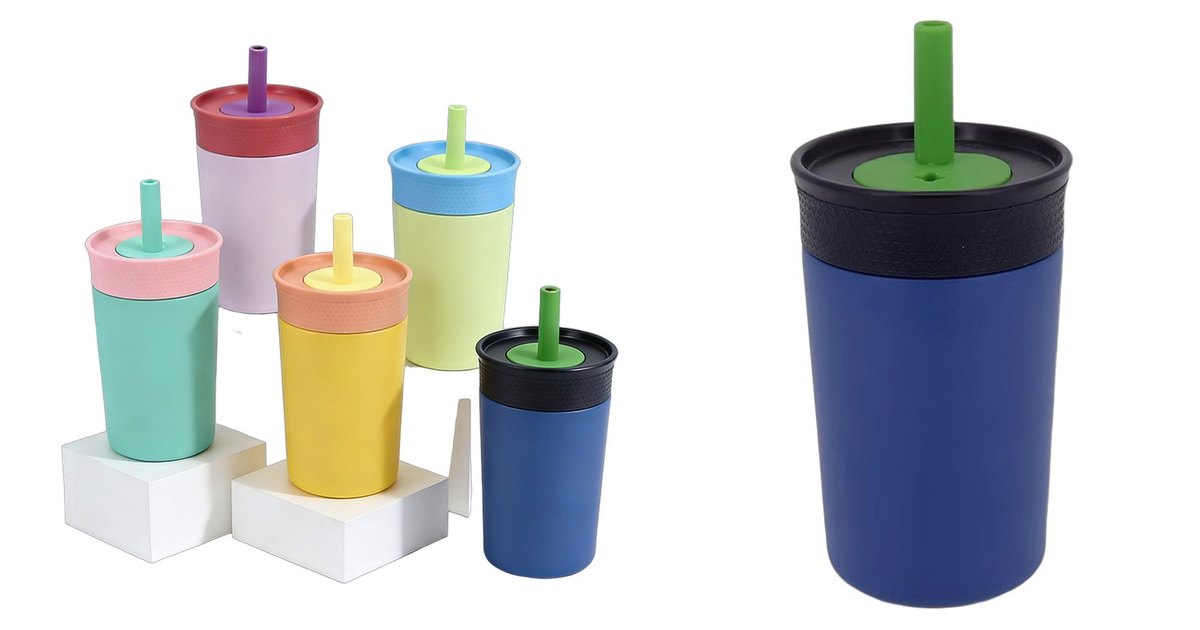
Quick answer: A kids straw cup leaks through one of five paths: the lid gasket, the straw-through-lid seal, the mouthpiece valve, the air vent, or headspace pressure. A leak-proof OEM straw cup is specified part by part. That means a gasket with 15-25% compression, platinum-cured silicone that meets FDA 21 CFR 177.2600 and BfR XV (≤0.5% volatiles), a valve design matched to the age grade, and seven leak tests with written pass criteria. An inversion test on one sample is not enough. This guide covers each of those, from the factory side.
Search for a leak-proof straw cup supplier and you get Amazon listings, factory category pages with a "leak-proof" badge, and silicone-cup guides that describe leak paths without a single number. None of them explain why a cup that passes an inversion test on the factory bench still leaks in a backpack, a hot car or an aircraft cabin. We make 12oz insulated stainless steel kids cups in Yongkang, and straw-lid leaks are the first thing a kids brand asks us about. They are also the first thing their customers complain about. Here is the explanation we give them, plus the spec we suggest they send to any factory.
Why Kids Straw Cups Leak: The Five Leak Paths
A straw lid is a small pressure vessel with several holes in it. Each hole is a separate leak path with its own cause and its own fix:
| Leak path | Where it shows up | Typical root cause | Design fix |
|---|---|---|---|
| 1. Lid-to-body seal | Wet ring around the thread; drips down the cup wall | Gasket under-compressed, wrong hardness, or thread engagement under one turn; gasket fitted upside down after washing | Gasket groove designed for 15-25% compression; ≥1-1.5 turns of thread; asymmetric gasket that only fits one way |
| 2. Straw-through-lid seal | Liquid around the base of the straw when tipped | Loose interference fit; silicone relaxes after repeated dishwasher cycles | Straw collar moulded as one part with the valve; interference fit checked after 100 wash cycles, not only when new |
| 3. Mouthpiece valve | Drips from the straw tip when the cup is tipped or squeezed | Slit too long, silicone too soft, or no valve at all (open straw) | Self-sealing slit or cross-slit valve; flip cap that pinches the straw closed |
| 4. Air vent | Drips from a pinhole in the lid top | Open vent hole with no check valve | Silicone umbrella or duckbill vent valve; vent covered by the flip cap when closed |
| 5. Headspace pressure | Liquid squirts up the straw the moment the cap opens | Air trapped above the drink expands with heat or lower outside pressure | Vent path that equalises before the straw opens; "cold drinks only" marking; fill line below the straw collar |
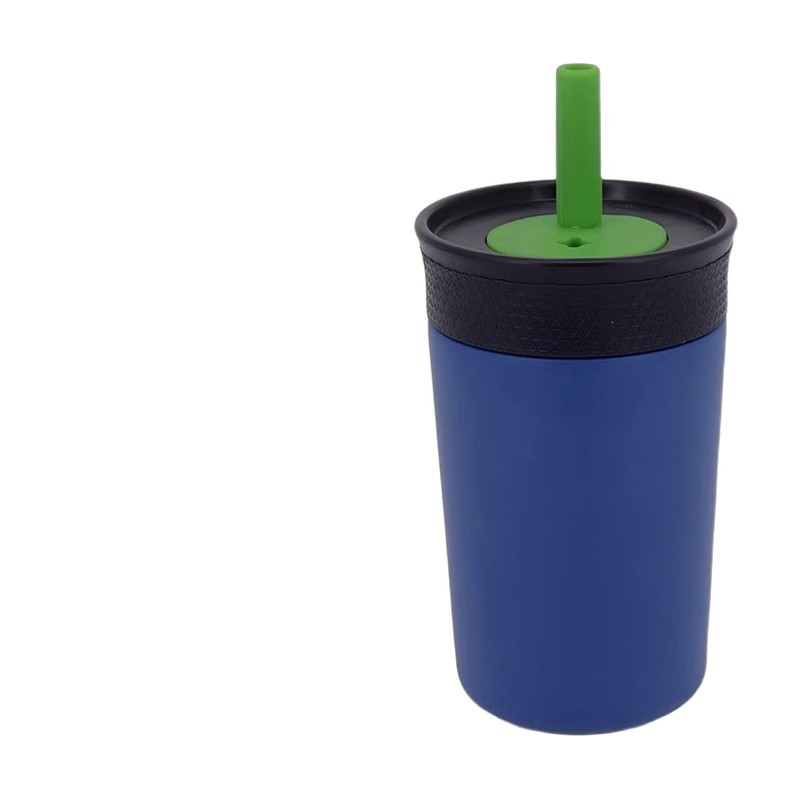
Paths 1-4 are what an inversion test catches. Path 5 is the one behind most "it leaked in my kid's backpack" reviews on cups that pass every bench test, so it gets its own section below.
The Leak Nobody Tests: Headspace Pressure
A sealed insulated cup traps a pocket of air above the drink. That air behaves like any gas: warm it, or lower the pressure outside the cup, and it pushes on the liquid. The only way out is up the straw. Two everyday scenarios show how big the effect is:
| Scenario | What changes | Approximate pressure pushing on the drink |
|---|---|---|
| Cold milk filled at 4°C, cup left in a car and contents reach 30°C | Trapped air warms from 277 K to 303 K; water vapour pressure rises from about 0.8 to 4.2 kPa | About +13 kPa above outside air (roughly 13%) |
| Cup sealed at sea level, opened in an aircraft cabin pressurised to 8,000 ft | Cabin pressure is about 75 kPa vs 101 kPa at sea level | About +26 kPa above cabin air |
| Warm drink (50°C) sealed in and left to cool | The reverse: the headspace drops below outside pressure | Lid becomes hard to open; when the valve finally opens it can gulp air and spit |
A double-wall vacuum cup makes this worse, not better. The insulation means the drink changes temperature slowly, so the cup can sit pressurised for hours. The fixes are all at the lid design stage. You need a vent path that releases pressure before the straw is exposed (a two-stage flip cap, or a vent under the cap), a fill line that keeps liquid below the straw collar, and honest labelling. That is why we recommend straw lids for cold drinks only on kids cups. A straw also delivers liquid straight into the mouth, so a child cannot sip-test a hot drink first.
Anatomy of a Kids Straw Lid: Parts, Materials and What to Specify
"BPA-free lid" on a spec sheet tells a factory almost nothing. A straw lid is five to nine separate parts, often from three different materials. Specify each one:
| Part | Common material | What to write into the spec | US / EU food-contact reference |
|---|---|---|---|
| Lid body and flip cap | PP (polypropylene); sometimes copolyester such as Tritan | Virgin food-grade resin, named grade; living-hinge life (for example 5,000 open-close cycles); colour masterbatch declared | 21 CFR 177.1520 (PP); EU 10/2011 plastics |
| Mouthpiece / valve | Silicone (LSR, liquid silicone rubber) | Platinum-cured; hardness range (commonly 40-50 Shore A for bite-resistant soft spouts); slit length and type | 21 CFR 177.2600; BfR XV (≤0.5% volatile organic compounds) |
| Inner straw | Silicone or PP | Length to 5-10 mm above the cup floor; inner diameter; removable for cleaning | 177.2600 or 177.1520 |
| Lid gasket | Silicone | Hardness (often 50-60 Shore A); groove compression 15-25%; one-way fit | 177.2600; BfR XV |
| Vent valve | Silicone umbrella or duckbill | Opening pressure; must reseal after 100 dishwasher cycles | 177.2600; BfR XV |
| Weighted straw (360° cups) | Stainless weight in silicone sleeve | Weight fully encapsulated; retention after tension test | 177.2600; stainless per ASTM A240 grade |
| Handle / grip band | PP or TPE | Does not touch liquid, but include in phthalate and lead testing for children's products | CPSIA lead and phthalates apply to accessible parts |
Two silicone details separate good lids from cheap ones. First, platinum-cured vs peroxide-cured. Peroxide-cured silicone is cheaper, but it needs post-curing to drive off by-products. Under-cured parts smell, taste of rubber, and are the usual reason a lid fails the BfR XV volatiles limit of 0.5% (tested after 4 hours at 200°C). Second, test the moulded part, not the raw compound. A compound datasheet shows the material can pass. Only a test on your moulded valve shows that the factory's curing actually got it there.
The stainless body matters too, especially for kids. Our guide to 316 stainless steel for kids bottles explains why we run 316 on the premium kids line. Our drinkware compliance testing guide covers the lead-free sealing dot on the base, which is a separate issue from the lid.
Comparing lid options for a kids line? Send us your target age range and price point and we will send photos and part counts for the straw lids we can run on our 12oz bodies.
Valve Designs Compared: Which Straw Lid for Which Age
The valve design is a trade-off between leak resistance, how hard a child has to suck, and how many parts a parent has to wash. It also decides your age grade, which in turn decides your regulations (more on that below).
| Design | Closed and inverted | Open and tipped | Typical age fit | Parts to wash | Typical lid cost adder vs basic open-straw lid* |
|---|---|---|---|---|---|
| Open straw + push-on stopper | Drips if stopper not fitted | Leaks | 5+ | 3 | Base |
| Self-sealing silicone slit valve | Holds | Holds unless squeezed or bitten | 1-4 (with small-parts testing under 3) | 3-4 | +$0.10-$0.25 |
| Flip cap that pinches straw closed + lock | Holds | Leaks if no valve | 3+ | 5-6 | +$0.30-$0.60 |
| Button-release pop-up straw + lock | Holds | Leaks if no valve | 4+ | 6-9 | +$0.50-$0.90 |
| Weighted 360° straw | Needs a valve | Drinks at any angle | 1-3 | 4-5 | +$0.20-$0.40 |
*Indicative factory-side ranges at 3,000 pieces, 2026, for a stock lid in custom colours. A new lid needs its own tooling.
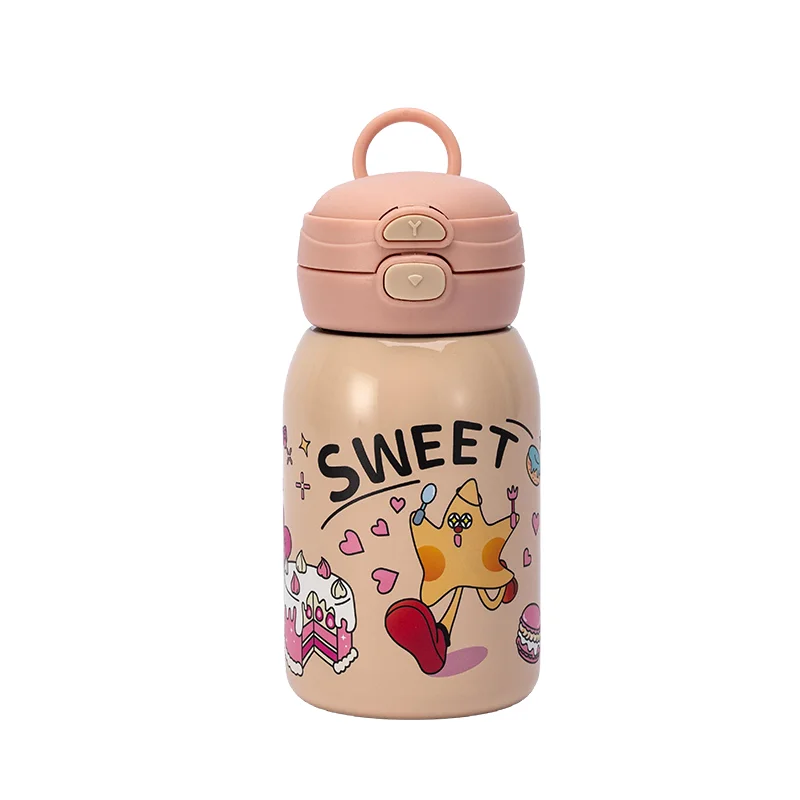
The best-selling combination we see for ages 3-8 is a flip cap with a lock plus a silicone slit valve. The flip cap handles the backpack, and the valve handles the tipped cup on the table. Our button-release kids thermos uses a pop-up straw for older children, and the dual-lid 316 kids cup ships a straw lid for daily use plus a sealed lid for travel. That dual-lid design is a simple way to solve the headspace problem without engineering a new straw lid. For a broader view of lid families beyond kids cups, see our tumbler lid types guide.
Seven Leak Tests to Write Into Your OEM Spec
"Leak-proof" is not a test result. Write the tests and the pass criteria into your purchase specification, and ask the factory to run them at golden sample, pre-production and final inspection. These are the tests we suggest to kids brands, with pass criteria you can adapt:
| # | Test | Method | Suggested pass criterion | Catches leak path |
|---|---|---|---|---|
| 1 | Static inversion | Fill to rated capacity with water at 23±2°C, close, invert on blotting paper for 4 hours | No liquid on the paper | 1, 2, 3, 4 |
| 2 | Shake | Closed, 30 vigorous shakes in all directions | No drops | 1, 2, 4 |
| 3 | Squeeze / tip (open) | Cap open, tip to horizontal for 30 seconds; squeeze the straw tip | No drips beyond the valve's declared behaviour | 3 |
| 4 | Warm-up pressure | Fill with water at 4°C, close, condition at 35°C for 2 hours, then open the cap over white paper | No spray beyond the mouthpiece | 5 |
| 5 | Reduced pressure | Closed cup in a vacuum chamber at -25 kPa for 10 minutes (about an 8,000 ft cabin) | No leak; lid still opens normally | 1, 2, 4, 5 |
| 6 | Drop and re-test | Filled, closed, drop 1.0 m onto hard floor in 3 orientations, then repeat test 1 | No cracks; still passes inversion | 1, 2 |
| 7 | Wash durability | 100 top-rack dishwasher cycles (or the number you print on the box), reassemble, repeat tests 1 and 3 | Still passes; no gasket swelling or valve tearing | 1, 2, 3, 4 |
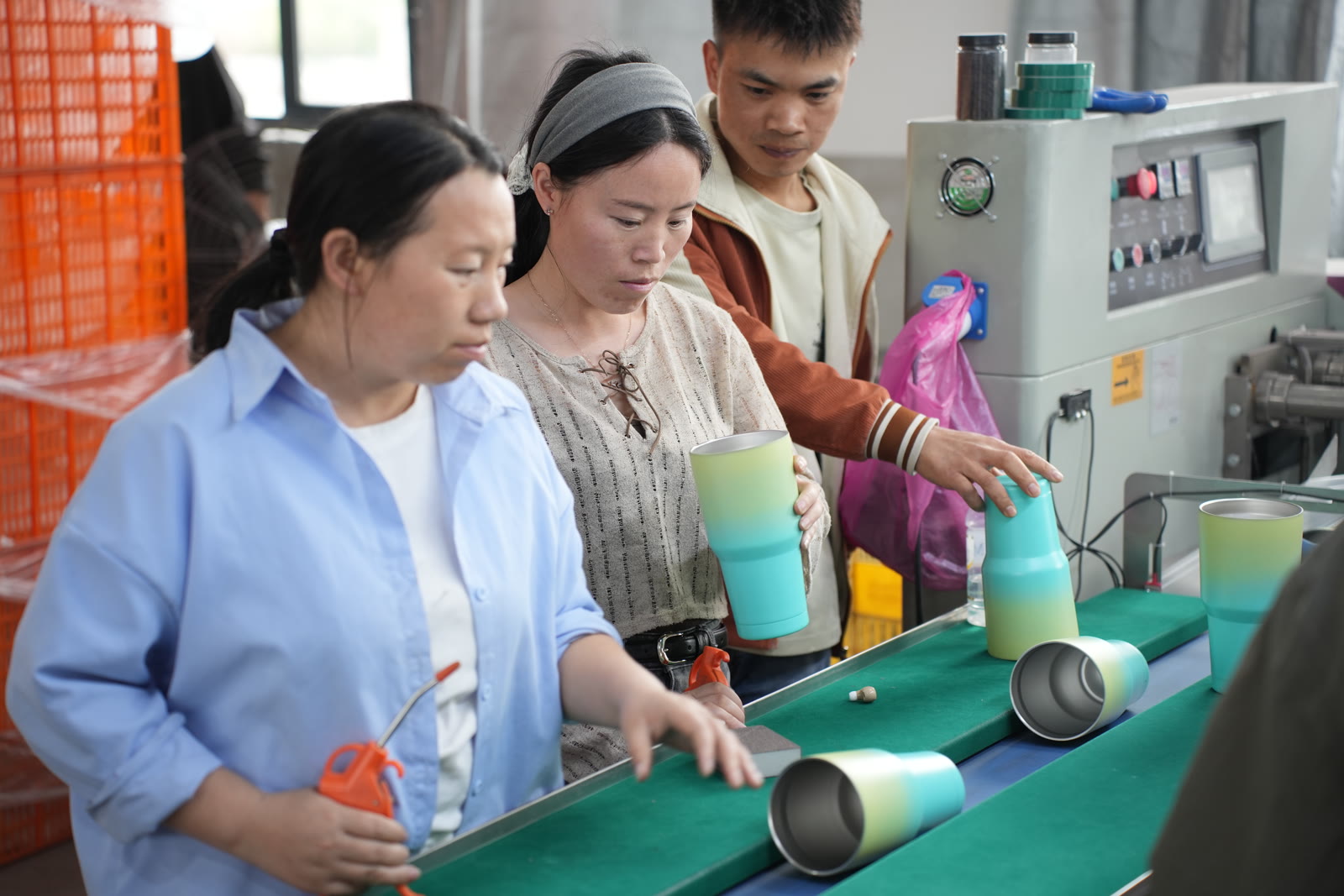
At final inspection, leakage should be classified as a major defect at an AQL of 1.0 or tighter, and any leak from a cup marketed as "leak-proof" is worth treating as critical (zero accepted). Tests 4, 5 and 7 are too slow for every lot, so run them at golden sample and pre-production and repeat whenever the silicone supplier or cure cycle changes. Our tumbler quality control guide covers the vacuum-insulation and body tests that run alongside these lid tests.
Age Grade Decides the Rules: US and EU Points Specific to Straw Lids
The age you print on the box, and how you market the cup, decides which rules apply. For straw lids, the key differences are all about small detachable parts: the mouthpiece, valve, vent and weighted straw.
| Requirement | Ages 3-12 (US) | Under 3 (US) | EU, 0-48 months |
|---|---|---|---|
| Children's product testing + CPC + tracking labels (CPSIA) | Yes | Yes | — |
| Small parts: no detachable part may fit the small parts cylinder | Warning labels for ages 3-6 if small parts are present | Yes: 16 CFR 1501, after use-and-abuse tests | EN 14350 small parts test |
| Use-and-abuse before small parts check | — | Torque 2 in-lbf, tension 10 lbf (≤18 months, 16 CFR 1500.51); 3 in-lbf and 15 lbf (18-36 months, 1500.52) | EN 14350 security / retention tests |
| Phthalates (8 phthalates, ≤0.1% each, 16 CFR 1307) | Applies if the cup is a toy | Applies if it is a "child care article" that helps children 3 and under with feeding or sucking | REACH Annex XVII; EN 14350 chemical requirements |
| Drinking-equipment standard | — | — | EN 14350:2020+A1:2023 (drinking equipment for children 0-48 months) |
In practice, most of our 12oz insulated straw cups are designed and labelled for ages 3+. A double-wall steel cup weighs around 200-230 g, which is heavy for a toddler anyway. If you want a toddler SKU, design for it from the first sketch. That means a one-piece valve that cannot be pulled out at 10-15 lbf, no small vent parts, and a budget for small-parts and EN 14350 testing. Do not relabel a 3+ cup as a toddler cup. The CPSC looks at marketing and photos as well as the age on the box. The full CPSIA testing and CPC process is explained in our compliance testing guide.
Cleaning Design: The Part That Drives Returns
Leaks get one-star reviews in week one. Mould gets them in month three. A valve or straw collar that cannot be taken apart traps milk and juice, and parents find black spots they cannot reach. When you review a sample lid, check four things:
- Every liquid-contact part comes apart by hand, with no tool and no fingernail prying
- No blind cavities: you can see light through the straw and valve once removed
- A cleaning brush that fits the straw comes in the box, sized to the straw's inner diameter
- Reassembly only works one way, so a gasket cannot go back upside down
Put your care instructions in the box, not just on the website. Our deep cleaning guide for stainless bottles can be adapted into an insert for your brand.
Stock Lid or Private Lid: Tooling, MOQ and Lead Time
| Route | What you customise | Tooling | Typical MOQ | Sample → mass production |
|---|---|---|---|---|
| Stock body + stock straw lid | Body colour, lid colour, logo, packaging | None | 100 pcs per design on our 12oz kids cups | 7-10 days sample; 25-35 days production |
| Stock body + modified lid | Silicone colour, new valve slit, grip texture | Silicone compression mould, often $350-$700 | 1,000-3,000 pcs | +2-3 weeks |
| Stock body + new private lid | Lid body, flip cap, lock, valve | Lid injection mould $2,800-$6,500 + silicone moulds | 3,000-5,000 pcs | +6-8 weeks including leak-test iterations |
Our advice to new kids brands is to launch on a proven stock lid in your own colours. Run tests 1-7 on it, and only build a private lid once the SKU sells. That way the lid tooling is paid for by real demand, not a forecast. The full tooling breakdown is in our custom tumbler mould cost guide, and unit pricing by quantity is in our kids water bottles wholesale guide. If this is your first order from China, read our first order step-by-step guide as well.
Kids Straw Cup Spec Sheet Checklist
- Capacity, fill line, and age grade (3+ or under 3) with matching marketing
- Body: 304 or 316 stainless, double-wall vacuum, lead-free sealing, finish
- Lid: part list with the material for each part, named resin grade, platinum-cured silicone, Shore A range
- Valve type and "cold drinks only" marking for straw lids
- Leak tests 1-7 with pass criteria, and at which stage each runs
- AQL: leakage major at 1.0 or critical at zero
- Food-contact reports on the moulded lid parts: FDA 21 CFR 177.1520 / 177.2600, LFGB / BfR XV for Germany
- Children's product testing for your market: CPSIA (US) or EN 14350 (EU, 0-48 months) as applicable
- Cleaning: tool-free disassembly, brush in box, care insert
- Change control: no change of silicone supplier, resin or cure cycle without re-testing and written approval
Related Guides
- Kids Water Bottles Wholesale: Custom 316 Stainless Steel Kids Cups
- Safe Kids Water Bottle: Why 316 Stainless Steel Is Best
- Drinkware Compliance: FDA, LFGB, Prop 65 & PFAS Test Costs
- Tumbler Quality Control: How Chinese Factories Test Drinkware
- Tumbler Lid Types: Flip, Straw, Slide & Screw
Get Leak-Tested Kids Straw Cup Samples
Tell us your age grade, target market and price point. We will recommend a straw lid from our range, run the leak tests above on your sample, and send the results with the samples. Browse our kids cups, including the 12oz leak-proof travel kids cup, all 12oz with an MOQ of 100 pieces per design.