
Quick answer: A China drinkware manufacturer should give you two separate files. The first is product test reports for your exact cup: FDA 21 CFR food-contact, LFGB for Germany, Prop 65 for California. The second is factory audits, which depend on your sales channel: amfori BSCI for EU retail, SMETA for UK retail and global brands, ISO 9001 from an accredited registrar, and Disney ILS/FAMA for licensed product. Three facts shape everything below. BSCI issues no certificate. The FDA certifies no factory. And an ISO 9001 certificate from an unaccredited body is worth nothing. You can verify each of these documents yourself in about ten minutes.
Almost every supplier page in this category, including the "top 10 manufacturer" lists, prints the same row of logos: ISO 9001, BSCI, FDA, LFGB, SGS. None of them explain what those letters prove, how long they are valid, or how to check them. We are a stainless steel drinkware factory in Yongkang. Buyers' compliance teams ask us for these documents every week, and this guide is the explanation we usually give them.
Factory Audits vs Product Test Reports: Two Different Files
The most common mistake is treating everything with a logo as a "certification". In practice, the documents fall into two groups that answer two different questions:
- Product test reports answer: is this cup safe and legal to sell? They are tied to a specific product and its materials.
- Factory audits and management certificates answer: is this supplier run in a way my customer can accept? They are tied to a site and a date.
| Document | What it proves | Issued by | Valid for | Where to verify |
|---|---|---|---|---|
| FDA food-contact test report | Cup materials meet 21 CFR 175.300 / 177.1520 / 177.2600 | Accredited lab (SGS, Intertek, BV, TÜV) | Until any material changes; buyers expect ≤12 months | Report number on the lab's verification portal |
| LFGB report | German food-contact law incl. sensory test | Accredited lab | Same as above | Lab portal |
| amfori BSCI audit report | Social compliance, rated A-E | amfori-approved audit firm | 24 months (A/B), 12 months (C-E) | amfori platform, via your amfori-member customer |
| SMETA report | Labour, H&S (+ environment, ethics if 4-pillar) | APSCA-member audit firm | No formal expiry; buyers accept ≤12 months | Sedex platform, shared by the supplier |
| ISO 9001 certificate | A documented quality management system | Accredited certification body | 3 years, with annual surveillance audits | IAF CertSearch; CNCA cx.cnca.cn |
| Disney ILS audit / FAMA | Facility authorised for a Disney licensee | Disney-appointed audit firm | ILS audit renewed every 12 months | Through the licensee |
If you are working through the product side first, our drinkware compliance testing guide covers real FDA, LFGB, Prop 65 and PFAS test costs component by component. This article is about the second file: the factory.
Which Audit Your Sales Channel Actually Asks For
You do not need every audit. You need the one your customer's supplier programme accepts. Collecting extra logos adds cost and nothing else. Here is how the requirement usually falls by channel for insulated tumblers and bottles:
| Where your tumblers are sold | Factory-level requirement you will usually meet | Product-level requirement |
|---|---|---|
| Amazon / your own DTC store | Usually none requested | FDA report matching the ASIN, Prop 65, CPSIA for kids cups |
| EU discount chains and department stores | amfori BSCI, rating A-C | LFGB or EU 1935/2004 + 10/2011 declaration |
| UK grocers and high-street retail | SMETA on Sedex (2-pillar minimum) | UK food-contact declaration, often BRCGS-type packaging questions |
| US big-box retail | One social audit from the retailer's accepted list (BSCI and SMETA are commonly accepted) + security questionnaire (C-TPAT / GSV) | FDA, Prop 65, retailer lab protocol |
| Licensed character products | Disney ILS audit + FAMA for your licensee | Licensor's test protocol |
| Promotional / corporate gift distributors | Signed supplier code of conduct; Fortune 500 end clients may require BSCI or SMETA | FDA, Prop 65, CPSIA if marketed to children |
Retailers revise their accepted-audit lists regularly, so always confirm the current list in your vendor onboarding pack before you ask a factory for anything. If you sell into the promotional channel, our promotional drinkware sourcing guide covers what distributors and their end clients typically ask for. For corporate programmes, see corporate gift tumblers wholesale.
Not sure which audit your channel needs? Tell us where you sell and we will tell you which documents to request, from us or from any other supplier.
amfori BSCI: A Rating, Not a Certificate
amfori BSCI is the default request from European retail. The factory is audited against the amfori Code of Conduct across 13 performance areas, including working hours, fair remuneration, occupational health and safety, and no child or bonded labour. It then receives an overall rating:
| Overall rating | What happens next | How buyers usually read it |
|---|---|---|
| A / B | Next full audit within 24 months | Approved |
| C | Follow-up within 2-12 months, full audit within 12 months | Accepted by most programmes with a corrective action plan |
| D / E | Follow-up audit, full audit within 12 months | Onboarding usually paused until remediated |
Two things follow from this. First, a "BSCI certificate" is a red flag. amfori does not issue one. What exists is an audit report with an audit ID, a date and a rating. Second, the rating matters more than the logo. A C-rated factory with open findings on working hours can be a perfectly reasonable supplier, but you need to know that before your retailer finds out.
From the factory side, the finding that most often pulls drinkware plants down to C is working hours in peak season. Tumbler demand is seasonal: Q3 production for the holiday season can double a line's output. Overtime beyond the limits in Chinese labour law shows up in timecards and payroll, and auditors cross-check both. So ask about the audit month. A report written in March tells you less about peak-season conditions than one written in September.
SMETA and Sedex: Read the Findings, Not the Cover
SMETA (Sedex Members Ethical Trade Audit) is the most widely used social audit format globally and the standard ask for UK retail. The report is uploaded to the Sedex platform, and the supplier shares it with buyers who are Sedex members.
| SMETA 2-pillar | SMETA 4-pillar | |
|---|---|---|
| Labour standards | ✓ | ✓ |
| Health & safety | ✓ | ✓ |
| Environment | — | ✓ |
| Business ethics | — | ✓ |
| Typical audit length (50-300 workers) | 1-2 auditor-days | 2-3 auditor-days |
| Typical 2026 cost in Zhejiang | $1,200-$2,000 | $1,800-$3,000 |
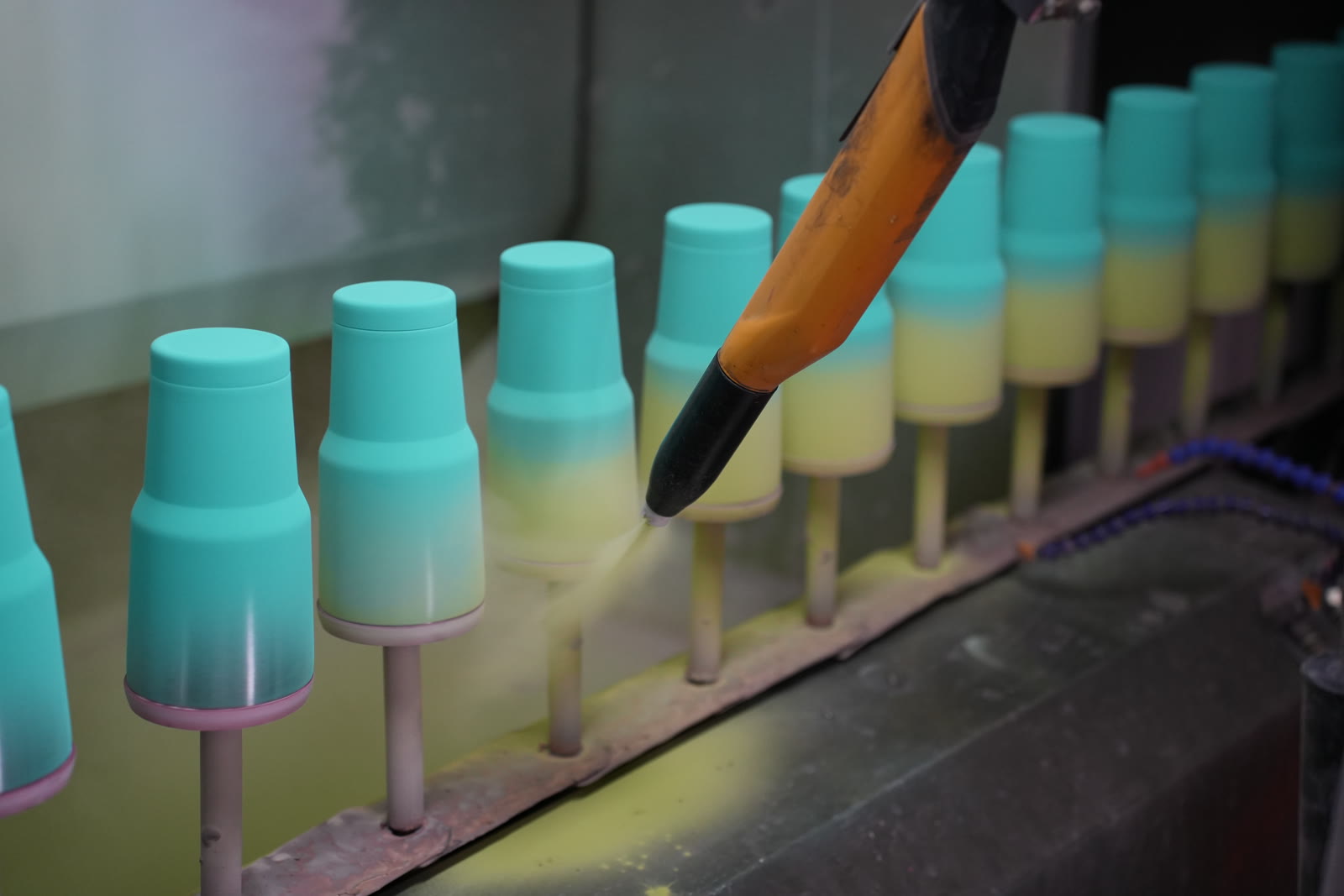
SMETA has no pass or fail. It records non-conformances and a corrective action plan. So a supplier who says "we passed SMETA" is summarising something that cannot be summarised that way. Ask for the Sedex reference number (the site's ZS number), then read the non-conformance list. For a vacuum drinkware plant, the ones worth checking are fire exits and chemical storage around the powder coating line, hearing protection in the stamping and deep-draw area, and ventilation at the polishing stations.
ISO 9001 and the Certificate Mill Problem
ISO 9001 is the most common logo on Chinese supplier pages. It is also the easiest to fake, because ISO itself certifies nobody. Certificates are issued by certification bodies, and only those accredited by an IAF member (in China, that is CNAS) issue certificates that mean anything. Unaccredited "certification mills" will sell a good-looking ISO 9001 certificate without a real audit.
A genuine certificate runs for three years, with surveillance audits every year. Check it in two places:
- IAF CertSearch (iafcertsearch.org): search the certificate number or the legal company name.
- CNCA public service platform (cx.cnca.cn): China's own registry of certificates issued by approved bodies. If a Chinese factory's certificate is real, it will be here.
Then read the certificate like an auditor would. These are the three traps we see most often in our industry:
- Scope trap: the scope says "sales of daily necessities" or "trading of stainless steel products". That certifies an office, not a production line. A real manufacturer's scope reads like "design and manufacture of stainless steel vacuum cups and bottles".
- Address trap: the certificate covers a sister company's site or an old address. Your purchase order and the certificate must point to the same legal entity and the same address.
- Suspension trap: the certificate image is real, but it was suspended after a missed surveillance audit. Only the database shows its current status.
A related shortcut is to check the supplier's business licence on China's National Enterprise Credit Information System (gsxt.gov.cn). Our guide to finding the right tumbler factory walks through that. The annual report there also discloses how many employees have social insurance, which gives you a useful cross-check against the headcount stated in an audit report.
Retailer-Specific and Licensed-Product Audits
Beyond the big three, a few more documents come up regularly in drinkware:
| Audit / standard | When it comes up | What to know |
|---|---|---|
| Disney ILS / FAMA | Licensed character tumblers and kids bottles | FAMA is tied to a specific licensee and facility; ILS audit every 12 months. Another licensee's FAMA does not cover your order. |
| C-TPAT questionnaire / GSV | US importers in the CBP C-TPAT programme; many US retailers | Supply chain security (container sealing, access control), not labour. Often requested alongside a social audit. |
| ISO 14001 | Brands with published ESG targets | Environmental management system; verify exactly like ISO 9001. |
| GRS / RCS | "Recycled stainless steel" marketing claims | Without a chain-of-custody certificate covering every site, the recycled claim is unsupported. Ask before you print it on the box. |
| BRCGS Packaging Materials | Some UK food retailers, mainly for food packaging | Rarely required for finished drinkware, but questions from its checklist appear in UK onboarding forms. |
How to Verify Any Supplier Document in Ten Minutes
Use this routine on every file a supplier sends, including ours:
| Red flag | What it usually means | Check |
|---|---|---|
| "FDA certificate" or "FDA certified factory" | Misunderstanding or fabrication; the FDA issues neither | Ask for the lab test report and its number |
| "BSCI certificate" | amfori issues ratings in reports, not certificates | Ask for the full report: audit ID, date, overall rating |
| ISO certificate not found on IAF CertSearch or CNCA | Certification mill, or suspended | Search both databases by number and legal name |
| Company name on the report ≠ company on your invoice | Trading company borrowing a factory's documents | Match the legal name to the business licence on gsxt.gov.cn |
| Report date over 12 months old | Nothing has been re-checked since | Ask for the current report or the scheduled audit date |
| Test report for a different lid or colour | The report does not describe your product | Match the photos and bill of materials in the report to your SKU |
| PDF only, no audit ID or report number | Cannot be verified | Treat as not provided |
A supplier's response time is itself a data point. A factory that sends the real report with a number you can check the same day has it on file. A factory that needs a week, then sends a PDF with someone else's name on it, has told you what you need to know.
What Certificates Do Not Tell You: The Subcontracting Gap
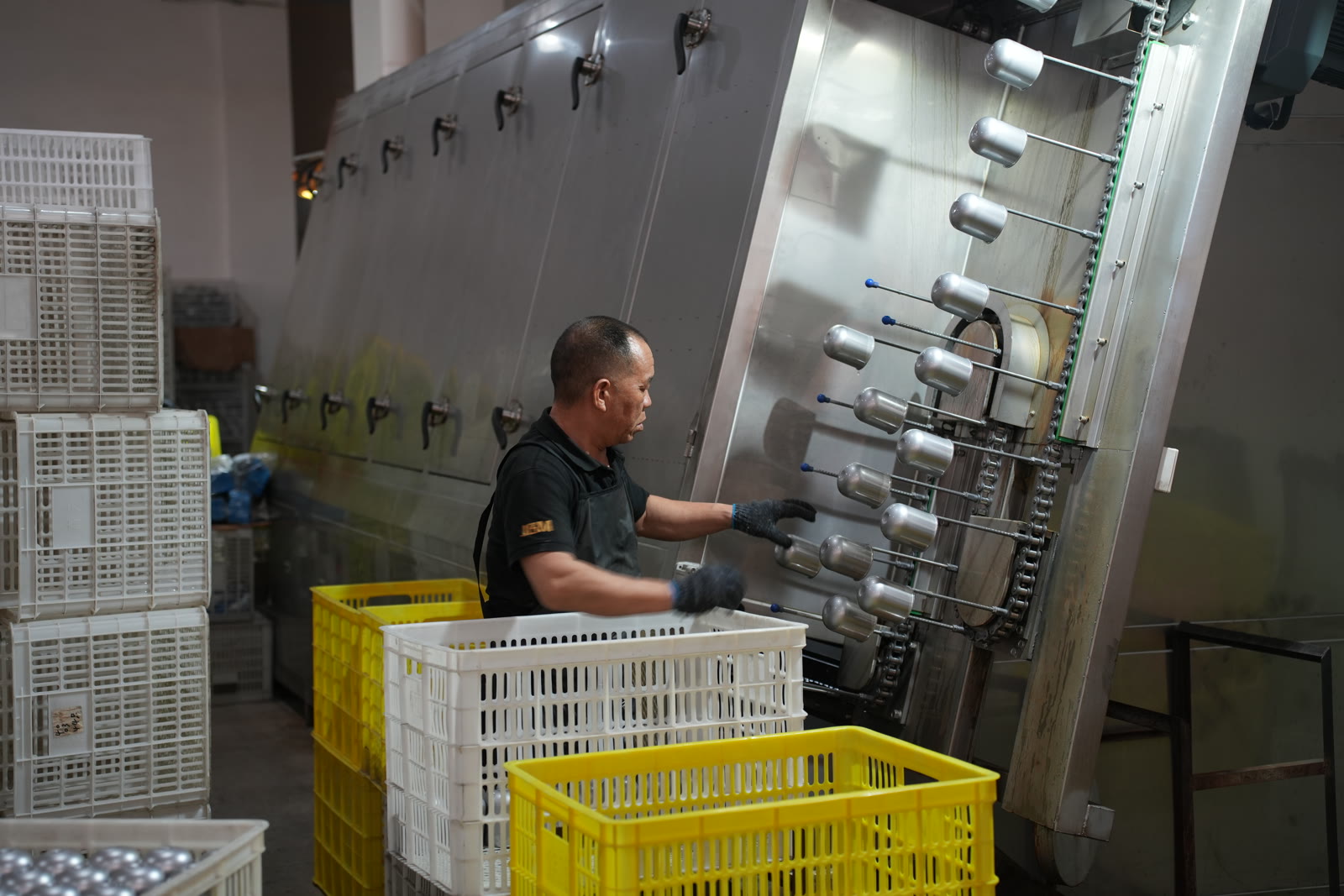
This is the part no certificate covers, and the part we see most often as a factory in Yongkang, China's largest vacuum drinkware cluster. An audit covers one address on one date. A stainless steel tumbler passes through six to eight distinct processes: deep drawing, welding, polishing, vacuum sealing, powder coating, printing, assembly, packing. In a dense cluster, any of them can be sent to a neighbouring workshop when the main plant is full.
That is not automatically bad; specialist subcontractors can be excellent. But it means the BSCI report you were shown may describe a site where only assembly and packing happen. The subcontracted steps are exactly where the risks sit: overtime in polishing, lead content in vacuum sealing alloy, and coating chemistry. So, alongside the certificates, ask for:
- A written process map: each production step, and whether it is in-house or outsourced, with the subcontractor's name
- A change-control clause in your purchase agreement: no process moves to another site without your written approval
- A video walk-through of the specific lines for your SKU, filmed on the day, with a timestamp you requested
- An inspection at the audited address during your production run, not just before shipment. Our tumbler quality control guide lists the six production gates worth inspecting.
Buyers who do this once rarely skip it again. It costs nothing, and it is the clearest way to tell a manufacturer from a trading company that has borrowed a manufacturer's paperwork. For a broader shortlist, our top tumbler manufacturers in China comparison shows how different suppliers present these documents.
Audit Costs, Timelines and Who Pays
| Audit | Typical 2026 cost (50-300 worker site, Zhejiang) | Lead time to book | Usually paid by |
|---|---|---|---|
| amfori BSCI full audit | $1,000-$2,500 | 2-4 weeks (semi-announced window) | Negotiated; amfori sets no rule |
| SMETA 2-pillar / 4-pillar | $1,200-$3,000 | 2-4 weeks | Supplier if reusable; buyer if a specific firm is required |
| ISO 9001 initial certification | $2,000-$5,000 + annual surveillance | 2-3 months including preparation | Factory |
| Disney ILS audit | $1,500-$3,000 | Scheduled through the licensee | Usually factory or licensee |
| Buyer's own factory audit (quality + capability) | $300-$600 per auditor-day | 3-7 days | Buyer |
These ranges are what third-party firms typically quote in our region; confirm with your chosen audit firm. For total cost planning, fold audit and testing costs into the landed-cost model in our tumbler import landed cost guide. Amortised over a 3,000-piece order, a $2,000 audit adds about $0.67 per cup. Over 20,000 pieces, it is $0.10.
Pre-Order Supplier Document Checklist
- Confirm your channel's accepted audit list from your customer's vendor onboarding pack
- Request product test reports for your exact SKU and check the report numbers on the lab portal
- Request the full social audit report (BSCI: audit ID, date, rating; SMETA: ZS number, non-conformance list)
- Verify ISO certificates on IAF CertSearch and cx.cnca.cn: status, scope, address
- Match every document's legal name and address to the business licence and your invoice
- Get a written process map with any subcontractors named
- Add change-control and no-unauthorised-subcontracting clauses to your purchase agreement
- Diarise renewal dates: BSCI 12/24 months, SMETA ~12 months, ISO surveillance yearly, Disney ILS yearly
Related Guides
- Drinkware Compliance: FDA, LFGB, Prop 65 & PFAS Test Costs
- Tumbler Quality Control: How Chinese Factories Test Drinkware
- Custom Tumbler Manufacturer: How to Find the Right Factory
- Tumbler MOQ & First Order from China
- Custom Tumbler Mold & Tooling Cost Breakdown
Ask for the Documents Before You Ask for the Price
The cheapest point to find a documentation problem is before the deposit. Tell us your sales channel and destination market, and we will send the audit and test documentation that is current for our powder coated tumblers, car tumblers, kids cups and office mugs, with report numbers you can verify yourself using the steps above. You can also see how our production lines are organised on the factory page.