
Quick answer: On a typical 5,000-piece order of 40oz insulated tumblers, the FOB factory price is only about 60-70% of what you actually pay per unit. Duty (7.2% MFN base under HTS 9617.00.10 plus any China-specific add-ons), ocean freight, destination charges, brokerage and inland trucking add roughly $1.10-$2.40 per unit on top of a $4.00 FOB price. Get the HS classification wrong and you can swing that number by more than a dollar a cup.
We are a tumbler factory in Yongkang, Zhejiang, and we ship FOB Ningbo every week. This guide is written from the loading dock side of the transaction: what actually goes in the carton, how many cartons fit in the box, and where first-time importers lose money that they never see on the quotation.
The Landed Cost Stack: Where Every Dollar Goes
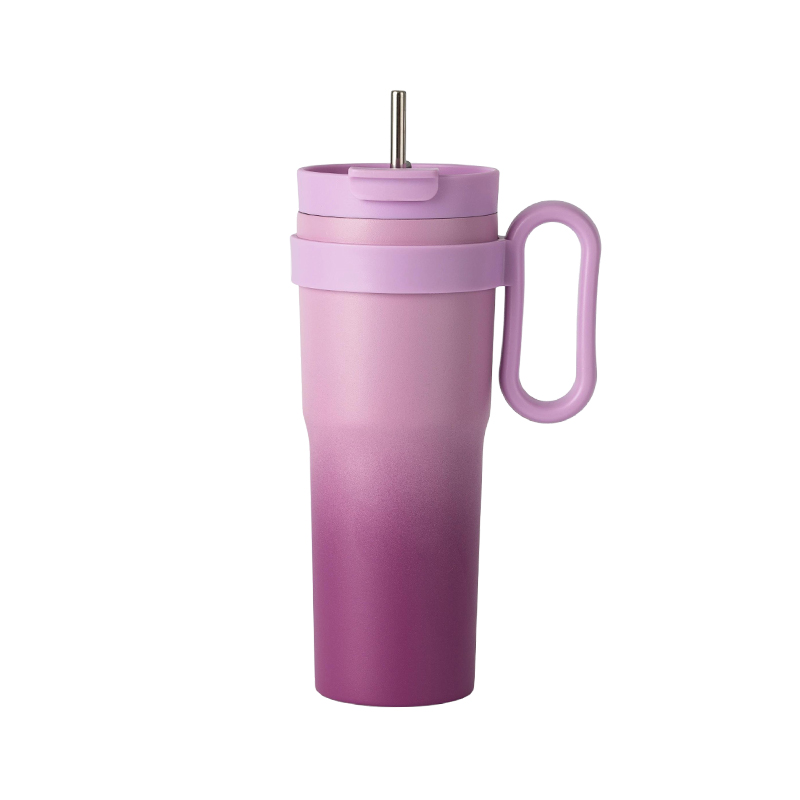
Here is a real cost breakdown for 5,000 powder-coated 40oz tumblers with laser-engraved logos, shipped FOB Ningbo to Los Angeles by full container:
| Cost line | Amount | Per unit | Notes |
|---|---|---|---|
| FOB factory price | $21,000 | $4.20 | Powder coat + laser engraving + poly bag |
| Ocean freight (share of 40HQ) | $1,650 | $0.33 | ~40% of a $4,200 container at 5,000/12,500 pcs |
| Import duty (7.2% MFN base) | $1,512 | $0.30 | On $21,000 entered value; add-ons extra |
| Merchandise Processing Fee (0.3464%) | $73 | $0.01 | Capped per entry |
| Harbor Maintenance Fee (0.125%) | $26 | $0.01 | Ocean shipments only |
| Customs broker entry | $150 | $0.03 | Per entry, not per unit |
| Destination THC + drayage | $1,250 | $0.25 | Port to warehouse, LA basin |
| Third-party inspection (optional) | $350 | $0.07 | SGS / BV pre-shipment |
| Landed cost | $26,011 | $5.20 | 24% above FOB |
Note what this table does not include: China-specific tariff add-ons under Chapter 99 of the HTSUS. Those rates have changed repeatedly and are the single most volatile number in your model. Everything else on this list is stable within a few percent year to year — the Chapter 99 line is not. Price your product with the current rate from your broker on the day you place the order, and build a sensitivity case at plus and minus ten points.
HTS 9617 vs 7323: The Classification That Moves Your Margin
This is the part almost every sourcing blog gets wrong, and it is worth real money.
Stainless steel drinkware splits into two very different tariff headings:
| Product type | US HTS heading | MFN base rate | Example |
|---|---|---|---|
| Double-wall vacuum insulated, steel outer shell | 9617.00.10 | 7.2% | 40oz Quencher-style tumbler, thermos bottle |
| Double-wall, air gap only (no vacuum) | 7323.93.00 | 2.0% | Cheap double-wall party cup |
| Single-wall stainless tumbler | 7323.93.00 | 2.0% | Uninsulated pint cup, shot glass |
| Vacuum flask replacement parts (non-glass) | 9617.00.60 | 7.2% | Lids, gaskets, straws sold separately |
The heading 9617 language is "vacuum flasks and other vacuum vessels, complete with cases." Importers used to argue that a modern tumbler has no separate outer "case" — the outer steel wall is the product — and therefore belongs in 7323 at the friendlier 2% rate. US Customs closed that argument: on review of prior rulings, CBP held that a case does not have to be a separate, distinct, unintegrated covering, and that the hard protective outer steel shell of a vacuum-insulated beverage container satisfies the requirement. Vacuum-insulated stainless tumblers classify in 9617.
Why this matters beyond the 5.2-point base rate difference: heading 7323 is a steel article heading and has been swept into Section 232 metals measures in a way that heading 9617 has generally not been. A supplier or forwarder who classifies your vacuum tumblers into 7323 to show you a lower duty line is not saving you money — they are creating a misclassification exposure that lands on you as importer of record, complete with back duties and penalties.
Factory tip: Ask your supplier to state the HS code on the proforma invoice before you pay the deposit, and have your broker confirm it. If the factory writes 7323.93 for a vacuum tumbler, that tells you something about how carefully they handle export documentation generally.
Two more classification traps we see regularly:
- Mixed cartons. If you order vacuum tumblers and single-wall shot glasses in the same shipment, they are two line items with two codes. One blended code is not acceptable.
- Gift sets. A tumbler packed with a straw, brush and gift box is generally classified as a set by the essential character of the tumbler, but a tumbler packed with an unrelated item (a tote bag, a notebook) may need to be broken out. Tell your broker what is in the box.
Not sure how your product classifies? Send us the spec and we will tell you exactly what we declare on our export documents — contact our export team.
Carton Specs and CBM: The Numbers Your Forwarder Wants
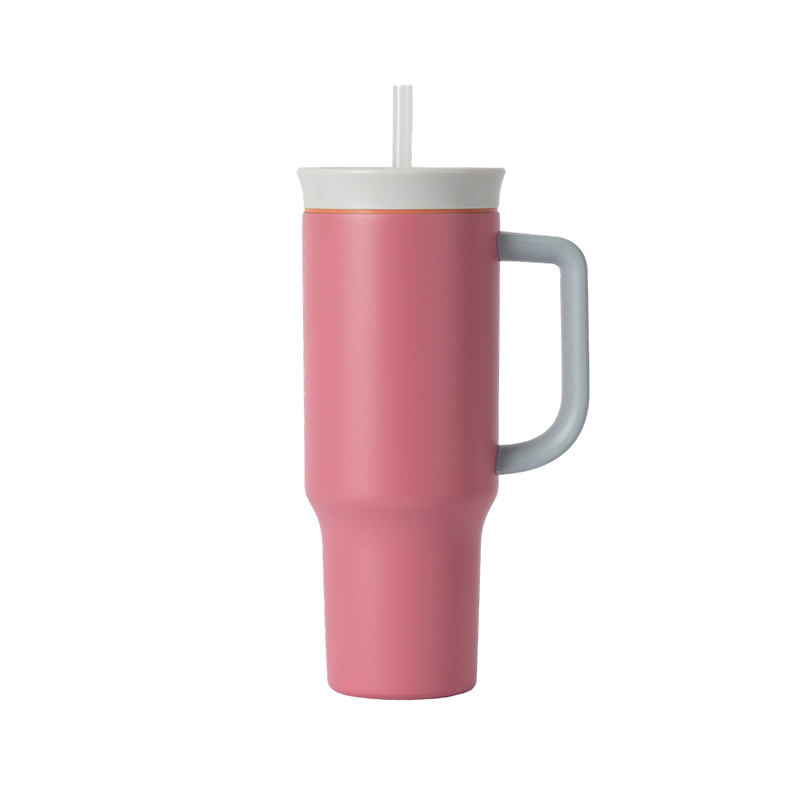
Tumblers are a volume cargo, not a weight cargo. You will hit the CBM limit of a container long before you hit the weight limit, which means carton efficiency is the lever that controls your freight cost per unit. Here are our actual standard export carton specs:
| Product | Pcs/carton | Carton size (mm) | CBM/carton | Pcs/CBM | Gross wt |
|---|---|---|---|---|---|
| 40oz car tumbler | 24 | 585 x 390 x 342 | 0.078 | ~308 | 13.5 kg |
| 30oz car tumbler | 24 | 530 x 355 x 310 | 0.058 | ~410 | 10.8 kg |
| 20oz coffee tumbler | 48 | 560 x 425 x 245 | 0.058 | ~825 | 12.2 kg |
| 12oz kids cup | 48 | 480 x 365 x 215 | 0.038 | ~1,270 | 8.6 kg |
| 12oz wine tumbler | 72 | 500 x 375 x 200 | 0.038 | ~1,920 | 9.4 kg |
| 3L ice bucket | 6 | 620 x 415 x 445 | 0.115 | ~52 | 11.0 kg |
Translate that into containers, using the practical usable volume after stacking loss (not the theoretical figure):
| Container | Usable CBM | 40oz tumblers | 30oz tumblers | 20oz coffee mugs |
|---|---|---|---|---|
| 20GP | 27-28 | ~5,200 | ~7,000 | ~14,000 |
| 40GP | 55-57 | ~10,500 | ~14,200 | ~28,500 |
| 40HQ | 65-68 | ~12,500 | ~16,800 | ~33,700 |
The gift box penalty. A 40oz tumbler in a printed gift box goes from 24 to 16 pieces per carton and the carton grows to roughly 0.089 CBM. Pieces per CBM drops from 308 to about 180 — a 42% loss of container efficiency. On a $4,200 container that turns $0.33 per unit of freight into $0.57. If you are selling on Amazon FBA where the gift box also raises your dimensional tier, model this before you fall in love with the packaging. See our tumbler packaging guide for formats that protect the product without destroying the cube.
Air vs Sea: The Break-Even Is Lower Than You Think
Insulated tumblers are the textbook dimensional-weight victim. A 40oz tumbler weighs about 560 g but occupies roughly 3.2 L. Under the standard air freight volumetric divisor of 6000, a carton of 24 at 0.078 CBM chargeable weight is 13.0 kg volumetric versus 13.5 kg actual — for tumblers these are close, which is unusual and works in your favour compared to, say, lampshades. Express couriers using a 5000 divisor push the volumetric figure to 15.6 kg and you pay the higher of the two.
| Mode | Cost per 40oz tumbler | Transit (China to US West Coast) | Sensible for |
|---|---|---|---|
| Express courier (DHL/FedEx) | $3.20-$5.50 | 4-7 days | Samples, 1-100 pcs |
| Air freight | $2.10-$3.60 | 7-12 days | 100-800 pcs, urgent restock |
| LCL sea | $0.70-$1.40 | 28-40 days door to door | 800-2,500 pcs |
| FCL sea (40HQ) | $0.28-$0.45 | 25-35 days | 4,000+ pcs |
The break-even between LCL and FCL sits around 7,000-8,000 pieces of 40oz at typical rates, because LCL destination charges are largely fixed per shipment. Below about 1,500 pieces, LCL's fixed CFS and documentation charges make air competitive on total cost once you price in the 30 extra days of working capital tied up on the water.
The split strategy that actually works. For a product launch, ship 15-20% by air so you have stock to sell in week two, and put the remaining 80-85% on the water. You start generating revenue a month earlier while paying the air premium on only a fifth of the order. We do this routinely for Amazon sellers doing a first listing.
FOB, EXW and DDP: What Each One Hides
Incoterms are not just a price format — they decide who carries which risk and who can see which numbers.
| EXW | FOB Ningbo | DDP | |
|---|---|---|---|
| Price includes | Goods at factory gate | Goods + export clearance + loaded on vessel | Everything to your door |
| You nominate forwarder | Yes | Yes | No |
| You see declared customs value | Yes | Yes | Usually not |
| Importer of record | You | You | Varies / sometimes unclear |
| Best for | Consolidating from several factories | Most wholesale orders | First small orders, no broker yet |
Three things worth knowing about DDP for drinkware specifically:
- You often cannot see the entry. DDP forwarders frequently use their own consignee arrangements. If you never receive the CBP Form 7501 entry summary, you do not know what code was used or what value was declared.
- Cheap DDP quotes usually imply an aggressive declared value. When a DDP price is meaningfully below FOB plus freight plus current duty, the arithmetic is coming from somewhere. Ask where.
- You can still be liable. If your company is the importer of record on the entry, penalties for undervaluation or misclassification attach to you, regardless of what the commercial arrangement said.
We quote FOB Ningbo as standard. Our factory in Yongkang is 2.5 hours from Ningbo port and 3.5 hours from Shanghai, so both origin options are open, and we will work with any forwarder you nominate.
Compliance Documents That Prevent Customs Holds
A shipment sitting at the port costs $150-$300 a day in demurrage and per-diem. Almost every hold we have seen on drinkware traces back to one of these being missing or wrong:
- FDA food-contact declaration. The interior surface is what matters. 304 or 316 stainless steel with a statement of compliance to 21 CFR 175.300 for any coating. For the EU, LFGB and EU Regulation 1935/2004.
- Country of origin marking. Must be permanent and legible on the article itself, not just the carton. We laser-mark or pad-print "Made in China" on the base as standard. Sticker-only marking is a classic detention trigger.
- CPSIA / Prop 65 for kids products. Any tumbler marketed for children under 12 needs a Children's Product Certificate backed by CPSC-accepted third-party lab testing for lead and phthalates. See our 316 stainless kids bottle guide for the material side of this.
- Accurate commercial invoice and packing list. Piece counts, carton counts, net and gross weight, CBM, HS code, and a transaction value that matches your wire transfer.
- Trademark clearance. If you are printing your own brand, make sure it does not collide with a mark recorded with CBP. Recorded-mark seizures on drinkware are common because the category is full of lookalike branding.
Payment Terms and Working Capital
The standard in our industry is 30% deposit, 70% against copy of bill of lading by T/T. That means on a $21,000 order you pay $6,300 up front, $14,700 roughly 35-45 days later, then wait another 25-35 days for arrival. Your money is committed for about 90 days before the first unit sells.
Ways to shorten that cycle:
- Negotiate 70% against B/L copy, not before loading. This is a small but real difference — it moves your second payment about a week later and gives you a document to check first.
- Use a letter of credit at 60 days for orders above $50,000. We accept L/C for established clients and it converts your cash-out point to after arrival.
- Split the PO into two shipments. Half now, half in 30 days. You pay the second deposit out of first-shipment revenue.
- Order at the right time. Chinese New Year shuts factories for 2-3 weeks and freight rates spike in the 4-6 weeks before it. Q4 ocean rates into the US also run high. Placing bulk orders in March-May typically gets you the best combination of factory capacity and freight pricing.
A Worked Example: Two Ways to Buy the Same 3,000 Tumblers
Same product, same factory, two different sourcing decisions. This is where the money actually is:
| Buyer A (unplanned) | Buyer B (planned) | |
|---|---|---|
| Quantity | 3,000 x 40oz | 3,000 x 40oz |
| Packaging | Printed gift box | Poly bag + branded sleeve |
| FOB price | $4.80 | $4.35 |
| Pcs per CBM | ~180 | ~308 |
| Shipping mode | LCL (16.7 CBM) | LCL (9.7 CBM) |
| Freight + destination | $1.35/unit | $0.86/unit |
| Duty, fees, brokerage | $0.45/unit | $0.40/unit |
| Landed cost | $6.60 | $5.61 |
| Difference on the order | $2,970 — roughly the profit on 600 units at retail | |
Buyer B did not negotiate harder. Buyer B chose packaging that ships well and asked for the carton spec before approving it. That is the whole trick.
What to Send Us for an Accurate Landed Cost Quote
We can give you a full landed-cost model, not just an FOB number, if you tell us:
- Product and size (or link the model from our car tumbler range or powder coated tumblers)
- Quantity and colour split
- Customization: powder coat, laser engraving, UV print, custom lid
- Packaging: poly bag, sleeve, gift box, retail-ready
- Destination port or door address, and whether you have a customs broker
We will come back with FOB price, carton spec, total CBM, an estimated freight range for your lane, and the HS code we declare — so you can hand the whole package to your broker and get a duty number you can trust.
Frequently Asked Questions
What HS code applies to vacuum insulated stainless steel tumblers?
Double-wall vacuum insulated tumblers with an integrated stainless steel outer shell classify under HTS heading 9617 (vacuum flasks and other vacuum vessels, complete with cases), typically 9617.00.10 in the US at a 7.2% MFN base duty. Single-wall or non-vacuum double-wall cups fall under 7323.93.00 at 2%. CBP has confirmed that a tumbler's integrated protective outer steel shell qualifies as a "case," so a separate outer casing is not required. Confirm the 10-digit code and any Chapter 99 add-on duties with your licensed customs broker.
How many 40oz tumblers fit in a 40HQ container?
Roughly 12,000-13,000 pieces. Our standard 40oz export carton holds 24 pieces at 0.078 CBM (585 x 390 x 342 mm), about 308 pieces per CBM, and a 40HQ takes 65-68 usable CBM after stacking loss. A 20GP holds about 5,200 pieces. Gift boxes reduce these figures by 30-42%.
Should I buy tumblers FOB or DDP?
FOB gives you visibility and control: you see the factory price, nominate the forwarder, and pay duty on a declared value you can verify. DDP is simpler but hides the classification and declared value, and as importer of record you may still carry the penalty exposure. Use DDP for first orders under 500 pieces by air; use FOB Ningbo with your own broker for anything moving by sea.
What order size makes sea freight worth it?
About 1,500-2,000 tumblers (5-6 CBM) for LCL to beat air on total cost, and around 7,000-8,000 pieces of 40oz for a full 40HQ to beat LCL. Below 1,500 pieces the fixed CFS, documentation and drayage charges on an LCL shipment cancel out the lower per-CBM rate.
What hidden costs do first-time tumbler importers forget?
Destination terminal handling and CFS charges ($150-$400 on LCL), customs broker entry fee ($100-$175), Merchandise Processing Fee (0.3464% of entered value, roughly $32 minimum to $635 maximum per entry), Harbor Maintenance Fee (0.125% on ocean shipments), and inland trucking ($400-$900). On a 5,000-piece order these total about $0.25-$0.45 per unit.
How do I verify my supplier is declaring the correct value?
Request the commercial invoice and packing list before the container ships and check the invoice value against your actual payments. Ask for the CBP Form 7501 entry summary after clearance. Under-declaration is most common on DDP shipments, and the liability attaches to the importer of record — you — not the factory.
When is the best time of year to place a bulk tumbler order?
March through May. Chinese factories close 2-3 weeks for Chinese New Year (late January or February) and freight rates spike in the 4-6 weeks before the holiday as everyone rushes to ship. Q4 ocean rates into the US also run high ahead of the retail season. A March-May order gets you open factory capacity and softer freight pricing, with delivery in time for summer and back-to-school programs.
Get a Real Landed Cost, Not Just an FOB Price
Most factories will send you a price per piece and stop there. We would rather you go into the order knowing the full number, because a buyer who is surprised by $1.50 a unit at the port does not reorder.
Tell us the product, quantity and destination, and we will send back the FOB price, carton spec, total CBM, HS code and a freight estimate for your lane — usually within one working day.
Duty rates and tariff programs change. The MFN base rates and classification logic above reflect the US HTSUS and CBP ruling practice as of September 2026, but China-specific measures under Chapter 99 are revised frequently. Always confirm the applicable rate with a licensed customs broker before committing to a purchase order.
Related guides: Tumbler MOQ & First Order Guide | Wholesale Tumblers Bulk Sourcing | Custom Tumbler Packaging Ideas | Tumbler Quality Control & Testing | 40oz Tumbler Wholesale Guide | Amazon FBA Private Label Tumblers