Starting a custom tumbler business takes less capital than most founders expect — and more strategic sourcing knowledge than most guides admit. The barrier is not the idea; it is knowing how to navigate OEM manufacturing, powder coating specs, quality certifications, and container logistics from a factory 7,000 miles away. This guide gives you the complete picture: from how tumblers are actually made, to cost tiers by volume, to how Hongming structures an OEM order for a first-time tumbler brand.
Why Custom Tumblers Are Still a Strong Business in 2026

The insulated tumbler market is projected to reach $1.9 billion by 2028, growing at 8.2% annually. Stanley's Quencher created a cultural moment, but the underlying demand — durable, leak-proof, vacuum-insulated drinkware — is evergreen. The Stanley effect also opened the market for hundreds of independent brands, because it educated consumers about what to look for in a quality tumbler.
Three forces make 2026 a strong entry point for custom tumbler businesses:
- Consumer sophistication: Buyers now ask about steel grade, lid type, and powder coat durability — creating room for brands that compete on specs, not just brand recognition.
- Niche whitespace: Segments like nurses, teachers, gym-goers, dog moms, and outdoor enthusiasts are underserved by the major brands and highly responsive to targeted marketing.
- Manufacturing accessibility: OEM minimum orders have dropped from 1,000–5,000 pieces to 100–500 pieces as Yongkang factories compete for new brand accounts. A $2,000–$4,000 first order is now realistic.
Step 1: Define Your Brand and Target Customer
Before you contact a single factory, you need to answer three questions:
- Who is your customer? A gym brand selling to fitness coaches needs different aesthetics and specs than a corporate gifting company. Know the end user before you spec the product.
- What price point are you targeting? $19.99 retail demands a different manufacturing approach than $39.99 retail. Your target retail price determines your allowable landed cost (typically 20–30% of retail for a healthy margin).
- What makes you different? Color story, unique lid design, a specific niche, a social cause, premium materials — pick one differentiator and build your sourcing spec around it.
This positioning work is not fluff — it directly determines what you order, how many colors you carry, and what customization level you need from your manufacturer.
Step 2: Understand the Product — How Custom Tumblers Are Made
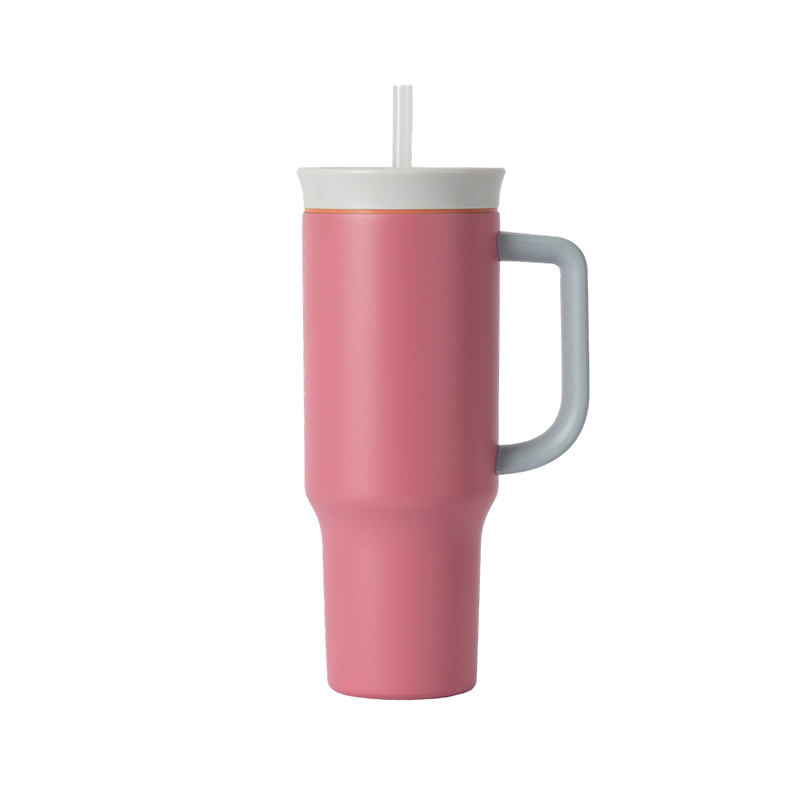
Every vacuum-insulated tumbler consists of the same core construction. Understanding this helps you make intelligent sourcing decisions and ask the right quality questions.
Double-Wall Vacuum Insulation
The outer and inner walls are formed separately, then assembled with a precise gap between them. Air is evacuated from that gap using a high-vacuum pump, pulling the pressure down to 0.005 Pa or lower. This vacuum eliminates conductive and convective heat transfer — it is the same principle as a Thermos flask. The quality of the vacuum seal determines how long your tumblers maintain temperature performance. Hongming's vacuum sealing process achieves a retention rate of 95%+ through 2 years of standard use.
Material: 18/8 (304) vs 316 Stainless Steel
| Property | 304 (18/8) | 316 (Marine Grade) |
|---|---|---|
| Chromium content | 18% | 16–18% |
| Nickel content | 8% | 10–14% |
| Molybdenum | None | 2–3% (key differentiator) |
| Corrosion resistance | High (general use) | Very High (acids, salts) |
| FDA food-contact | Yes | Yes |
| Price premium vs 304 | Baseline | +$0.60–$0.90/unit |
Recommendation: Start with 304 for your main product line — it meets all food safety requirements and is what Stanley, YETI, and Hydro Flask use. Add a "premium" 316 variant if you are positioning at $35+ retail or targeting parents buying for children (where peace of mind around material safety is a strong purchase driver).
Lids: The Overlooked Differentiator
The lid is often where the real brand identity is made. Common lid types we manufacture:
- Straw lid with flip top: Most popular for car tumblers. BPA-free Tritan or PP plastic. Available with silicone straw or reusable hard straw.
- Dual-lid (push-button + straw): Two lids in the box — one for hot beverages, one for cold. Excellent perceived value for gifting.
- Slide-open lid: One-handed operation, popular with gym and outdoor audiences.
- Screw-on cap: Classic vacuum flask style, leakproof at any angle.
Custom lid shapes require tooling investment ($800–$2,500 one-time) but create genuine brand differentiation that is difficult to copy. Most brands start with a stock lid and switch to custom tooling at order volumes of 2,000+ pieces.
Step 3: Customization Options — Know What You're Buying
There are four primary ways to apply custom branding to a tumbler. Each has different economics, minimum quantities, and aesthetic outcomes:
Powder Coating
Powder coating applies a dry polyester or epoxy powder to the tumbler's exterior via electrostatic charge, then cures it at 190°C in an oven. The result is a hard, durable finish with a matte or satin texture that resists scratching, chipping, and UV fading far better than liquid paint. This is the primary finish used on bulk powder coated tumblers.
- MOQ: 100 pieces per color
- Cost: Included in base product price (standard colors); specialty colors (metallic, pearlescent) add $0.20–$0.40/unit
- Lead time: 2–3 production days within the total manufacturing timeline
- Best for: Clean, premium aesthetics; solid-color brand palettes; high durability requirements
Laser Engraving
A CNC laser removes the powder coat layer to expose the bare steel underneath, creating a permanent, tactile logo or text. The result is an upscale, brushed-metal look that cannot be scratched off.
- MOQ: 100 pieces
- Cost: $0.30–$0.60/unit (logo setup included after first order)
- Best for: Corporate gifts, premium retail, logo-forward branding
UV Printing
UV-curable ink is printed directly onto the tumbler surface using a rotary UV printer, then instantly cured with UV light. Supports full-color artwork, gradients, and photographic images that powder coating cannot achieve.
- MOQ: 500 pieces
- Cost: $0.50–$1.20/unit depending on coverage area
- Best for: Complex graphics, seasonal designs, limited-edition drops
Heat Transfer / Sublimation Printing
A printed film is wrapped around the tumbler and heat-pressed to transfer the design. Enables full wraparound, edge-to-edge coverage. Best for photographic or highly detailed all-over prints.
- MOQ: 500 pieces
- Cost: $0.70–$1.50/unit
- Best for: All-over pattern designs, photographic prints, maximum visual impact
Step 4: Cost Breakdown by Order Volume
One of the most common questions new tumbler business owners ask is: "What will each tumbler actually cost me?" Here is a realistic breakdown across common order sizes, using a standard 30oz powder-coated car tumbler with straw lid as the benchmark product:
| Order Quantity | FOB Unit Cost | Sea Freight (US) | Landed Cost/Unit |
|---|---|---|---|
| 100 pcs (sample run) | $4.20–$4.80 | $3.00–$4.50 (air) | $7.20–$9.30 |
| 500 pcs | $3.60–$4.10 | $1.20–$1.80 (sea) | $4.80–$5.90 |
| 1,000 pcs | $3.30–$3.80 | $0.90–$1.40 (sea) | $4.20–$5.20 |
| 5,000+ pcs | $2.80–$3.20 | $0.50–$0.80 (sea) | $3.30–$4.00 |
Notes: FOB prices are from Ningbo port. Sea freight estimates are for LCL (less than container load) to US West Coast ports (Los Angeles / Long Beach). Add $0.40–$0.70/unit for 316 stainless steel. Custom packaging (individual gift boxes) adds $0.30–$0.80/unit depending on specification. UV printing or heat transfer adds $0.50–$1.50/unit on top of base price.
At 500 pieces with a landed cost of $5.50 and a retail price of $27.99, your gross margin before platform fees and marketing is approximately 80%. After Amazon FBA fees (~$6.50) and PPC (~$3.00), net margin on Amazon is approximately 33–40% — healthy for a physical product business.
Step 5: Quality Certifications — What You Actually Need
Selling tumblers in the US, EU, or Australia requires specific certifications. Here is what matters and why:
FDA Food Contact Compliance
US FDA 21 CFR regulations specify which materials can contact food and beverages. Compliant 304 stainless steel and BPA-free Tritan lids meet FDA requirements. Hongming provides FDA compliance declarations for all standard products. Note: FDA does not issue a "certificate" — compliance is self-declared with supporting test data from accredited labs (SGS, Intertek, Bureau Veritas).
California Proposition 65
If you are selling into California (which effectively means the entire US market, since you cannot easily geo-restrict), Prop 65 compliance is mandatory. It restricts lead, cadmium, DEHP, and 900+ other chemicals in products sold in California. Our standard powder-coat formulations are Prop 65 compliant; we provide test reports upon request. Custom finishes may require additional testing ($200–$400 per test batch).
LFGB (EU Food Safety)
The German food safety standard that has become the de-facto EU benchmark for drinkware. Required for selling through European retailers and Amazon EU. Our products are LFGB-tested for migration of heavy metals and primary aromatic amines from all food-contact surfaces. We recommend requesting LFGB test reports if you plan any EU distribution.
Prop 65 + LFGB + FDA: The Full Package
Ask your factory for all three sets of reports before you place a bulk order. At Hongming, we maintain current test reports (renewed annually) for all standard product lines and can provide them within 24 hours of request. For custom products, allow 10–15 business days for third-party testing.
Step 6: Shipping & Logistics — FOB to Your Door
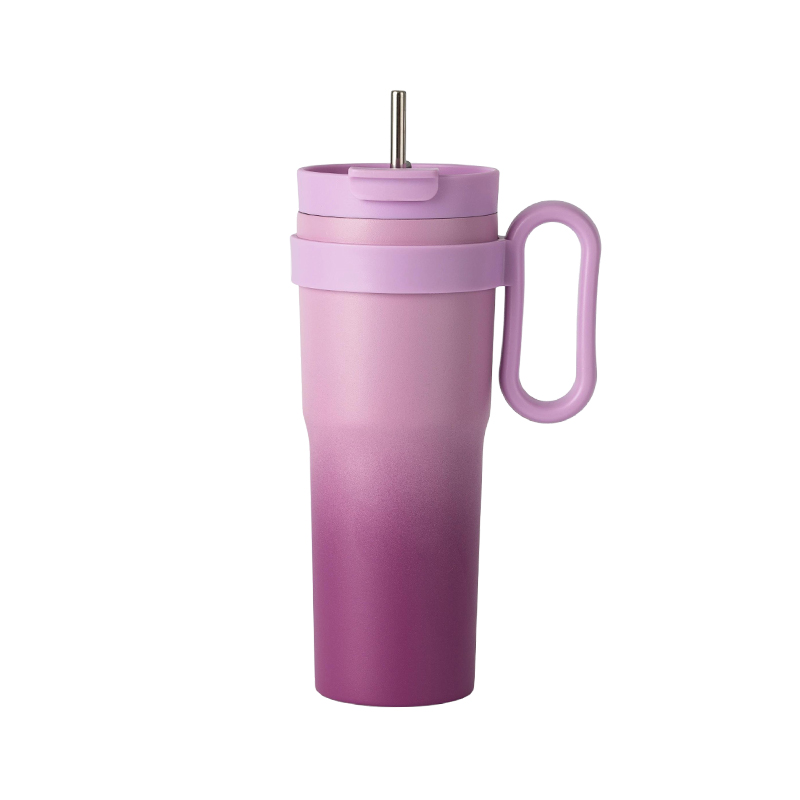
Understanding shipping is where most first-time importers lose money. Here is the simplified framework:
FOB Pricing Explained
"FOB Ningbo" (Free on Board) means the factory delivers your goods to the Ningbo port and loads them onto the vessel. From that point, you bear the cost and risk. Your total landed cost = FOB unit cost + ocean freight + destination port fees + US customs duty + domestic delivery.
US Import Duty on Tumblers
Stainless steel vacuum-insulated tumblers fall under HTS code 9617.00.00 (vacuum flasks and vessels). The standard MFN tariff rate is 1.8% of the FOB value. Important for 2026: Section 301 tariffs on goods from China have varied. Confirm the current effective tariff rate with your customs broker before calculating your landed cost — it can significantly affect your margin.
Sea Freight vs Air Freight
- Sea freight (LCL): $350–$700 for 200–500 units to US West Coast. Transit time 18–22 days from Ningbo. Use for bulk restocking orders.
- Air freight: $1.80–$3.50/kg. A carton of 50 tumblers (approx. 18 kg) costs $32–$63 to air freight. Use for initial sample orders or urgent restocking.
- Express courier (DHL/FedEx/UPS): For sample orders of 10–30 pieces. Cost $80–$180 for a box of 20 tumblers. Transit 5–7 days door-to-door.
Packaging Considerations
Standard export packaging: individual polybags + master carton (typically 24 or 48 units). If you want branded retail packaging (individual gift boxes with your logo), add $0.30–$0.80/unit and factor in extra volume/weight. Retail packaging increases carton dimensions and may shift your sea freight from LCL to a different rate bracket. Hongming handles all packaging specifications and provides carton dimension data for freight quoting before you commit.
Step 7: The OEM Order Process — What to Expect
Here is how a typical first-time OEM order flows at Hongming:
- Inquiry: Send us your product spec (size, color, lid type, customization method, quantity target). We provide a quote within 24 hours.
- Samples: Order 3–10 samples of your chosen SKUs. Sample lead time is 7–10 days. Cost $8–$15/sample + shipping. Sample cost is credited toward your first bulk order.
- Artwork approval: Submit your logo in vector format (AI or PDF). We send a digital mockup for approval. For powder coat + laser engraving, we produce a physical branded sample for final approval.
- Deposit: We require 30% deposit to start production, 70% balance before shipment. T/T (bank transfer) and PayPal accepted for small orders; L/C available for orders above $10,000.
- Production: 15–25 days depending on order size. We provide production photos at midpoint and final QC report before shipment.
- Shipment: We book freight on your behalf (and invoice at cost) or hand off to your nominated freight forwarder.
The total timeline from confirmed order to US delivery is 40–55 days for sea freight. Plan your inventory accordingly — for a product launching in Q4, place your first order no later than September 1.
Building a Sustainable Tumbler Business: The First 12 Months
The brands that succeed long-term in the tumbler market share a few common practices:
Month 1–3: Test and Learn
Start with 200–500 pieces in 2–3 colors. Sell through one channel (Amazon, Shopify, or direct wholesale to local gyms/studios). Get real customer feedback on color preferences, lid functionality, and durability. Do not over-invest in custom packaging until you know what is selling.
Month 4–6: Narrow and Double Down
Identify your top 1–2 colors and discontinue the rest. Increase your reorder quantity to 1,000–2,000 pieces to unlock better unit pricing. If you are selling on Amazon, reinvest 20–30% of revenue into PPC to build keyword ranking. If direct-to-consumer, build your email list.
Month 7–12: Differentiate
This is when custom tooling investment starts to make sense. A custom lid shape, a proprietary color only you carry, or a branded carry sleeve creates moats that competitors cannot easily copy. Most successful tumbler brands invest in at least one differentiating product feature by month 9–12.
Why Work with Hongming
Hongming manufactures custom insulated tumblers from Yongkang, Zhejiang — the global center of vacuum-insulated drinkware production, where over 70% of the world's tumblers are made. We have supplied OEM manufacturing to brands across the US, Europe, and Australia, from startups placing 200-piece first orders to distributors moving 50,000-piece annual volumes.
What this means for your business:
- Low entry barrier: MOQ 100 pieces for standard ODM products — you can test the market without a five-figure commitment.
- Full customization stack: Powder coating, laser engraving, UV printing, heat transfer, and custom packaging — all in-house.
- Certified quality: FDA, LFGB, and CA Prop 65 test reports on all standard products.
- Transparent logistics: We provide carton specs, HS codes, and freight coordination so you are never guessing at your landed cost.
- Responsive communication: WhatsApp-direct factory contact, not a trading company middleman.
Related guides: Bulk Powder Coated Tumblers Guide | Powder Coating vs UV Printing | How to Find the Right Factory in China | MOQ Guide: First Order from China