
Quick answer: Yes — titanium is completely waterproof and chemically inert to water at any temperature. Its natural TiO₂ oxide surface is self-repairing and stable from pH 0 to pH 14, which means carbonated drinks (sparkling water pH 3.5–4.0), kombucha (pH 2.5–3.5), and even cola (pH 2.5) cause zero reaction with titanium. No corrosion, no metallic taste, no surface etching — ever. Here is the material science behind why, and how titanium compares to stainless steel, aluminum, and plastic when you put acidic carbonated beverages inside.
What Does "Waterproof" Mean for a Water Bottle Material?
When people ask if titanium is waterproof, they usually mean one of two things:
- Does water get through the bottle? — That is a question about manufacturing quality (welds, seals, lid gaskets), not material.
- Does the material react with water or corrode over time? — This is the more interesting question, and the one this article answers.
For context: iron rusts in water (iron + oxygen + water → iron oxide). Aluminum oxidizes in water, forming a dull surface layer. Copper turns green in water (verdigris). Each of these reactions produces ions that migrate into your drink.
Titanium does none of these things. Here is why.
The Science: Why Titanium Doesn't React With Water
When titanium metal contacts oxygen — whether in air or dissolved in water — it instantly forms a thin, dense layer of titanium dioxide (TiO₂) on its surface. This oxide layer is:
- Self-repairing — if you scratch titanium, the oxide layer re-forms within milliseconds on contact with air or water.
- Thermodynamically stable — TiO₂ has a Gibbs free energy of formation of −944 kJ/mol. This means it is one of the most energetically stable oxide compounds known. It does not spontaneously dissolve or react further.
- Chemically inert across the full pH range — TiO₂ is amphoteric (slightly soluble in both very strong acids and very strong bases), but this only becomes relevant at extreme pH values far outside the range of any food or beverage. Food beverages span pH 2–8. Titanium's oxide is stable well beyond this range.
In practical terms: titanium's surface essentially does not interact with water or any water-based beverage. This is why titanium is used in:
- Submarine hulls and marine propellers (seawater immersion for decades)
- Chemical processing reactors (handling concentrated acids)
- Offshore oil platform hardware (saltwater, hydrogen sulfide, extreme temperatures)
- Dental implants and hip replacements (permanent contact with bodily fluids)
If titanium can handle submarine service and surgical implantation, your sparkling water is not going to challenge it.
What Happens When You Put Carbonated Drinks in a Titanium Bottle
Carbonated drinks get their fizz from dissolved CO₂ gas. When CO₂ dissolves in water, it forms carbonic acid:
CO₂ + H₂O → H₂CO₃ (carbonic acid)
Carbonic acid is a weak acid — it partially dissociates into H⁺ and HCO₃⁻ ions. The typical pH of common carbonated beverages:
| Beverage | pH | Acidity Comparison |
|---|---|---|
| Sparkling / mineral water | 3.7–4.5 | Mildly acidic |
| Club soda | 3.7–4.0 | Mildly acidic |
| Kombucha | 2.5–3.5 | Moderately acidic |
| Sparkling lemonade | 2.5–3.2 | Moderately acidic |
| Cola (Coca-Cola, Pepsi) | 2.4–2.6 | Strongly acidic |
| Energy drinks | 2.6–3.3 | Strongly acidic |
Now compare this to titanium's corrosion resistance range: pH 0–14. Even cola at pH 2.4 sits comfortably within titanium's stability window. The carbonic acid molecules simply encounter the TiO₂ surface and cannot find anything to react with.
Result: zero corrosion, zero metallic taste, zero ion migration into your drink.
How Carbonated Drinks Behave in Other Bottle Materials
To understand why titanium's performance is notable, here is what happens with other common bottle materials:
304 Stainless Steel + Carbonated Drinks
304 SS uses a chromium oxide (Cr₂O₃) passive layer for corrosion protection. This layer is stable at pH 4–14 but starts to thin and become less protective below pH 4. Carbonic acid in sparkling water (pH 3.7–4.5) sits right at the edge of this range.
For short-term use (a few hours), 304 SS handles carbonated drinks fine. For long-term storage (overnight, 24+ hours), especially with more acidic carbonated beverages like kombucha or cola, there is a risk of trace surface etching. This is why soda manufacturers don't use 304 SS for carbonated beverage packaging.
316 Stainless Steel + Carbonated Drinks
316 SS adds 2–3% molybdenum, which extends corrosion resistance to pH 2–14. This makes 316 significantly better than 304 for acidic carbonated beverages. Cola at pH 2.4 is right at the edge of 316's resistance range, but sparkling water and kombucha are handled well.
For daily use with sparkling water or kombucha, 316 SS is adequate. For cola stored overnight, titanium remains the better choice.
Aluminum + Carbonated Drinks
Uncoated aluminum reacts readily with carbonic acid and citric acid in carbonated beverages. This is why all aluminum beverage cans have an epoxy or BPA-based liner — the aluminum itself cannot safely contact carbonated drinks. If you have an aluminum water bottle and put soda in it, you will taste the difference within hours. Never use an unlined aluminum bottle for carbonated beverages.
BPA-Free Plastic + Carbonated Drinks
Food-grade plastics (Tritan, HDPE, polypropylene) do not react chemically with carbonated beverages. However, CO₂ permeates through plastic faster than through metal, so carbonated drinks go flat faster in plastic bottles. Plastic also absorbs odors and flavors over time, which can affect the taste of fizzy drinks stored repeatedly in the same bottle.
Full Material Comparison for Carbonated Drinks
| Material | Corrosion Resistance (pH) | Safe for Sparkling Water | Safe for Kombucha (pH 2.5–3.5) | Safe for Cola (pH 2.4) | Metallic Taste Risk |
|---|---|---|---|---|---|
| Grade 1 Titanium | pH 0–14 | ✅ Yes | ✅ Yes | ✅ Yes | None |
| 316 Stainless Steel | pH 2–14 | ✅ Yes | ✅ Yes | ⚠️ Short-term | Very low |
| 304 Stainless Steel | pH 4–14 | ✅ Yes | ⚠️ Short-term | ⚠️ Not recommended | Low risk |
| Aluminum (unlined) | pH 5–8 | ❌ No | ❌ No | ❌ No | High risk |
| Copper | pH 6–8 | ❌ No | ❌ No | ❌ No | High risk |
| Tritan / BPA-free Plastic | N/A (no oxide) | ✅ Yes | ✅ Yes | ✅ Yes | None (but odor absorption) |
The Self-Repairing Oxide Layer: Titanium's Hidden Superpower
Here is what really sets titanium apart from every other metal in drinkware: its oxide layer is self-repairing in real time.
When stainless steel's chromium oxide layer is scratched — say, by a metal straw, a cleaning brush, or dropping the bottle — the exposed iron underneath begins to oxidize in the presence of acid and oxygen. With repeated scratching over months of use, a 304 SS bottle's interior can develop micro-pits that harbor bacteria and potentially leach trace iron ions into acidic beverages.
When titanium's TiO₂ layer is scratched, it re-forms completely within milliseconds on contact with oxygen. The scratch you made doesn't exist anymore, chemically speaking. The surface reverts to the same stable, inert state it was in before. This is why:
- Titanium implants never need to be replaced due to surface corrosion — they look the same after 20 years in the body as the day they were implanted.
- Titanium marine hardware lasts indefinitely in saltwater, while stainless steel hardware eventually corrodes and needs replacement.
- Titanium drinkware maintains its food-safety properties over years of heavy use — a titanium flask you bought 10 years ago is just as chemically inert as a new one.
Practical Takeaways for Carbonated Drink Users
If you regularly drink sparkling water, kombucha, seltzer, or other carbonated beverages, here is what these material science facts mean for you:
- Titanium is the safest choice for any carbonated beverage, at any acid level, for any duration of storage. No exceptions, no caveats.
- 316 stainless steel is an excellent second choice for most carbonated drinks — sparkling water, kombucha, and sparkling juice all handled well. Avoid cola stored overnight.
- 304 stainless steel is fine for same-day sparkling water but not for repeatedly storing acidic sodas or kombucha for hours.
- Never use unlined aluminum for carbonated drinks — the reaction is real and produces aluminum ions that enter your beverage.
- Plastic works chemically but loses carbonation faster and absorbs odors over time.
Our Titanium Flasks — Safe for Everything You Drink
Both titanium flasks we manufacture at Hongming use Grade 1 pure titanium with a bare titanium interior — no liners, no coatings, no chemicals between you and the metal. The science guarantees zero reaction with water, carbonated drinks, milk, coffee, or anything else in the food-safe pH range.
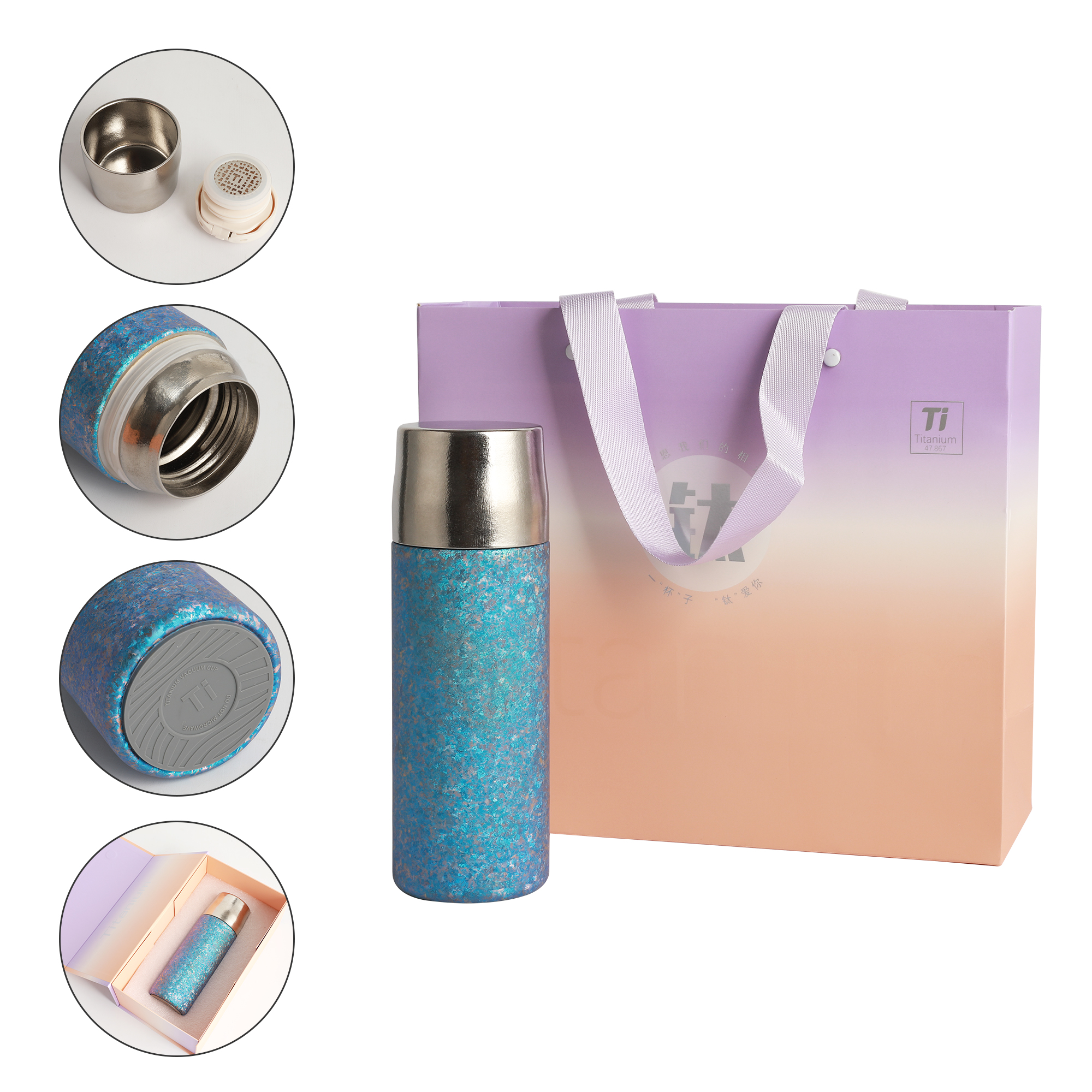
- Colorful Spray Titanium Flask — 300ml, ~180g, double-wall vacuum insulated
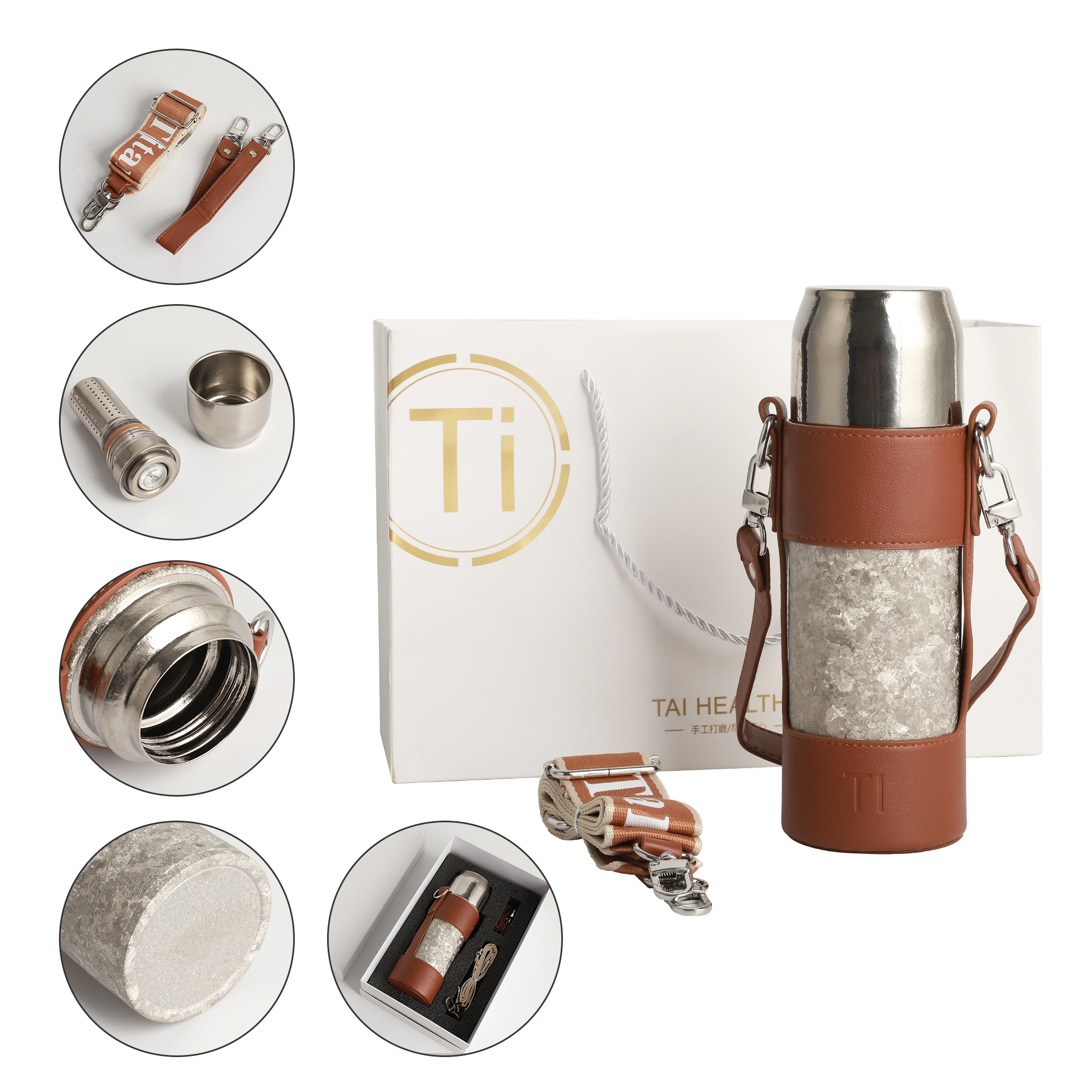
- Hammered Titanium Flask with Leather Sleeve — 500ml, ~280g, gift-ready
Both are 100% safe for sparkling water, kombucha, carbonated juice, soda, milk, coffee, and tea — guaranteed by the chemistry of Grade 1 titanium, not just a marketing claim.
Frequently Asked Questions
Is titanium waterproof?
Can you put sparkling water in a titanium bottle?
Does titanium react with water?
What happens if you put soda in a stainless steel bottle?
Can you use a titanium bottle for fizzy drinks like kombucha?
Is titanium better than stainless steel for carbonated drinks?
Order Grade 1 Titanium Flasks
100% safe for carbonated drinks, milk, and all food-contact beverages. MOQ 50 pcs, OEM available.
Get a Quote →