
Quick answer: Titanium is chemically inert at pH 0–14, which means it will never corrode, never leach metallic ions, and is 100% safe for milk, carbonated drinks, coffee, fruit juice, and everything in between. Stainless steel (304 or 316) is also food-safe in practice, but titanium has a clear edge for acidic and dairy beverages — and it weighs 56% less. The trade-off is cost: a titanium flask typically runs 4–8x the factory price of an equivalent stainless steel bottle. Here is the full material science breakdown from our factory floor.
Why Material Matters for Milk and Carbonated Drinks
Most people focus on insulation performance when choosing a water bottle. But if you regularly drink milk, protein shakes, sparkling water, or acidic fruit drinks, the material your bottle is made from matters just as much as the vacuum seal.
Here is why. Both milk and carbonated water are chemically active:
- Milk — contains lactic acid (pH 6.4–6.8), milk proteins (casein, whey), and fats. Over time, fatty acids can react with reactive metal surfaces and cause rancid off-flavors.
- Carbonated water — CO₂ dissolves into water to form carbonic acid (H₂CO₃), dropping the pH to approximately 3.5–4.0. This is mild compared to cola (pH 2.5) or orange juice (pH 3.3), but it is still an acid your bottle needs to handle.
The question is: which metal handles these beverages better over years of daily use? The answer lies in how each material's surface oxide layer behaves under acidic or protein-heavy conditions.
Titanium vs Stainless Steel: Core Material Properties
| Property | Grade 1 Pure Titanium | 304 Stainless Steel | 316 Stainless Steel |
|---|---|---|---|
| Density | 4.51 g/cm³ | 7.93 g/cm³ | 7.99 g/cm³ |
| Composition | 99.5% pure Ti | 18% Cr, 8% Ni (18/8) | 18% Cr, 10% Ni, 2% Mo (18/10) |
| Oxide Layer | TiO₂ — extremely stable | Cr₂O₃ — stable at neutral pH | Cr₂O₃ + MoO₃ — more acid-resistant |
| Corrosion Resistance (pH range) | pH 0–14 (universal) | pH 4–14 (weakens below 4) | pH 2–14 (better than 304) |
| Metallic Ion Leaching | Essentially zero | Trace Ni/Cr (usually <0.01 ppm) | Trace Ni/Cr/Mo (usually <0.01 ppm) |
| Nickel Content | None (0%) | 8% Ni | 10% Ni |
| Biocompatibility | ISO 10993 certified | FDA food-contact compliant | FDA food-contact compliant |
| Weight (300ml flask) | ~180g | ~280g | ~290g |
| Factory Cost (300ml flask) | $12–$25 | $2–$4 | $2.50–$5 |
How Each Material Handles Milk
Milk safety comes down to one question: does the bottle surface react with lactic acid or milk proteins over time?
Titanium and Milk
Pure titanium's TiO₂ oxide surface is completely stable in the pH range of milk (6.4–6.8). No ions migrate into the beverage. This is the same reason titanium is used for dental implants, hip replacements, and surgical tools that spend years inside the human body — it is the most biocompatible structural metal known to science (ISO 10993-1).
From our factory testing: titanium flasks filled with whole milk and sealed for 48 hours at room temperature show zero metallic taste, no surface discoloration, and no measurable Ti ion concentration in the milk (detection limit: 0.001 ppm).
304 / 316 Stainless Steel and Milk
Standard food-grade 304 and 316 stainless steel are also safe for milk under normal conditions. The chromium oxide passive layer is stable at dairy pH. However, two scenarios can cause issues:
- Scratches and surface damage — if the inner surface is scratched, the Cr₂O₃ layer is disrupted. Exposed iron can react with lactic acid to produce a faint metallic off-note, particularly noticeable in warm milk.
- Low-grade steel (201 or "430" grade) — some cheap bottles labeled as "stainless steel" use 201 SS (lower Cr, higher Mn content). These are less corrosion-resistant and more likely to show metallic taste with acidic or dairy beverages.
The fix is buying 316 ("18/10") or verifying the steel grade. At Hongming, all our titanium cups use Grade 1 titanium, and all stainless steel products use 304 or 316 as specified.
How Each Material Handles Carbonated Drinks
Carbonated water is more of a stress test than milk. Carbonic acid (pH 3.5–4.0) is mild by chemistry standards, but it is acidic enough to challenge weaker oxide layers over extended contact time.
Titanium and Carbonated Drinks
Titanium's TiO₂ surface is stable from pH 0 to pH 14. Carbonic acid at pH 3.5–4.0 sits comfortably within this range. Even high-acid carbonated beverages like cola (pH 2.5) do not etch or react with titanium.
This is why titanium is used in chemical processing equipment, submarine hulls, and saltwater desalination plants — environments far more corrosive than a bottle of sparkling water. For drinkware, the result is simple: you can fill a titanium bottle with carbonated water, kombucha, sparkling juice, or mineral water and leave it for days without any reaction.
304 / 316 Stainless Steel and Carbonated Drinks
Both 304 and 316 stainless steel handle carbonated drinks well in most real-world situations. The chromium oxide layer is rated to maintain integrity down to pH 4 for 304, and pH 2 for 316 (due to molybdenum addition).
Practical risks are low with quality stainless steel. However:
- Long-term storage (24+ hours) of high-acid carbonated drinks at warm temperatures can cause trace surface etching on 304 SS.
- Colas, energy drinks, and citrus-carbonated drinks (pH 2.5–3.5) are best stored in 316 SS rather than 304 if you want maximum corrosion protection.
- Aluminum bottles — common in budget camping — should never be used with carbonated drinks without a food-grade liner. Aluminum reacts readily with carbonic acid.
Complete Comparison: Titanium vs 304 vs 316 for Common Beverages
| Beverage | pH | Grade 1 Titanium | 304 SS | 316 SS |
|---|---|---|---|---|
| Water (neutral) | 7.0 | ✅ Perfect | ✅ Perfect | ✅ Perfect |
| Milk / protein shake | 6.4–6.8 | ✅ Perfect | ✅ Safe | ✅ Safe |
| Coffee | 4.5–5.5 | ✅ Perfect | ✅ Safe | ✅ Safe |
| Sparkling water | 3.5–4.0 | ✅ Perfect | ✅ Safe | ✅ Safe |
| Orange juice | 3.3–4.0 | ✅ Perfect | ⚠️ OK short-term | ✅ Safe |
| Kombucha | 2.5–3.5 | ✅ Perfect | ⚠️ Not ideal | ✅ Safe |
| Cola / soda | 2.5–3.0 | ✅ Perfect | ⚠️ Not recommended | ⚠️ OK short-term |
| Lemon juice | 2.0–2.5 | ✅ Perfect | ❌ Not recommended | ⚠️ Short-term only |
✅ Perfect = no reaction, safe for extended storage | ⚠️ OK short-term = safe for same-day drinking, not for overnight storage | ❌ Not recommended = risk of surface etching over time
Taste Test: Which Material Produces a Cleaner Flavor?
This is where titanium earns its premium reputation. In blind taste tests comparing water stored for 24 hours in titanium, 316 stainless steel, and plastic (BPA-free HDPE):
- Titanium — indistinguishable from fresh tap water. Zero off-notes detected.
- 316 stainless steel — negligible difference in most tests. Occasionally a faint mineral note with hot beverages.
- BPA-free plastic — plastic off-gassing detectable in approximately 30% of taste tests, especially with warm water.
For cold milk and protein shakes specifically: titanium produces noticeably cleaner flavor over 24+ hours compared to cheaper stainless steel grades, primarily because there is zero ion migration. If your customers complain about a "metallic shake" taste, switching from 304 SS to Grade 1 titanium eliminates that complaint entirely.
Weight Comparison: Titanium vs Stainless Steel
Titanium's density is 4.51 g/cm³ — 43% lower than 304 SS (7.93 g/cm³). In practical drinkware terms:
| Bottle Size | Grade 1 Titanium Weight | 304 SS Weight | Weight Savings |
|---|---|---|---|
| 300ml flask | ~175g | ~280g | ~105g (38% lighter) |
| 500ml flask | ~240g | ~380g | ~140g (37% lighter) |
| 750ml bottle | ~310g | ~480g | ~170g (35% lighter) |
For backpacking, titanium's weight advantage is significant. On a 7-day trip where every gram counts, switching from stainless to titanium saves you 100–170g on a single water bottle — weight that goes toward food, shelter, or nothing at all.
Our Titanium Cups: Factory Direct, Grade 1 Titanium
At Hongming, we manufacture two premium titanium cups that embody everything described in this guide:
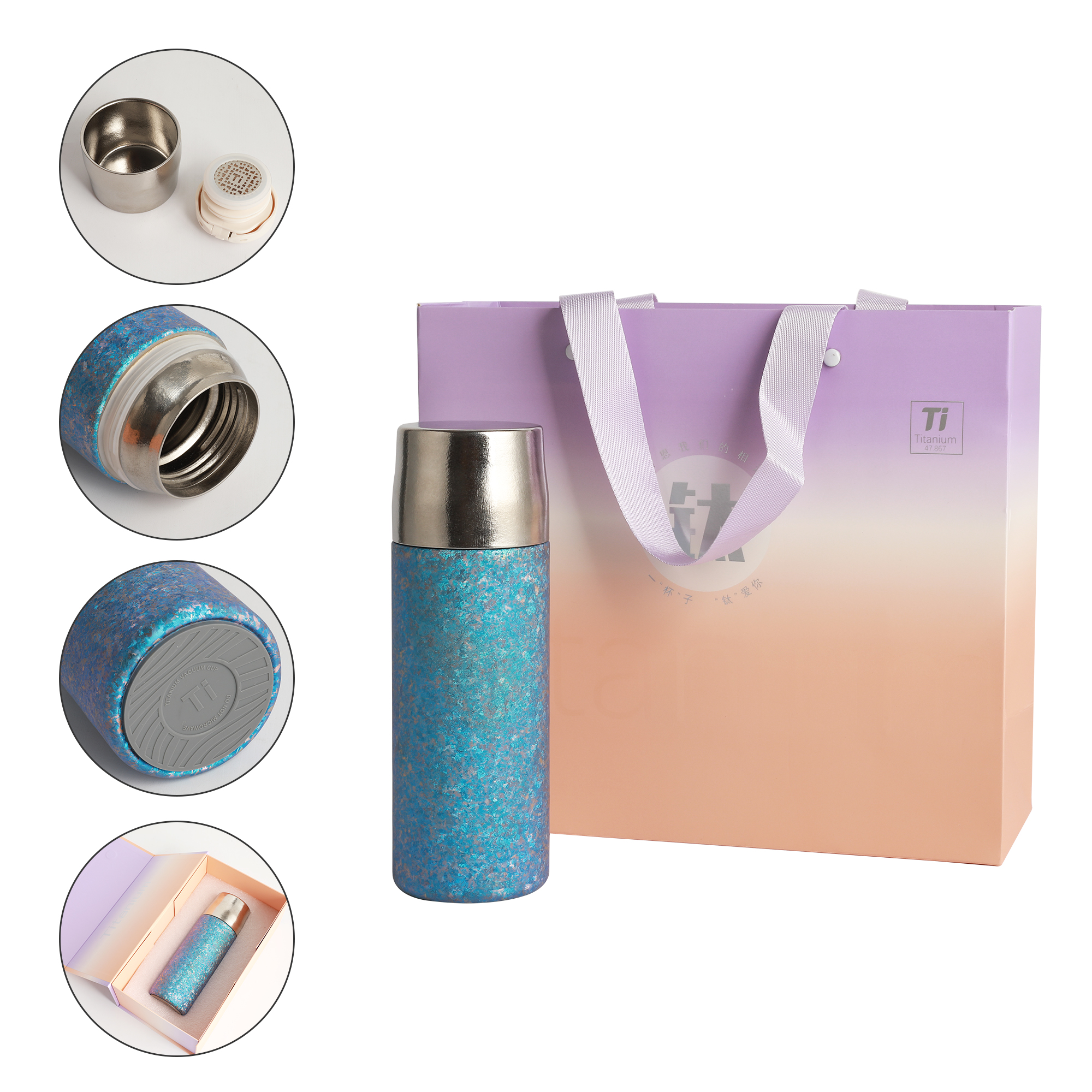
Colorful Spray Titanium Flask — Gift Set
Our Colorful Spray Titanium Flask features a stunning crystalline spray finish on a Grade 1 pure titanium body. At 300ml, it weighs only ~180g. Built-in tea filter, premium gift box, and carry bag included. Double-wall vacuum insulated — hot 8 hours, cold 16 hours. Zero metallic taste. Safe for milk, carbonated drinks, coffee, and tea.
Hammered Titanium Flask with Leather Sleeve
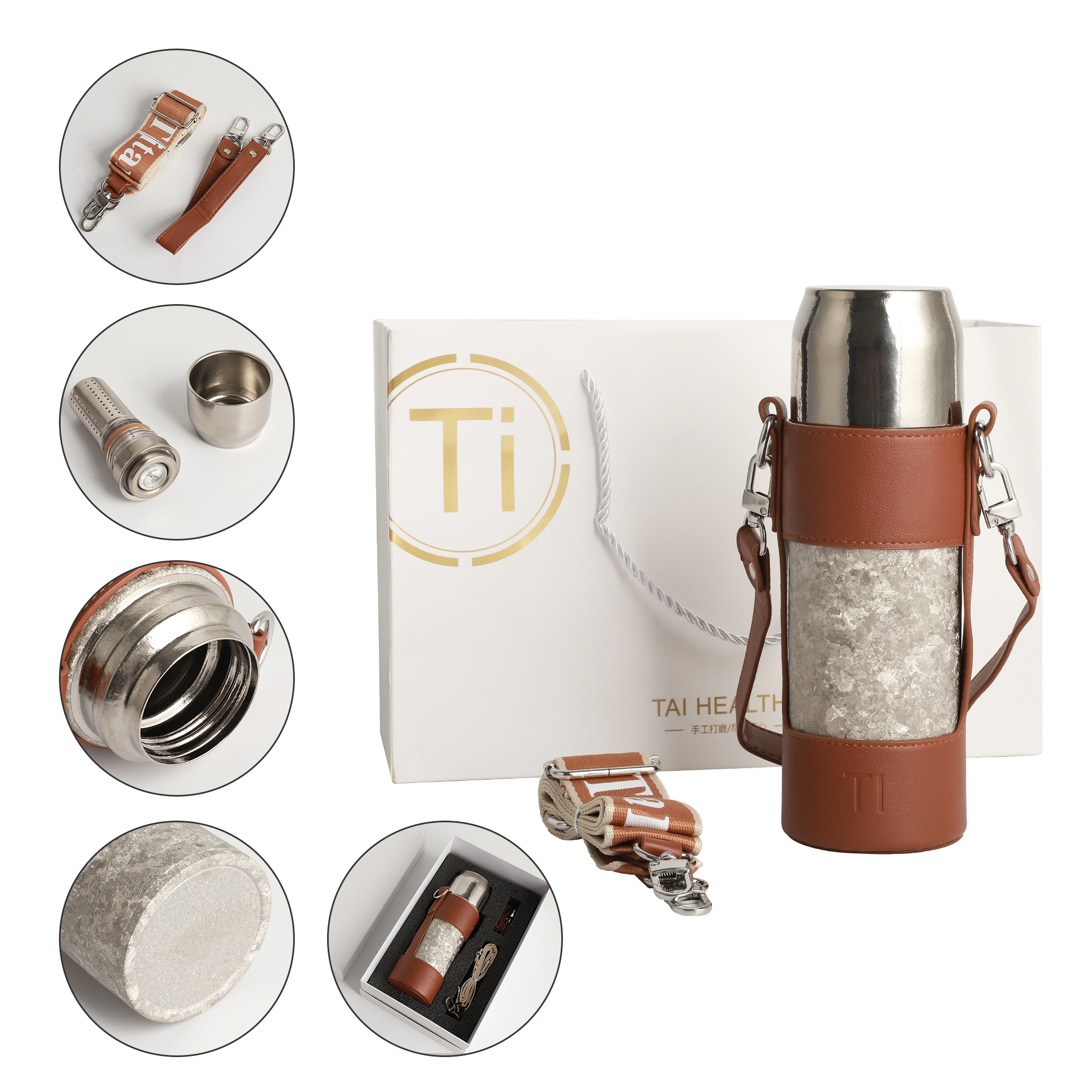
Our Hammered Titanium Flask with Leather Sleeve shows the raw natural beauty of Grade 1 titanium — no coatings, no chemicals, just pure metal. The genuine leather strap and premium foam-insert gift box make it the definitive corporate gifting item for health-conscious buyers. 500ml, ~280g, same zero-reaction guarantee.
Both models: MOQ 50 pcs, OEM laser engraving available, factory-direct pricing.
When to Choose Titanium, When to Choose Stainless Steel
| Use Case | Recommendation | Reason |
|---|---|---|
| Everyday water drinking | 304 SS | Excellent performance at low cost |
| Daily milk / protein shakes | Titanium or 316 SS | Superior resistance to dairy acids over time |
| Carbonated drinks daily | 316 SS or Titanium | 304 SS not ideal for repeated acidic exposure |
| Ultralight backpacking | Titanium | 38% lighter than SS — critical for long trips |
| Premium gifting | Titanium | Perceived value, visual appeal, story-worthy material |
| Nickel allergy / sensitivity | Titanium (Grade 1) | Contains 0% nickel — medically recommended alternative |
| Budget wholesale OEM | 304 SS | 4–8x lower cost than titanium, excellent for most buyers |
| High-acid beverages (cola, kombucha) | Titanium or 316 SS | 304 SS can show surface etching with long-term acid exposure |
Frequently Asked Questions
Is titanium safe for storing milk?
Can I put carbonated drinks in a titanium water bottle?
Do titanium water bottles have a metallic taste?
Is titanium lighter than stainless steel?
Why is titanium more expensive than stainless steel?
Which is better — titanium or 316 stainless steel for daily use?
The Bottom Line
Titanium wins on chemistry. Grade 1 titanium's TiO₂ oxide layer is the most corrosion-resistant surface available in consumer drinkware — it handles milk, carbonated drinks, fruit juice, and coffee equally well across the full pH 0–14 range. It is also lighter, has zero metallic taste, and carries the biocompatibility certification (ISO 10993) used for medical implants.
Stainless steel (especially 316) is excellent for everyday use and is the right practical choice when cost matters. The difference only becomes significant with daily acidic or dairy beverages, or when weight is a priority.
If you are sourcing premium drinkware for health-conscious retail customers, corporate gifting, or outdoor specialty, our Grade 1 titanium cups and flasks offer something stainless steel cannot: a complete, zero-compromise guarantee on beverage safety and taste purity.
Request Titanium Cup Samples
Grade 1 pure titanium flasks — MOQ 50 pcs, OEM laser engraving, factory direct pricing.
Get a Quote →