
When sourcing stainless steel tumblers, the steel grade is the single most important material decision. It determines food safety, corrosion resistance, durability, and cost. Yet it is also the most commonly misrepresented specification in the drinkware industry — budget suppliers frequently sell 201 steel labeled as "food-grade stainless steel" without specifying the actual grade.
As a manufacturer that processes over 50 tons of stainless steel per month, Hongming has deep expertise in steel grades. This guide gives you the real data — chemical composition, corrosion test results, and practical sourcing advice — so you can make informed decisions.
The Three Grades: Composition and Properties
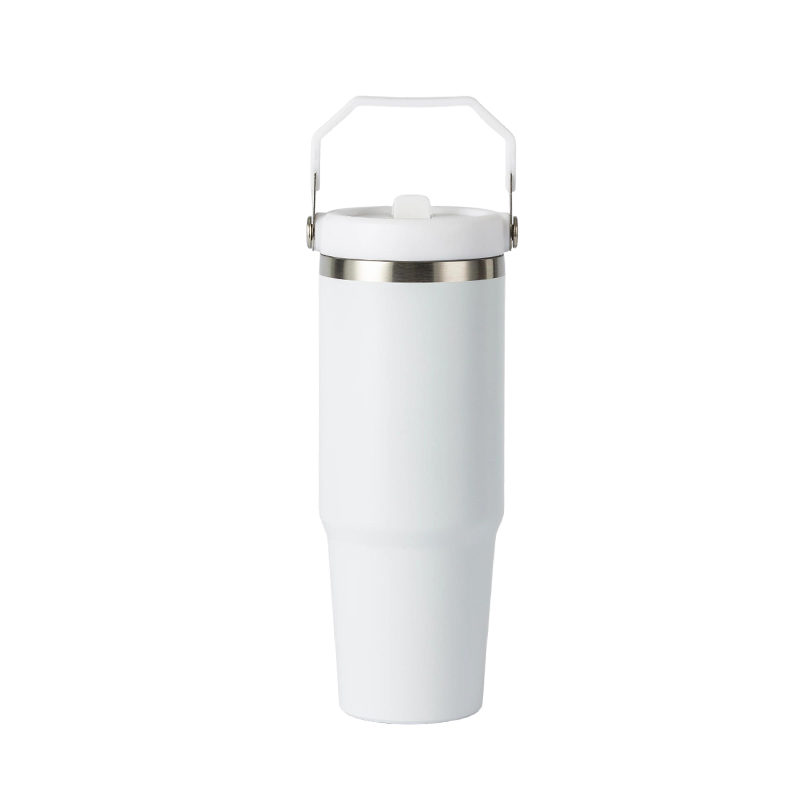
| Property | 201 (Budget) | 304 / 18-8 (Standard) | 316 / 18-10 (Premium) |
|---|---|---|---|
| Chromium (Cr) | 16-18% | 18-20% | 16-18% |
| Nickel (Ni) | 3.5-5.5% | 8-10.5% | 10-14% |
| Manganese (Mn) | 5.5-7.5% | ≤2% | ≤2% |
| Molybdenum (Mo) | None | None | 2-3% |
| Corrosion resistance | Fair | Very good | Excellent |
| Food safety | Acceptable (water only) | Excellent (all beverages) | Best (acidic drinks) |
| Cost per kg (raw steel) | $1.50-2.00 | $2.50-3.00 | $3.50-4.50 |
| Cost impact per tumbler | Baseline | +$0.30-0.50 | +$0.80-1.20 |
The key difference: nickel content. 304 has 8-10.5% nickel vs. 201's 3.5-5.5%. Nickel is expensive (approximately $16,000/ton in 2026) — this is why 201 exists: manufacturers replace expensive nickel with cheap manganese to cut costs. But manganese does not provide the same corrosion resistance, which is the problem.
Corrosion Testing: Real Factory Data
We conducted accelerated corrosion tests on polished samples of all three grades under controlled conditions:
Test 1: Citric Acid Immersion (Simulating Fruit Juice)
5% citric acid solution at 40°C, immersed for 72 hours.
| Grade | Surface Change | Metal Migration (Cr, Ni, Mn) |
|---|---|---|
| 201 | Visible pitting (12+ spots per cm²) | Mn: 0.42 mg/L, Cr: 0.18 mg/L |
| 304 | Minor surface dulling, 1-2 pits per cm² | Cr: 0.05 mg/L, Ni: 0.02 mg/L |
| 316 | No visible change | All below detection limit |
Test 2: Salt Spray Test (ASTM B117)
5% NaCl spray at 35°C, continuous exposure.
| Grade | First Rust Spots | Significant Corrosion |
|---|---|---|
| 201 | 48 hours | 200 hours |
| 304 | 200 hours | 500+ hours |
| 316 | 500+ hours | 1,000+ hours |
When to Use Each Grade
201 — Avoid for Drinkware
We do not recommend 201 for any food-contact drinkware. It exists in the market solely because it is cheaper, but the corrosion and metal migration risks do not justify the savings of $0.30-0.50 per unit. The only acceptable use for 201 in drinkware: outer walls of double-wall tumblers (where it never contacts liquid). Some factories use 201 outer + 304 inner to save cost — this is acceptable if disclosed.
304 — The Industry Standard (90% of Quality Drinkware)
304 is the right choice for most adult drinkware: tumblers, water bottles, beer cups, office mugs. It handles water, coffee, tea, beer, and even mildly acidic drinks (like diluted lemon water) without any safety concerns. Cost-effective and widely available. All Hongming adult drinkware uses 304.
Best for: Car tumblers, beer tumblers, office mugs, outdoor bottles.
316 — Premium Choice for Kids and Acidic Beverages
316 is worth the premium ($0.50-0.80 per unit) in these specific cases:
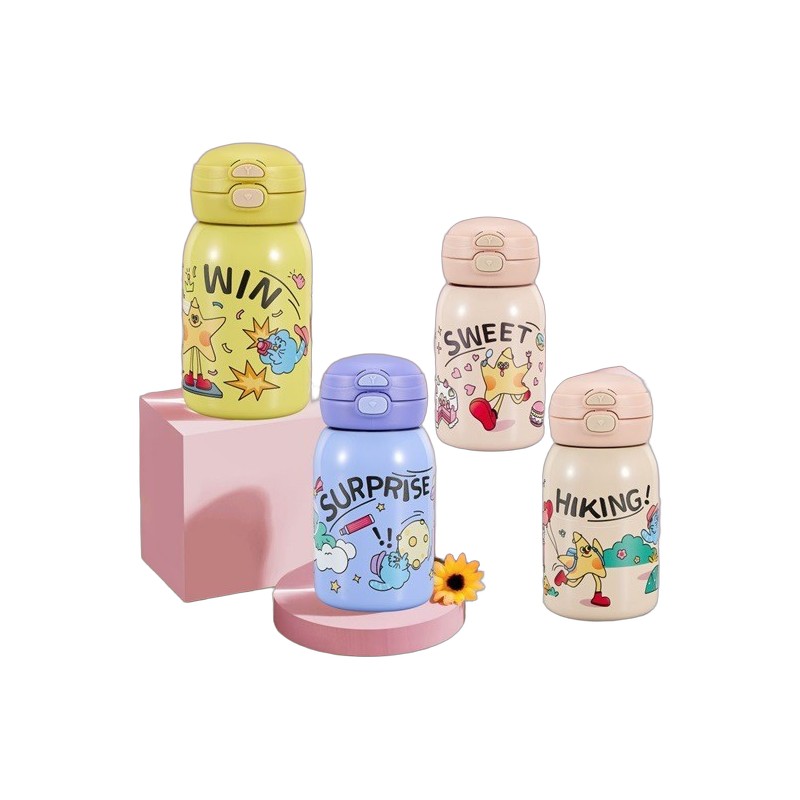
- Kids cups — Children drink juice, flavored milk, and acidic beverages frequently. 316's superior acid resistance provides an extra safety margin. All Hongming kids cups offer a 316 option.
- Premium/health brands — Brands targeting health-conscious consumers can use "surgical grade 316 stainless steel" as a marketing differentiator.
- Cocktail/wine tumblers — Acidic cocktail ingredients (citrus, wine, bitters) make 316 a better long-term choice.
- Marine/coastal use — Salt air accelerates corrosion on 304; 316's molybdenum provides much better resistance.
How to Verify Steel Grade: Protect Yourself from Fraud
Steel grade misrepresentation is the #1 quality fraud in the Chinese drinkware industry. Here is how to protect yourself:
- Request mill certificates — Every legitimate steel supplier provides a certificate with the heat number and chemical analysis. Ask your tumbler factory for the mill cert of the specific steel coil used in your order.
- XRF testing — A handheld XRF analyzer reads the chemical composition of metal in 30 seconds. Cost: $15-25 per sample at any materials testing lab. Request your QC inspector to XRF test 3-5 random units from your shipment.
- Third-party lab testing — SGS, Bureau Veritas, and TUV all offer stainless steel grade verification as part of their pre-shipment inspection services.
- Magnet test (limited reliability) — 304 is weakly magnetic or non-magnetic; 201 is more strongly magnetic. But this test is unreliable after cold working (stamping makes both grades more magnetic).
At Hongming, we provide: Mill certificates for every order, XRF verification available on request, and open-door factory inspection policy. We never use 201 steel for food-contact surfaces, period.
Cost Comparison: Is the Upgrade Worth It?
| Product | 201 Cost | 304 Cost | 316 Cost | Recommendation |
|---|---|---|---|---|
| 30oz car tumbler | $2.80 | $3.20 | $3.80 | 304 standard, 316 optional |
| 40oz car tumbler | $3.30 | $3.80 | $4.60 | 304 standard |
| 12oz kids cup | $1.80 | $2.20 | $2.70 | 316 recommended |
| Wine tumbler (12oz) | $2.00 | $2.40 | $3.00 | 316 for wine/cocktail use |
The price difference between 304 and 316 is $0.50-0.80 per unit. For a product retailing at $20-40, this is a negligible cost increase that can be marketed as a premium feature. The difference between 201 and 304 is only $0.30-0.50 — never worth the quality and safety compromise.
Get a Material-Specific Quote →
Related guides: 304 vs 316 Stainless Steel | Safe Kids Water Bottle Guide | Glass vs Stainless vs Ceramic