
When sourcing insulated tumblers for wholesale, the single most important technical specification is the insulation method. Not all "double wall" tumblers are created equal. The difference between a tumbler that keeps ice for 24 hours and one that fails at 6 hours comes down to whether there is a true vacuum between the walls — and how well that vacuum is maintained.
This guide explains the engineering behind double wall vacuum insulation, how to evaluate quality when sourcing from China, and what price points indicate genuine vacuum construction versus shortcuts.
How Double Wall Vacuum Insulation Works
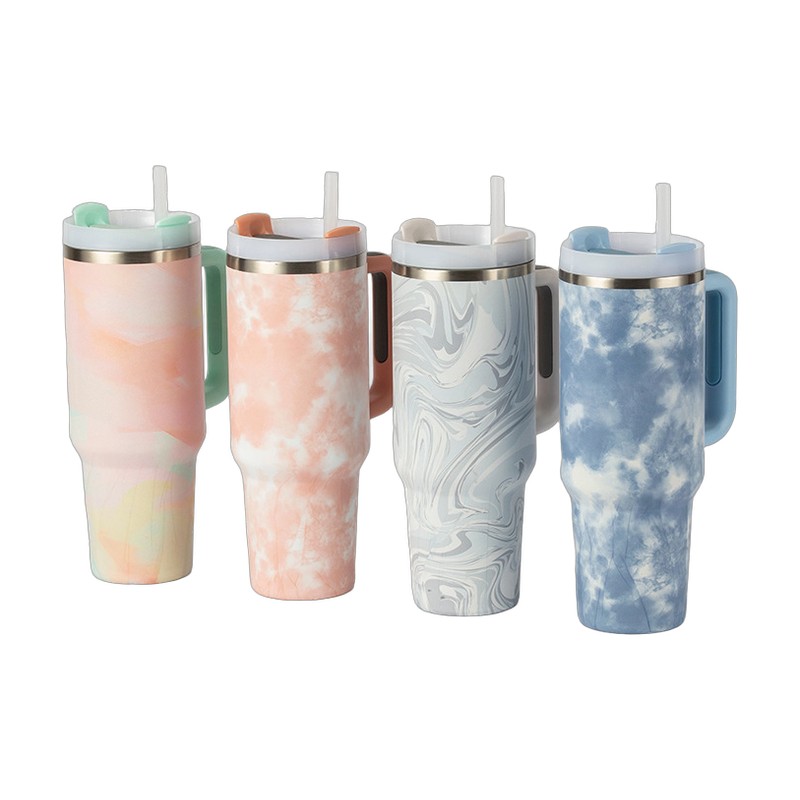
A vacuum-insulated tumbler consists of two separate stainless steel cylinders — an inner wall (food contact surface) and an outer wall (shell). The gap between them is evacuated to create a near-perfect vacuum (typically below 0.01 Pa). This eliminates two of the three heat transfer mechanisms:
- Conduction: Eliminated — no molecules in vacuum to conduct heat from inner to outer wall
- Convection: Eliminated — no air molecules to create convective currents
- Radiation: Still present — heat radiates across the vacuum gap. Premium models use copper or reflective coatings on the inner surface of the outer wall to further reduce radiative heat transfer by up to 30%.
The result is a thermal barrier that outperforms any solid insulation material by a factor of 3-5x. A properly sealed vacuum tumbler keeps ice for 24+ hours in ambient conditions (25°C), while a foam-insulated or air-gap tumbler manages only 6-8 hours.
Vacuum vs Air Gap vs Foam: The Three Tiers
| Feature | Vacuum (Premium) | Air Gap (Budget) | Foam (Low-End) |
|---|---|---|---|
| Ice Retention | 24+ hours | 6-8 hours | 3-5 hours |
| Hot Retention | 10-12 hours | 3-4 hours | 1-2 hours |
| Outer Wall Temp | Room temp | Warm | Warm-hot |
| Weight (30oz) | ~360-400g | ~300-340g | ~280-320g |
| FOB Price (30oz) | $3.50-$4.50 | $1.80-$2.50 | $1.20-$1.80 |
| Lifespan | 5-10+ years | 1-3 years | 6-12 months |
| Brands Using | Stanley, YETI, Hydro Flask | Amazon basics, generic | Dollar store, disposable |
The key insight for wholesale buyers: consumers can immediately feel the difference. When they pick up a vacuum tumbler with cold water and the outside feels room temperature, they recognize quality. An air-gap tumbler feels cold on the outside — instant perception of "cheap." This directly impacts return rates and repeat purchase rates.
Manufacturing Process: Where Quality Diverges
The vacuum creation process is where manufacturer quality separates. Here is how we produce vacuum tumblers at Hongming:
- Inner and outer wall forming: 304 or 316 stainless steel sheets are deep-drawn into cylinders using hydraulic presses. Wall thickness: 0.5mm inner, 0.4mm outer.
- Welding: Inner and outer walls are joined at the rim using automated orbital welders. This weld must be airtight — any micro-leak means vacuum failure over time.
- Vacuum evacuation: A small port hole in the bottom allows connection to a vacuum pump. Air is evacuated to below 0.01 Pa. The port is then sealed with a copper plug using high-frequency brazing.
- Vacuum verification: We use a helium leak detector to verify seal integrity. Any tumbler that shows leak rate above 10⁻⁸ Pa·m³/s is rejected.
- Temperature test: A sample from each batch is tested with 100°C water. After 6 hours, the outer wall temperature must be below 35°C at 25°C ambient.
The critical failure points are steps 2 and 3. Factories that use manual welding and skip helium testing produce tumblers that work initially but develop vacuum leaks within months. These factories quote 30-50% lower prices — and that is exactly why their prices are lower.
How to Evaluate Vacuum Quality When Sourcing
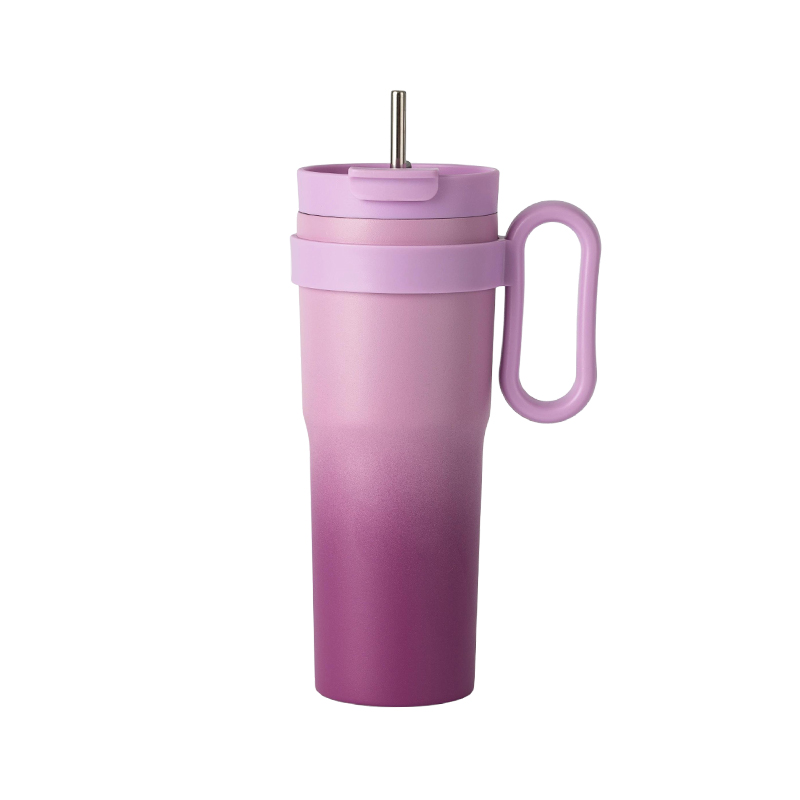
Before committing to a large order, request samples and perform these tests:
- Boiling water test: Fill with boiling water. Wait 5 minutes. The outer wall should be completely room temperature to the touch. Any warmth = vacuum failure or air-gap construction.
- 24-hour ice test: Fill with ice water. After 24 hours, there should still be ice remaining. Most genuine vacuum tumblers retain 60-70% of the ice after 24 hours in a 25°C environment.
- Weight check: A genuine 30oz vacuum tumbler should weigh approximately 360-400g. Significantly lighter suggests thinner walls (less durable, less insulation).
- Ask for test reports: Request the factory's vacuum testing protocol and helium leak detection certificates. Factories that invest in this equipment ($20,000-50,000 per unit) are serious about quality.
- Price reality check: If a 30oz vacuum tumbler is quoted below $2.50 FOB, it is almost certainly not a true vacuum construction. Genuine vacuum requires expensive equipment, slower production, and higher rejection rates.
Copper Lining: The Premium Upgrade
Some premium vacuum tumblers add a copper or reflective coating on the inner surface of the outer wall. This reduces radiative heat transfer by reflecting infrared energy back toward the inner wall. The performance improvement is measurable: approximately 10-15% longer ice retention.
At Hongming, we offer copper lining as an upgrade option on all models. The additional cost is approximately $0.30-$0.50 per unit. While not necessary for standard performance, it is a meaningful differentiator for brands competing in the premium segment against Stanley and YETI.
Wholesale Pricing by Insulation Tier
| Quantity | 30oz Vacuum (304SS) | 40oz Vacuum (304SS) | 30oz Copper-Lined |
|---|---|---|---|
| 100-499 pcs | $4.20-$5.00 | $5.50-$6.50 | $4.80-$5.50 |
| 500-999 pcs | $3.80-$4.50 | $5.00-$5.80 | $4.30-$5.00 |
| 1,000-4,999 pcs | $3.50-$4.20 | $4.50-$5.50 | $4.00-$4.70 |
| 5,000+ pcs | $3.00-$3.80 | $4.00-$5.00 | $3.50-$4.30 |
All prices are FOB Yongkang/Ningbo and include standard powder coating finish. Custom colors, printing, and packaging are additional. See our full pricing guide for add-on costs →
Why "Double Wall" Alone Is Not Enough
Be cautious when a supplier describes their tumbler as simply "double wall" without explicitly stating "vacuum insulated." The term "double wall" only means the tumbler has two walls — it says nothing about what is between them. Many budget suppliers use this ambiguity intentionally.
Always ask: "Is the gap between the walls vacuum-sealed, air-gap, or foam-filled?" If the supplier cannot clearly answer this question, consider it a red flag.
At Hongming, every tumbler we produce is genuine vacuum-insulated with helium leak-tested seals. We do not manufacture air-gap or foam-insulated products because we believe the long-term cost of returns, negative reviews, and brand damage is not worth the short-term savings.
Request vacuum tumbler samples — test our insulation performance yourself. We ship samples within 3 business days.
Related guides: Vacuum Insulation Technology Deep Dive | 304 vs 316 Stainless Steel Guide | Factory Quality Control Guide