
Last Updated: 2026-10-12 · Written by the Hongming production and QA team, Yongkang, Zhejiang
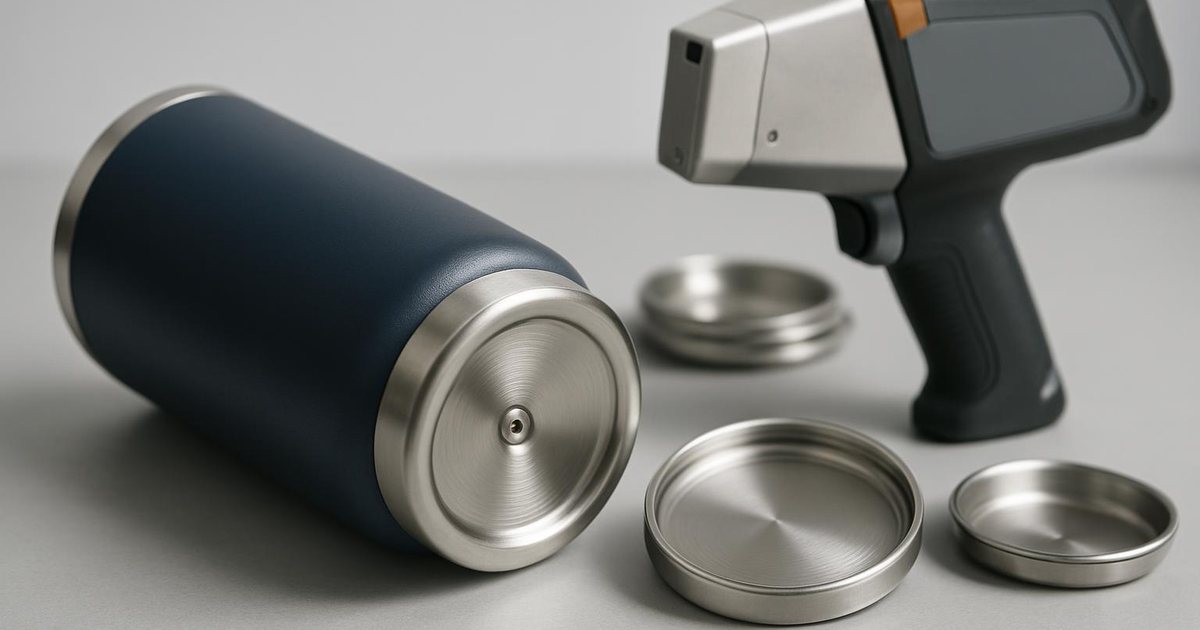
Quick answer: Most insulated stainless tumblers have no lead in anything you drink from. The 304 or 316 steel walls, the lid and the straw are not where lead lives. The one place it can hide is the vacuum sealing pellet: a small blob of alloy that closes the evacuation hole on the outer base, under a stainless or coated base cap. Stanley confirmed in January 2024 that its industry-standard pellet "includes some lead". Lead-free sealing alloys exist. The only way to know which one a factory uses is to put it in your purchase order and check it with an XRF reading on the uncovered seal.
Key takeaways
- 1 component, 0 food contact: the sealing pellet sits on the outside of the inner wall, under a base cap. Liquid never touches it in an intact tumbler.
- Food-contact reports miss it: an FDA, LFGB or migration test on the cup interior says nothing about the pellet. You have to test the base seal itself.
- 100 ppm and 90 ppm: the US CPSIA limits for lead in accessible children's product parts and in surface coatings. A tin-lead pellet reads in the percent range, hundreds of times above either.
- Kids' cups are the real risk: if a drop test can pop the base cap, the pellet counts as accessible under 16 CFR 1500.87. For anything aimed at children 12 and under, specify lead-free sealing.
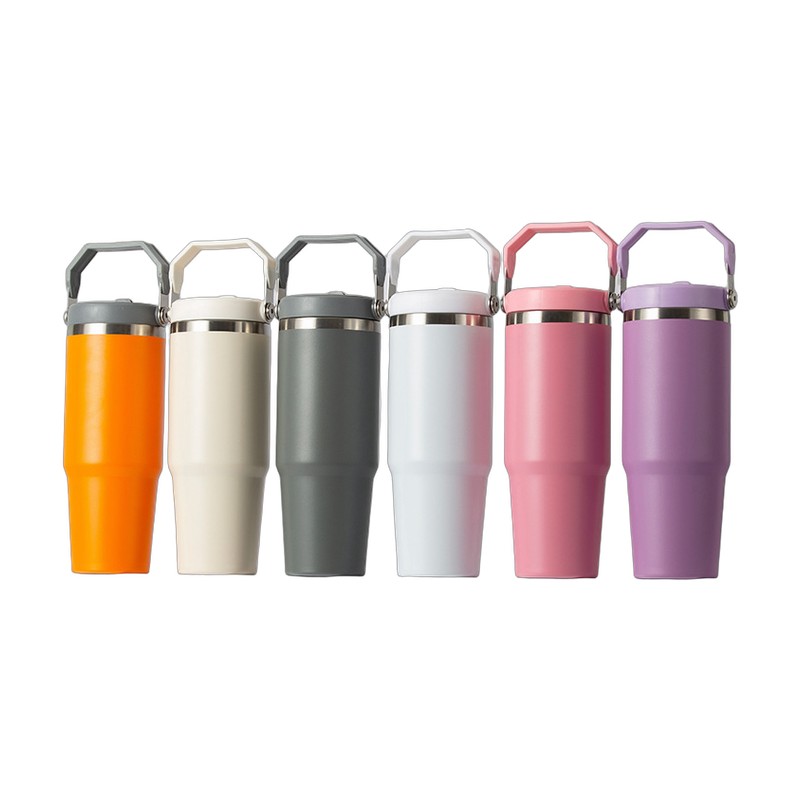
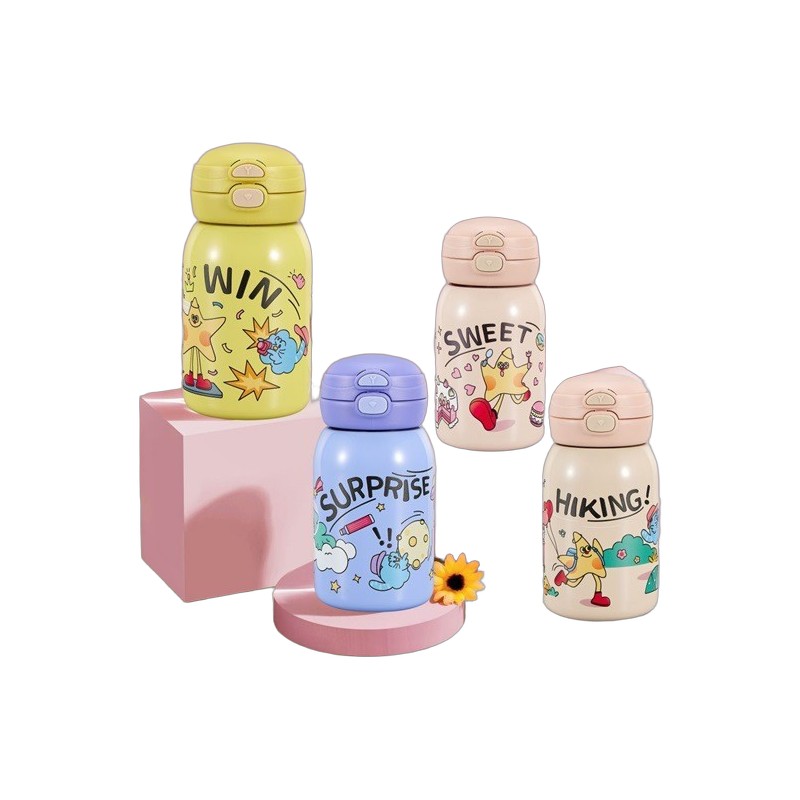
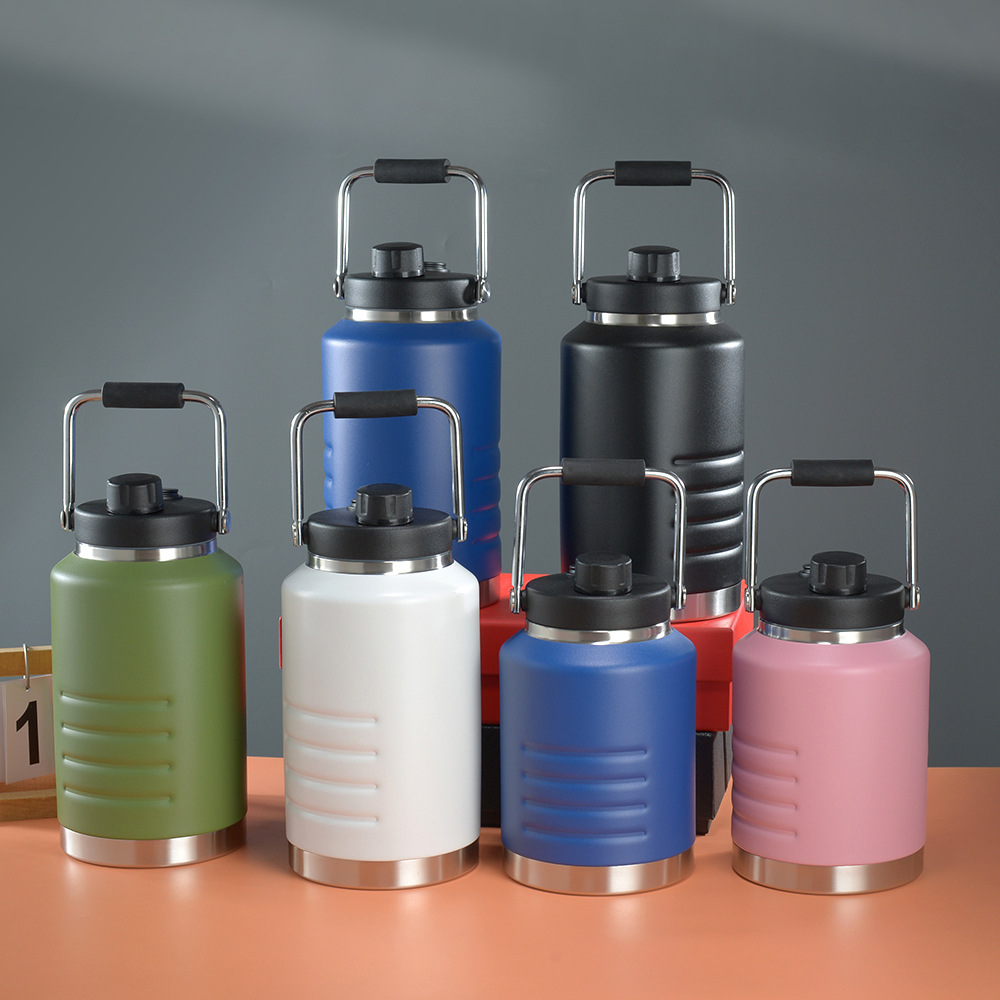
We make vacuum drinkware for private-label brands, and since the Stanley story went viral the question has shown up in buyers' first emails as often as MOQ does. Most of what ranks for it is news coverage of one company's statement. What follows is the factory-floor version: where the lead is, why it is there, what each market's rules actually say, and the purchase-order wording that gets you a lead-free seal you can prove.
Where the Lead Sits in a Vacuum Tumbler
A vacuum tumbler is two stainless steel cups, one inside the other, welded together at the rim. The 2-4 mm gap between them is what keeps your ice frozen, and it only works if the air is gone. Our guide to how vacuum insulation works explains the physics. The point here is the manufacturing step.
Modern tumblers are sealed "tailless". Older flasks used a copper evacuation tube that was crimped shut and left a small tail. Today, there is a small hole in the outer bottom shell instead. A pellet of sealing alloy is placed over that hole and the bodies go into a vacuum furnace. As the furnace heats up, air is pumped out of the gap through the hole. At peak temperature the pellet melts, flows into the hole and closes it. When the bodies cool, the vacuum is locked in. A stamped stainless cap, a powder-coated cap or a rubber foot then covers the spot.
The pellet is the only lead question, because of what the alloy has to do. It must:
- Stay solid while the furnace pulls the vacuum and drives gas out of the steel, then melt cleanly at a predictable temperature.
- Wet stainless steel well enough to seal a hole tightly enough to hold a vacuum for years.
- Survive thousands of hot-and-cold cycles without cracking.
Lead-bearing solders did all three cheaply and forgivingly for decades. That is why Stanley called its pellet "industry standard". A lead-safety advocate who tested tumblers after the story, Tamara Rubin, reported finding similar covered pellets in insulated cups from other brands.
| Part of the tumbler | Can it contain lead? | Touches your drink? | Test that actually checks it |
|---|---|---|---|
| Inner wall (304 / 316 stainless) | Not a practical source | Yes | FDA / LFGB metal migration on the interior |
| Vacuum sealing pellet | Yes, if a tin-lead alloy is used | No, it is outside the inner wall and under a cap | XRF or ICP on the uncovered seal (cap removed) |
| Exterior powder coat / paint | Possible with some pigments | No, but hands and lips touch the rim area | 16 CFR 1303 (90 ppm) / Prop 65 surface test |
| Printed decor, metallic or brass-look finishes | Possible | No | XRF screen, then lab confirmation |
| Lid, straw, gasket (PP, Tritan, silicone) | Not a typical source | Yes | 21 CFR plastics / LFGB migration |
Look at the right-hand column. The report most brands collect, a food-contact migration test on the cup, is built to ignore the base seal, because the seal is not a food-contact surface. A tumbler can pass FDA and LFGB with a lead pellet inside. Our drinkware compliance testing guide covers what each of those reports does check.
Is the Lead Pellet Actually Dangerous?
For an adult using an intact tumbler, the exposure route is hard to find. Stanley's own statement makes the same point: the pellet is covered by a stainless layer and is only exposed if the product is damaged. We agree with that, and we also think it leaves out three real-world cases we see in return data:
- The base cap comes off. Push-fit caps can loosen after drops or years of dishwasher heat. Once the cap is gone, the pellet is a bare metal dot that hands touch every time the tumbler is picked up. Our dishwasher testing guide shows how hot water trapped under a cap attacks the base area.
- The product is a kids' cup. Children drop cups, chew on bases and put fingers in their mouths. That is exactly the scenario US and EU children's rules are written for (next section).
- The seal fails and someone "fixes" it. When a tumbler loses its vacuum, the cause is often at the sealing point (see our lost-vacuum failure guide). Consumers prying caps off to look is how many of the viral photos happened.
The commercial risk is bigger than the medical one. A brand that cannot answer "does your cup have lead?" with a document loses the customer either way. Since early 2024, retail buyers and Amazon sellers increasingly ask for written seal-material declarations, which few asked for before.
Launching a kids' or premium line? Send us the model, quantity and target market. We will tell you which sealing option the quote is based on and which test file comes with it. Ask for a lead-free sealing quote →
What the Rules Say: US, California and EU
No rule bans a lead-bearing seal in an adult tumbler outright. The rules turn on two questions: is the part accessible? and is the product for children?
| Market / rule | Limit | Does it reach a covered seal? |
|---|---|---|
| US CPSIA Section 101, children's products (12 and under) | 100 ppm total lead in any accessible component | Only if the seal is accessible. Inaccessible parts are exempt under 16 CFR 1500.87, and accessibility is judged after the use-and-abuse tests in 16 CFR 1500.51-53 (drop, torque, tension) |
| US 16 CFR 1303, paint and surface coatings | 90 ppm (0.009%) | Applies to the powder coat or paint on the cap and body, not to the alloy underneath |
| California Proposition 65 | Exposure-based. Lead MADL 0.5 µg/day (reproductive), NSRL 15 µg/day (cancer) | Covers any exposure in normal use. A sealed, covered pellet is generally argued to be no exposure. An exposed one is not |
| EU REACH Annex XVII, entry 63 | 0.05% lead by weight in accessible parts of articles children may put in their mouths | Same accessibility logic as CPSIA |
| EU food contact (Reg. 1935/2004, metal release guidance) | Lead release limit of 0.010 mg/kg on food-contact surfaces | No, the seal is not a food-contact surface |
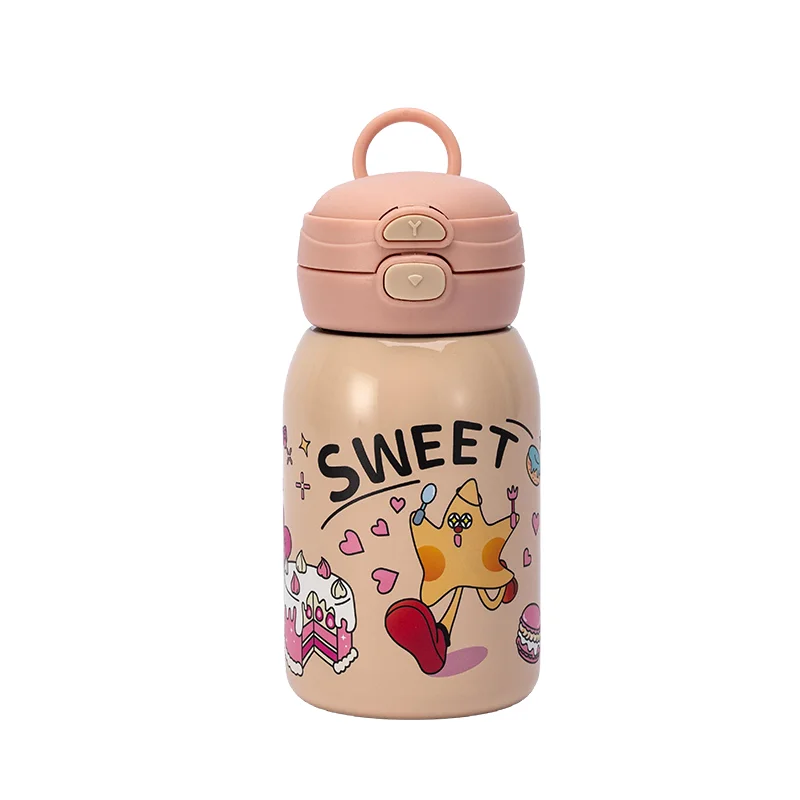
Here is the practical reading for a buyer. On an adult tumbler, a covered tin-lead seal is legal in most markets, but it is a reputational liability, and Prop 65 enforcement is driven by private plaintiffs who test products themselves. On a children's cup, everything depends on whether the cap survives the CPSC use-and-abuse sequence. A push-fit cap is far more likely to come loose in the drop test (4.5 ft for products for children up to 18 months under 16 CFR 1500.51) than a welded or crimped one. If the cap fails, the seal is accessible and must be under 100 ppm, and a tin-lead seal will miss that by a factor of hundreds. That is why we tell every kids' brand to treat lead-free sealing as a requirement, not an upgrade. Our kids' straw cup spec guide already lists it on the body spec line.
This is a manufacturer's summary, not legal advice. Confirm your product's classification with your compliance lab or counsel.
Lead-Free Sealing Options Compared
"Lead-free" does not mean the tumbler is sealed some other way. It is still a pellet over a hole in a vacuum furnace. What changes is the alloy, and every change affects the process.
| Factor | Tin-lead sealing pellet | Lead-free sealing alloy | Copper tail (pinch-off, older method) |
|---|---|---|---|
| Lead in the seal | Yes, percent level | Below 100 ppm when correctly specified | Depends on the solder used on the tail |
| Melting behaviour | Low and forgiving | Generally higher melting point, narrower window | Not furnace-melted, mechanically crimped |
| Furnace tuning needed | Mature, well known | Tighter profile control and cleaner surfaces | N/A |
| Seal reliability | Good | Good once the profile is dialled in. Watch first-batch vacuum yield | Weaker. A crimp is harder to make perfectly gas-tight |
| Appearance | Hidden under cap | Hidden under cap | Visible tail, needs a deeper cap |
| Cost impact | Baseline | Small per-unit premium, ask for it as a separate quote line | Rare in modern tumblers |
| Fit for kids' products | Avoid | Recommended | Not recommended |
Two things from the furnace side that buyers rarely hear:
- Watch vacuum yield on the first lead-free batch. Because lead-free alloys usually melt hotter with less margin, a factory switching alloys without re-profiling its furnace will see more bodies that never seal properly. Ask for 100% vacuum testing after sealing and again after a rest period. This is the same rule as in our tumbler QC testing guide.
- The premium is small next to the body cost. A 20oz powder-coated body runs about $2.60-$3.60 FOB. The alloy change is a fraction of that. If a supplier quotes lead-free sealing as a big jump, ask what else changed in the quote.
How to Verify a "Lead-Free" Claim (Without Trusting the Sales Sheet)
"Lead-free" printed on a catalogue page proves nothing. Here is the sequence we would follow ourselves, in order of cost:
- Written seal-material declaration. Ask the factory to name the sealing alloy and state its lead content on letterhead, specific to your model. A generic "our products are lead-free" email does not count.
- XRF on the uncovered seal. Take 3-5 samples, remove the base cap and put a handheld XRF analyzer directly on the sealing point. The reading takes seconds. A tin-lead seal reads in the tens of thousands of ppm, so there is no grey zone at that scale. Do this on bare bodies before coating if you can.
- Lab confirmation for children's products. For CPSIA, a CPSC-accepted lab tests the metal substrate under method CPSC-CH-E1001-08.3. XRF is a screen. The lab report is what your Children's Product Certificate cites.
- Lock it into the golden sample. Record the seal alloy and the XRF reading on the golden-sample sign-off sheet, as in our sample approval guide. Then re-check 2-3 random pieces at pre-shipment inspection. Alloy substitution between sample and bulk is the failure you are guarding against.
Purchase-order wording you can copy
The last sentence matters most. A common way compliance fails is not a factory lying at sample stage. It is a quiet alloy or supplier swap three orders later.
How to Answer "Does Your Tumbler Have Lead?" on Your Product Page
Consumers now ask this in reviews and DMs. Once you have the documents above, a short, specific answer beats a vague "lead-free!" badge:
- Name the parts: "18/8 stainless steel interior, lead-free vacuum seal, BPA-free lid."
- Say how it was verified: "Seal tested by XRF and third-party lab."
- Never write "FDA certified". It does not exist as a product certification, and it invites the wrong kind of attention.
If you compare yourself with big brands in your marketing, keep it factual. Our BrüMate vs Stanley vs Owala comparison shows how buyers weigh those brands. The seal is now one more line they compare on.
Our Recommendation by Product Type
| Product | Sealing spec | Verification |
|---|---|---|
| Kids' cups and thermoses | Lead-free, mandatory | XRF + CPSC-accepted lab + CPC, plus use-and-abuse test on the base cap |
| Powder-coated tumblers for US retail / Amazon | Lead-free, strongly recommended | XRF at sample and pre-shipment, Prop 65 file |
| Car tumblers and corporate gifts | Lead-free recommended | Seal declaration + XRF screen |
| Insulated jugs and ice buckets (adult use) | Either, disclosed in writing | Seal declaration. Use a welded or crimped base cap if tin-lead |
Related Guides
- Drinkware compliance testing: FDA, LFGB, Prop 65 and PFAS costs
- Why tumblers lose vacuum, and what the factory can control
- Leak-proof kids' straw cup OEM spec and testing
- Tumbler quality control: factory testing guide
- How vacuum insulation works in tumblers
Need a tumbler you can prove is lead-free?
Tell us the model, quantity and target market (US adult, US children's, EU). We will reply with a quote that names the sealing material, the tests included and the MOQ. Usually within one business day.