
Last Updated: 2026-10-14 · Written by the Hongming production and export team, Yongkang, Zhejiang
Quick answer: For a first bulk order of custom tumblers, the normal and reasonable structure is 30% deposit by T/T when the PO is signed, 70% balance before shipment, released only after an independent pre-shipment inspection passes. Use PayPal or Alibaba Trade Assurance for samples and orders under about $3,000, and consider a letter of credit only above roughly $30,000 to $50,000, with an inspection certificate written in as a required document. The biggest real risk is not the factory running off with a deposit. It is paying the right factory into the wrong bank account after a hacked email.
Key takeaways
- The 70% is your leverage, so tie it to inspection: book the pre-shipment inspection when production is 100% complete and at least 80% packed, and pay the balance on the report, not on the factory's "goods ready" email.
- Fees decide the method more than safety does: on a $12,600 order, two T/T wires cost about $60 to $160 in bank charges, an Alibaba card payment about $377 (2.99%), and PayPal about $555 on the seller side (4.40% + $0.30).
- An L/C pays against paper, not product: under UCP 600 Article 14 banks have up to 5 banking days to check documents. They never open a carton, so an L/C without an inspection certificate protects the documents, not the goods.
- Bank-detail fraud is the number-one loss: the FBI's 2024 IC3 report puts business email compromise losses at about $2.77 billion. Verify every new account by phone before the first wire.
Why Payment Terms Matter More on Custom Tumblers
A stock tumbler can be resold to the next buyer. A custom one mostly cannot. Once your Pantone powder is mixed, your logo is lasered and your printed boxes are delivered, the factory holds inventory that is worth very little to anyone except you. Payment terms exist to share that risk.
The deposit tells the factory you are committed before it buys order-specific inputs. The balance tells you the goods match the approved sample before you lose leverage. Every argument about payment terms is really an argument about who carries the exposure at each stage. So the right question is not "which method is safest?" but "at each step, how much has each side put in?"
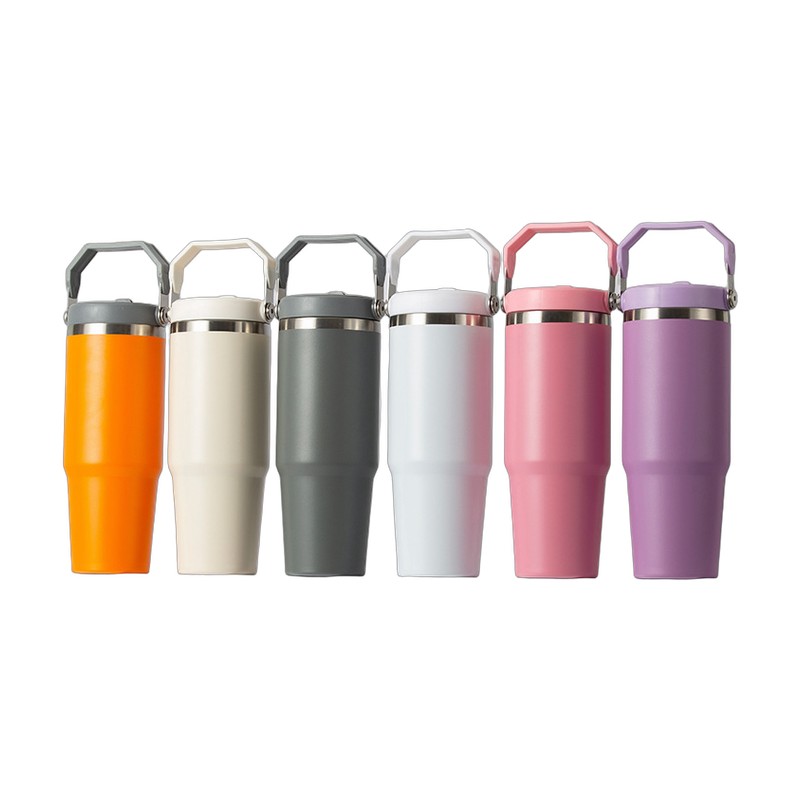
The worked example used throughout this guide: 3,000 × 30oz powder-coated tumblers with a laser logo at $4.20 FOB Ningbo = $12,600, inside the range on our powder coated tumbler pages. Deposit $3,780, balance $8,820.
Payment Methods Compared: Real Fees on a $12,600 Order
| Method | Who pays the fee | Cost on $12,600 | Buyer protection | Best for |
|---|---|---|---|---|
| T/T (bank wire), 30/70 | Each side pays its own bank; intermediary banks may deduct | About $30–$80 per wire, so $60–$160 for deposit + balance | None from the bank. Protection comes from inspection and staging | Most bulk orders from verified factories |
| Alibaba Trade Assurance (card) | Buyer | About 2.99% = $376.74 (check the current fee table) | Platform claim process for late shipment or spec mismatch, only if paid through Alibaba | First orders found on Alibaba |
| PayPal | Seller (and priced into your quote) | 4.40% + $0.30 = $554.70 | PayPal dispute process | Samples; orders under ~$3,000 |
| Letter of credit at sight | Both sides, each to its own bank | Roughly 0.5%–2% ($63–$252) plus fixed minimums, amendment and discrepancy fees | Bank pays only against compliant documents | Orders above ~$30,000–$50,000 or new relationships at scale |
| Western Union / personal accounts | Buyer | Varies | Effectively none | Never for factory orders |
The PayPal line explains a rule most buyers find arbitrary. The fee is charged to the receiver, at 4.40% plus $0.30 for commercial payments into mainland China on PayPal's published fee page. On a $3,000 order that is $132.30, which a factory can absorb. On the full $12,600 it is $554.70, often more than the margin on the order. So when we say PayPal for orders under $3,000, that is arithmetic, not distrust.
Fees for wires and card payments vary by bank, card and route, and the sources disagree. Treat the table as an order of magnitude and confirm with your bank before the first transfer.
What Your Deposit Buys: Cash at Risk, Stage by Stage
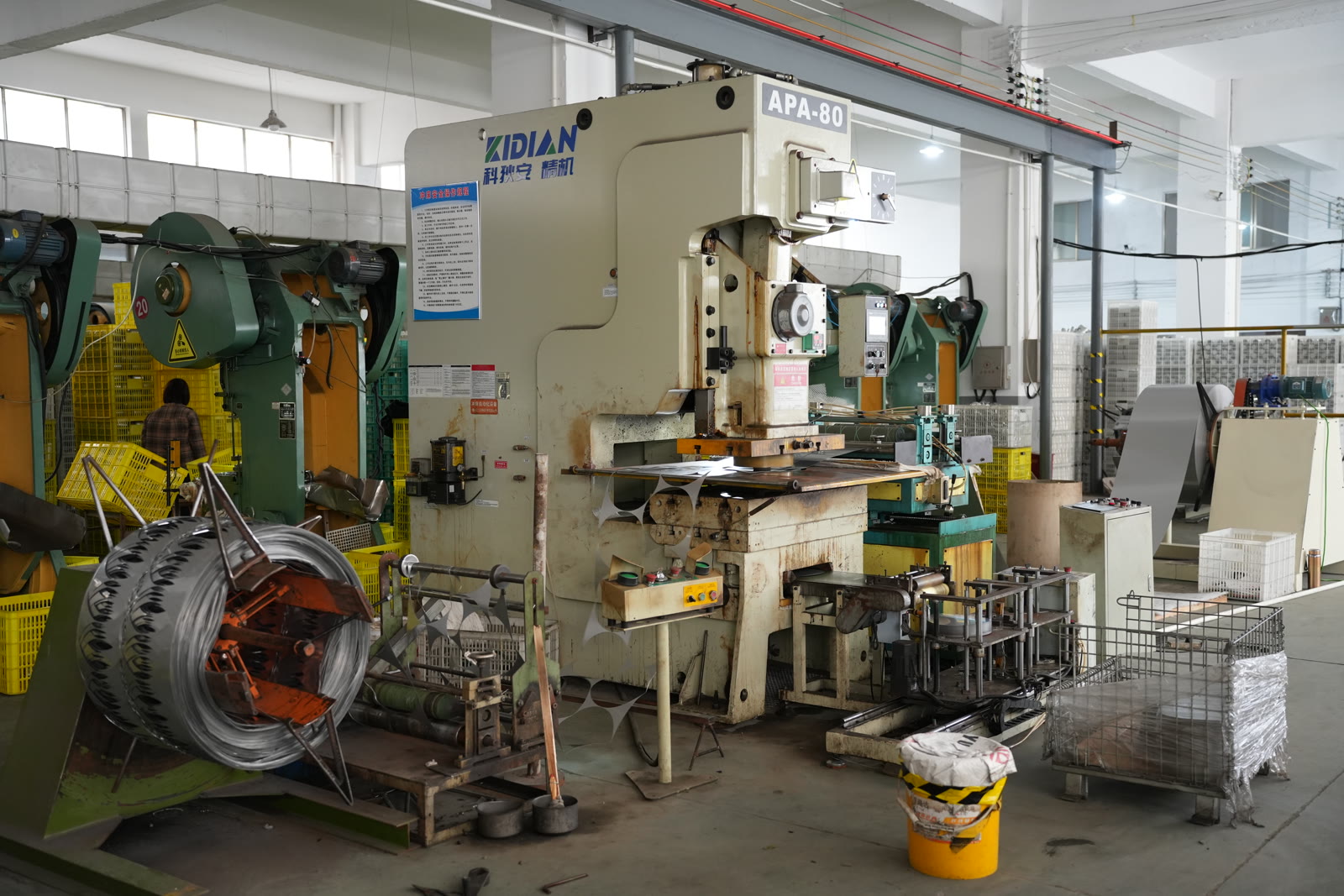
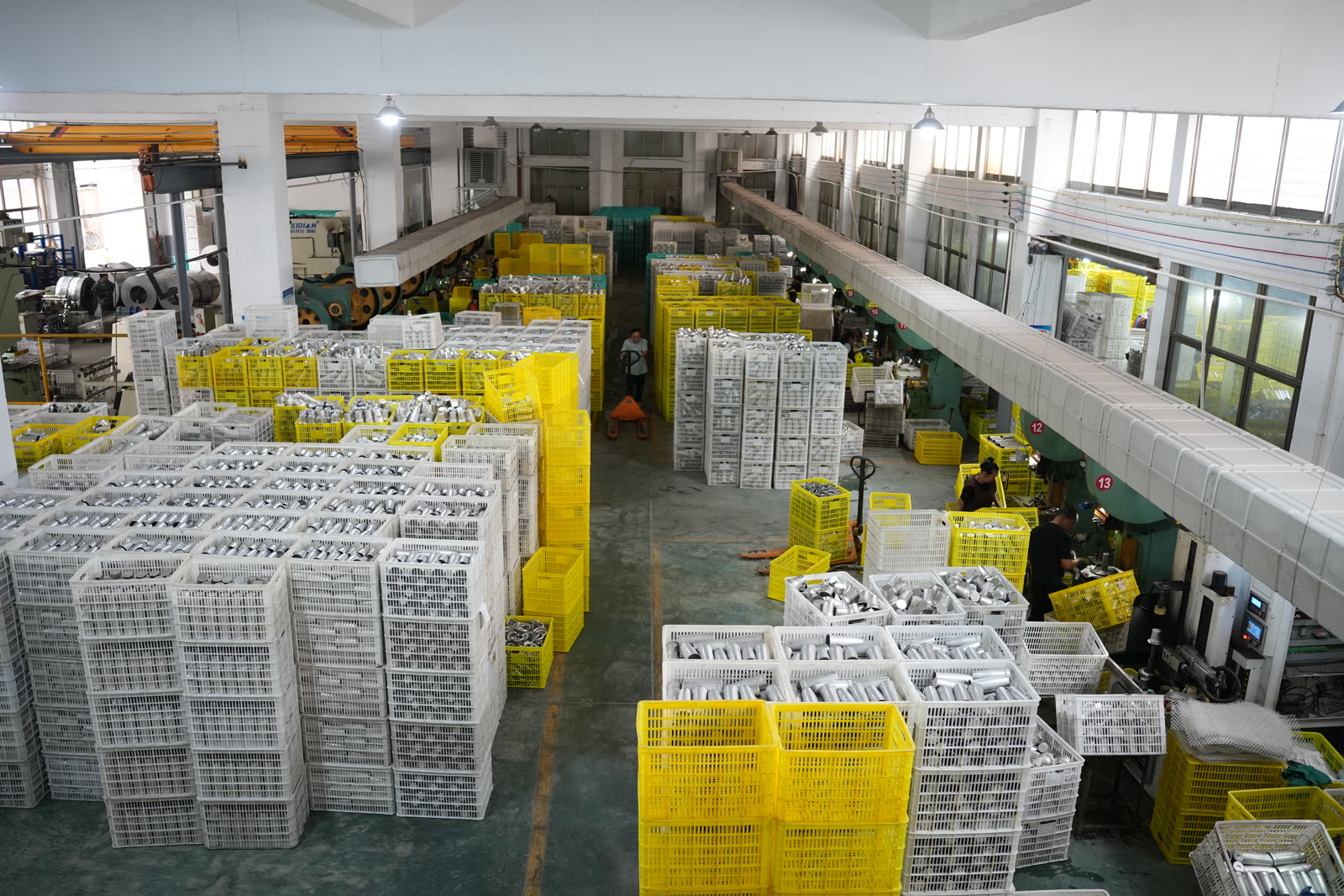
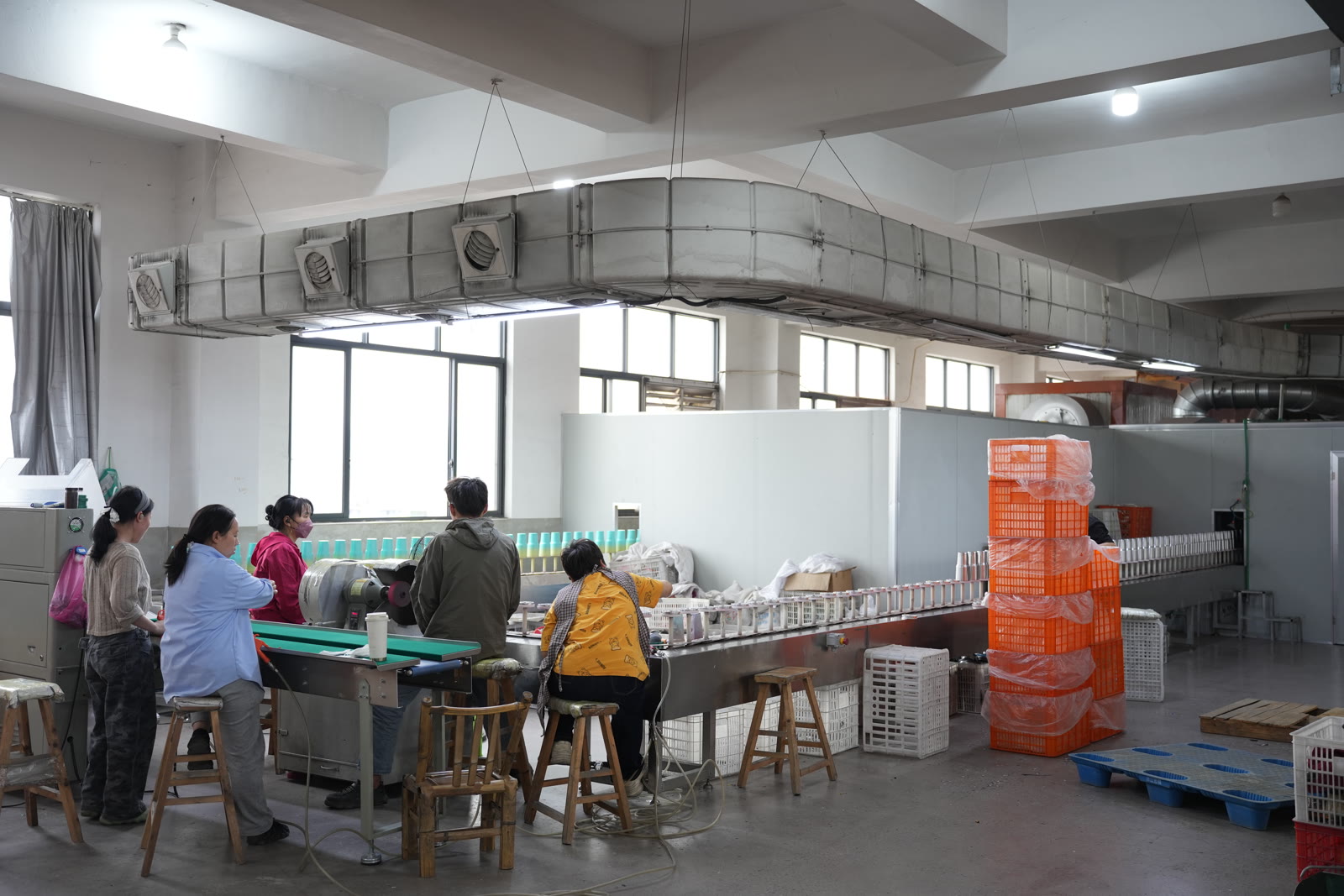
This is the table competitors leave out. It follows our standard 15–25 day production window for a custom-colour, custom-logo order after sample approval (see the golden sample approval guide for what has to be signed before Day 0).
| Stage (approx. day) | What happens | Buyer has paid | What the factory has committed | Your control point |
|---|---|---|---|---|
| PO + deposit (Day 0) | Steel, lids, straws, custom powder and printed packaging ordered | $3,780 (30%) | Order-specific materials that are hard to resell | Signed PO with sample reference, ship date and inspection clause |
| Forming and vacuum (Days 3–12) | Stamping, welding, vacuum sealing | $3,780 | Materials plus labour and furnace time | Optional during-production check, useful on first orders |
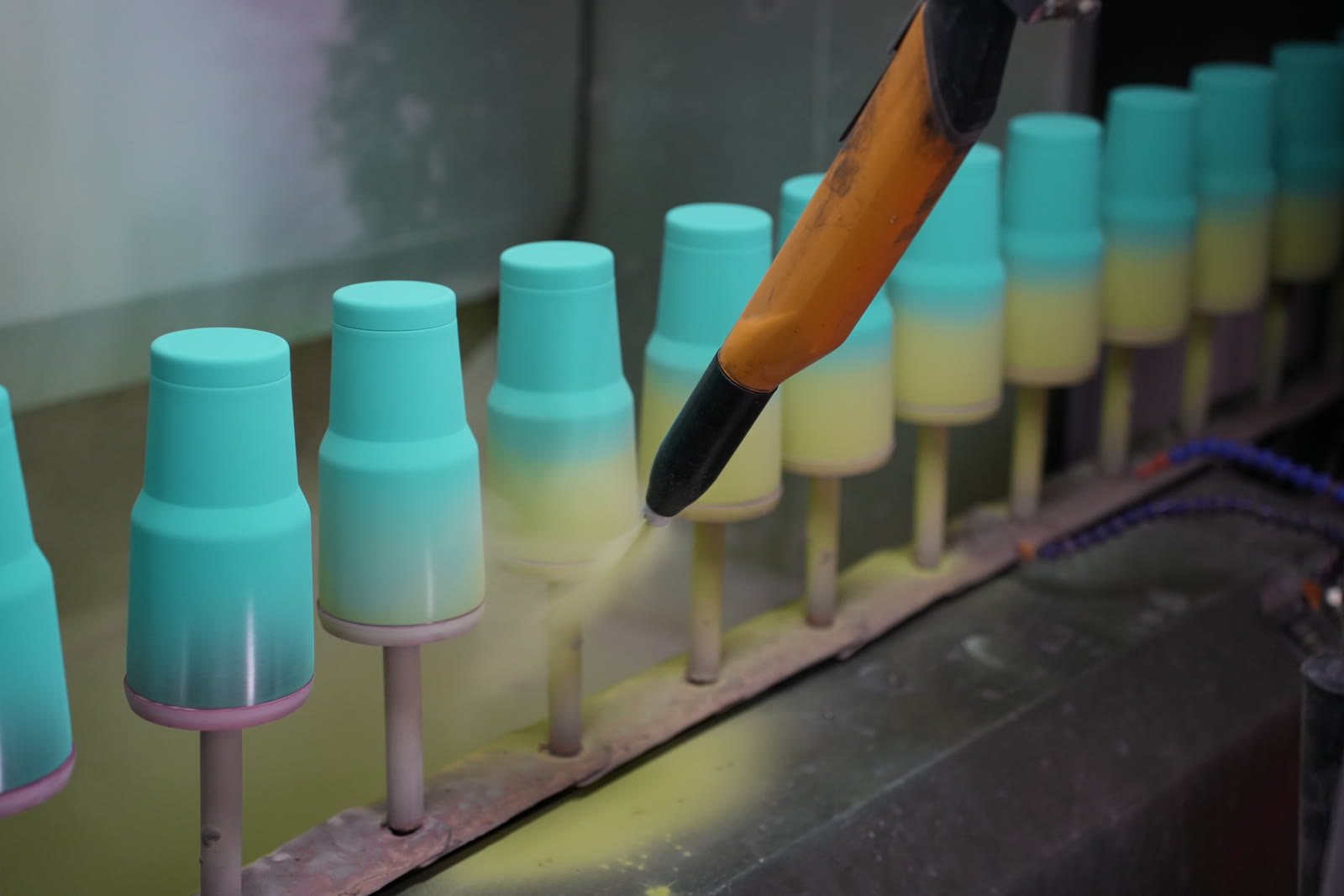
| Coating, logo, assembly (Days 12–20) | Powder coat in your colour, laser logo, lid assembly | $3,780 | Goods now carry your branding and are unsellable elsewhere | Production photos against the golden sample |
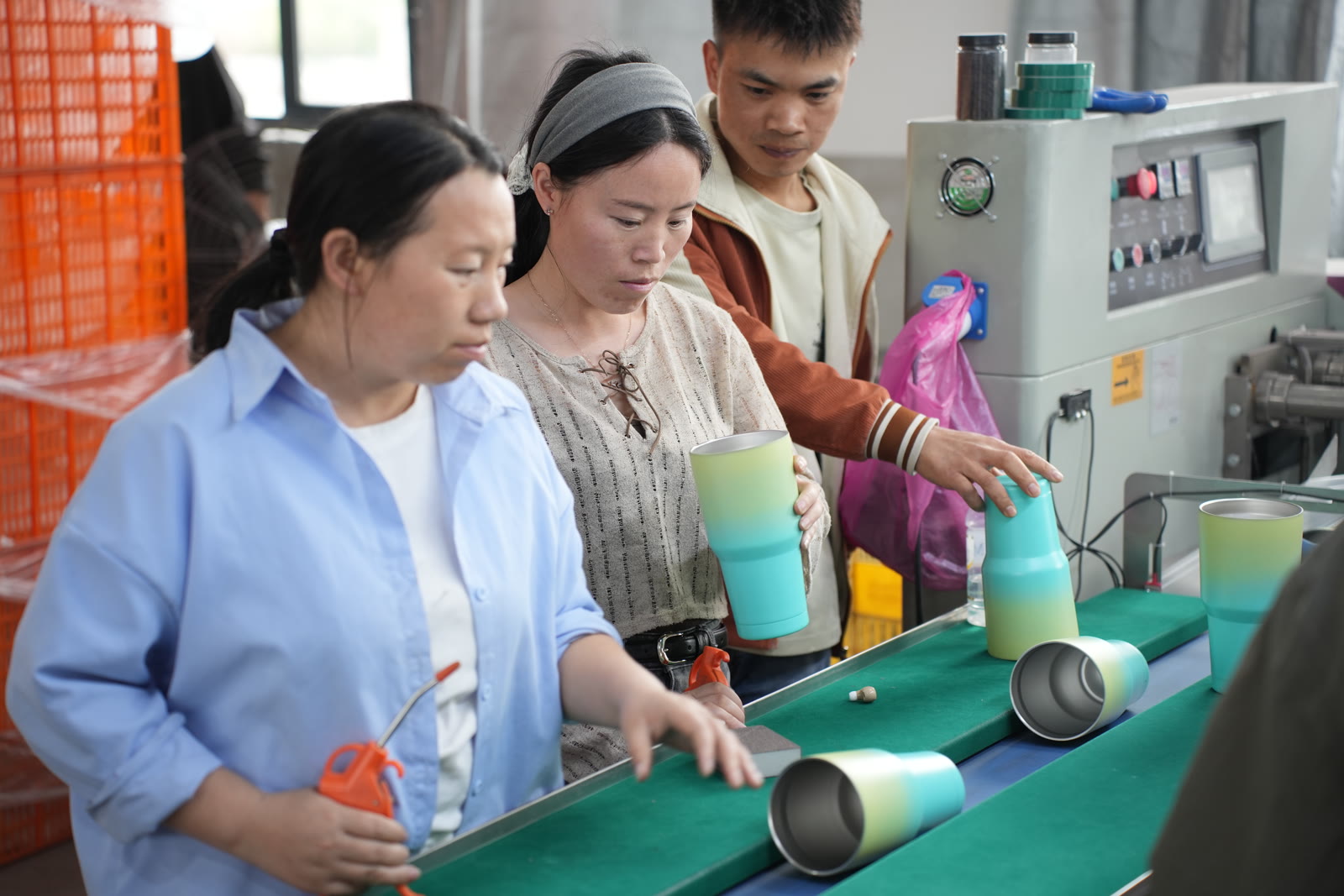
| Pre-shipment inspection (Days 20–25) | 100% produced, at least 80% packed; AQL sampling | $3,780 | Almost the full cost of the order | Pay the $8,820 balance only on a passing report |
| Loading and B/L | Container loaded at Ningbo, bill of lading issued | $12,600 (100%) | Releases the B/L or telex release after the balance clears | Check carton count and marks against the packing list |
Read the table from the factory's side too. By the time your goods are coated and logo-marked, the factory has spent far more than your $3,780. That is why a legitimate factory is happy with 30/70: the deposit is a commitment signal, not the money that funds production. A supplier who insists on 100% upfront for a five-figure custom order is asking you to carry the whole exposure with nothing in return.
Planning your first order? Tell us quantity, size and finish. We will send a quote with the payment schedule, production milestones and the inspection window written in, so you can see where every dollar sits before you pay a deposit. Ask for a quote with a payment schedule →
Balance Before Shipment vs Against B/L Copy vs Open Account
The 30% deposit is rarely the argument. The real negotiation is when the 70% is due. Five common triggers, from most to least factory-friendly:
| Balance trigger | Buyer's worst-case exposure | Factory's worst-case exposure | When it fits |
|---|---|---|---|
| 100% upfront | $12,600 before any steel is cut | None | Samples and small PayPal orders only |
| 70% before shipment, after inspection | $3,780 until inspection; full value only after goods are verified | Cost of goods until the balance arrives | Standard first bulk order |
| 70% against B/L copy | $3,780 until goods are on board | $8,820 of goods at sea; it controls release through the original B/L or telex release | Repeat orders after a clean track record |
| L/C at sight | Deposit if any, plus L/C fees; banks pay on compliant documents | Discrepancies delaying payment | Large first orders, or buyers whose own financing requires it |
| Open account (net 30 after arrival) | Almost none | The whole order, unsecured | Long relationships, often with credit insurance |
Against B/L copy only protects the factory if the B/L is genuinely controlled. If the shipment moves on a sea waybill, or the forwarder releases cargo without the original B/L, the factory has shipped on trust. That is why factories grant it after one or two orders, not before. If you want it, ask for it on the second PO and point to your payment record.
When to Inspect, and How to Link It to the 70%
Inspection timing is where 30/70 succeeds or fails. The industry convention for a pre-shipment inspection (PSI) is 100% of the order produced and at least 80% packed, so the inspector sees finished, packed goods and can draw a random sample from cartons. Inspect earlier and you are looking at the best of the batch. Inspect after loading and the balance is already gone.
For a 3,000-piece lot, ANSI/ASQ Z1.4 general inspection level II gives code letter K and a sample of 125 tumblers; at AQL 2.5 for major defects, 7 defects accept and 8 reject. A third-party inspector in Zhejiang typically costs around one man-day, often quoted near $300. That is about 2.4% of a $12,600 order and the cheapest insurance in the whole process. Our tumbler quality control guide lists what to check, and the vacuum failure guide shows why a sample of 125 cannot catch every hidden vacuum leak, so ask how vacuum is tested on every unit, not only on the sample.
Write the link into the PO so nobody argues about it later:
Letters of Credit: What They Protect and What They Don't
An L/C swaps the factory's trust in you for its trust in your bank. Under UCP 600, the ICC rules most L/Cs follow, the bank pays when the documents comply on their face, and Article 14(b) gives each bank a maximum of five banking days after presentation to decide. The bank never sees a tumbler. If the documents list 3,000 tumblers and match the credit, the bank pays, whatever is inside the cartons.
Three practical rules if you use one:
- Make inspection a document. Require "inspection certificate issued by [named third party] stating the goods passed AQL 2.5" among the presentation documents. Now the bank's paper check includes a check on the product.
- Keep the credit simple. Every extra condition is a chance for a discrepancy, and discrepancies add fees (often $50–$100 each) and delay payment for both sides. Match the description to the pro-forma invoice word for word.
- Leave room on dates. Set the latest shipment date at least 10–15 days after the planned ex-works date. Around Chinese New Year, leave more.
For a $12,600 order, an L/C's fixed costs and paperwork rarely beat 30/70 T/T with a $300 inspection. Above roughly $30,000 to $50,000, or when your own bank finances the purchase, it starts to make sense.
Bank-Detail Fraud: The Risk That Actually Costs Buyers Money
Most buyers worry about a fake factory. In practice the more common loss is a real factory, a real order and a fake bank account. Someone gains access to an email thread, waits until the balance is due, then sends a perfectly formatted message: "Our bank account has changed due to audit, please pay the balance to the new account below." The FBI's IC3 recorded about $2.77 billion in business email compromise losses in 2024.
| Red flag | What to do |
|---|---|
| New bank account announced by email, especially just before the balance | Call a number you already had on file. Never use the phone number in the new email. |
| Account name differs from the company on your contract and invoice | Do not pay. The beneficiary name should match the legal company name on the PO, or a related export company named in the contract. |
| Account in a different country or a personal name | Treat it as fraud until proven otherwise. |
| Sender address one character off (rn for m, .co for .com) | Check the full address, not the display name. Reply to a known address, not with "reply". |
| Urgency: "pay today or lose the shipping slot" | A real factory will hold a container booking for a day while you verify. |
If a payment has already gone to the wrong account, speed matters more than anything else. Call your bank to request a recall, then file at ic3.gov the same day. Freezes are far more likely in the first 72 hours than after a week. Fixing the bank account in the PO, as in the clause above, closes most of the door before it opens.
Our Terms, and What We Recommend by Order Type
Our standard terms are simple: 30% deposit before production and 70% balance before shipment, by T/T, PayPal or L/C. For orders under $3,000 we can take full payment by PayPal for speed. Whoever you buy from, ask three things before the deposit: production photos at the forming, coating and packing stages; written agreement that your inspector or a named third party can inspect before the balance; and the bank account printed on the pro-forma invoice, confirmed by phone.
| Your situation | Recommended structure | Why |
|---|---|---|
| Samples or a test order under ~$3,000 | PayPal or card, 100% | Fees are small in dollars; dispute rights cover the real risk |
| First bulk order, $3,000–$30,000 | 30% T/T + 70% T/T after PSI | Lowest cost; inspection gives the protection |
| New mould or custom shape | Tooling paid separately (often 50/50), then 30/70 for production | Keeps tooling ownership clean; see our mould and tooling cost guide |
| First order above ~$50,000 | 30% T/T + 70% L/C at sight with inspection certificate | Bank comfort for both sides on a large exposure |
| Repeat order, clean history | Ask for 70% against B/L copy | Earned trust; moves exposure toward the factory |
Before any of this, check the factory itself. Payment terms cannot fix a supplier that should not have your order. Our guide to drinkware factory certifications and audits shows how to verify a business licence and audit report, and how to find the right tumbler factory covers the steps before the first quote.
Related Guides
- Tumbler MOQ and your first order from China, step by step
- Landed cost of importing tumblers: HS codes, duty and freight
- Do tumblers have to say Made in China? Origin marking guide
- How to launch a private label tumbler brand on Amazon FBA
- Tumbler sample approval: golden vs counter sample
Fees change. Figures are as published or commonly quoted in October 2026 and should be confirmed with your bank or platform before paying. Sources: PayPal merchant fees page (mainland China, commercial transactions); ICC Uniform Customs and Practice for Documentary Credits (UCP 600), Article 14; ANSI/ASQ Z1.4 sampling tables; FBI Internet Crime Complaint Center, 2024 Internet Crime Report. This is not legal or financial advice.
Want the payment schedule before you commit?
Send us your quantity, size, colour and logo. We will reply with a quote, a pro-forma invoice showing the 30/70 schedule and production milestones, and the inspection window, usually within one business day.