
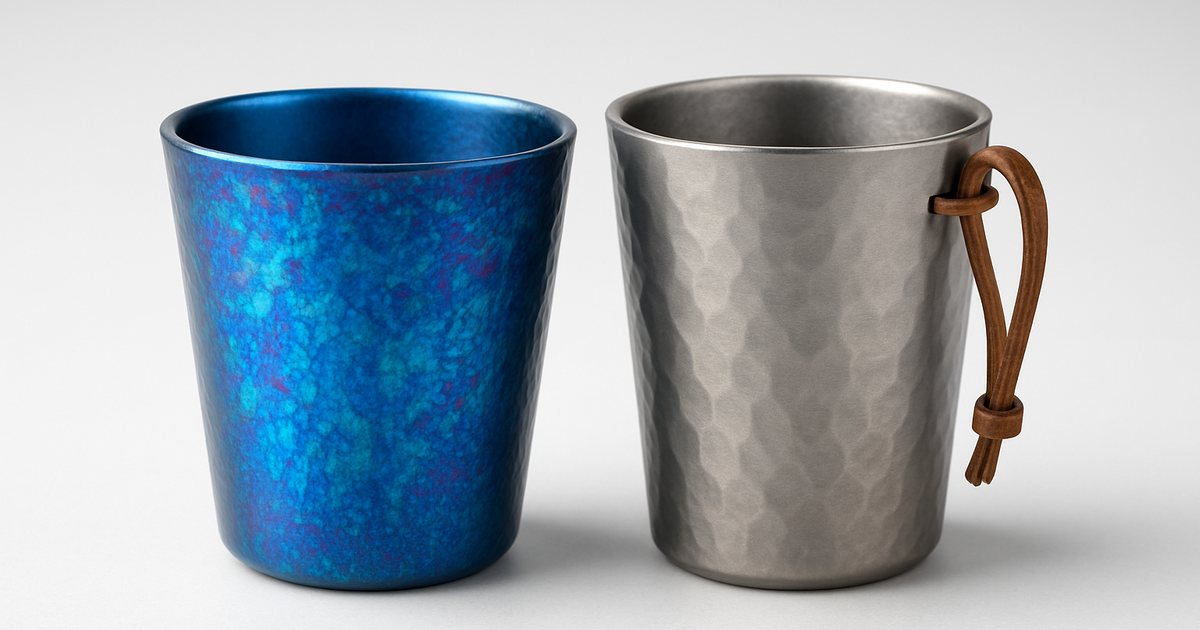
Quick answer: Titanium cups cost 3-5x more than stainless steel because of three stacked costs, not markup: raw Grade 1 titanium sheet runs $15-40/kg against $2.50-5/kg for 304 stainless, every weld needs a trailing argon shield on both sides of the seam (steel does not), and titanium's low thermal conductivity wears out cutting and forming tools faster. Realistic wholesale pricing lands at $25-45 for a 300ml flask and $35-65 for a 500ml set, MOQ 50 pieces from a factory that keeps semi-finished titanium in stock. What most buying guides skip: why the cost is real, and how to tell a factory that actually welds titanium in-house from one reselling a raw-mill part with a 20-30% markup on top.
What Actually Makes Titanium Different (Beyond "It's Lighter")
We have run stainless steel tumbler lines in Yongkang for years and only added Grade 1 titanium to our catalog this year, so we came into this material as steel manufacturers first — which means we can tell you plainly where titanium is a genuine upgrade and where it is just a more expensive way to hold water.
Titanium is fully inert: it does not react with acids, chlorides, or dissolved oxygen the way steel alloys can under certain conditions, so it never imparts a taste to what is inside it. It also never corrodes or rusts, and at roughly 4.5 g/cm3 versus 8.0 g/cm3 for stainless steel, it is close to 45% lighter for the same size cup. A 300ml titanium flask weighs about 180g; a comparable steel tumbler runs 280-320g. Those three properties — taste neutrality, corrosion immunity, weight — are the real reasons buyers pay the premium, not because titanium keeps drinks hotter or colder. Insulation performance comes from the vacuum gap between the walls, not the wall material, so a well-made titanium flask and a well-made steel tumbler of the same design perform similarly there.
The Real Reason Titanium Costs More: It Has to Be Welded in an Argon Bubble
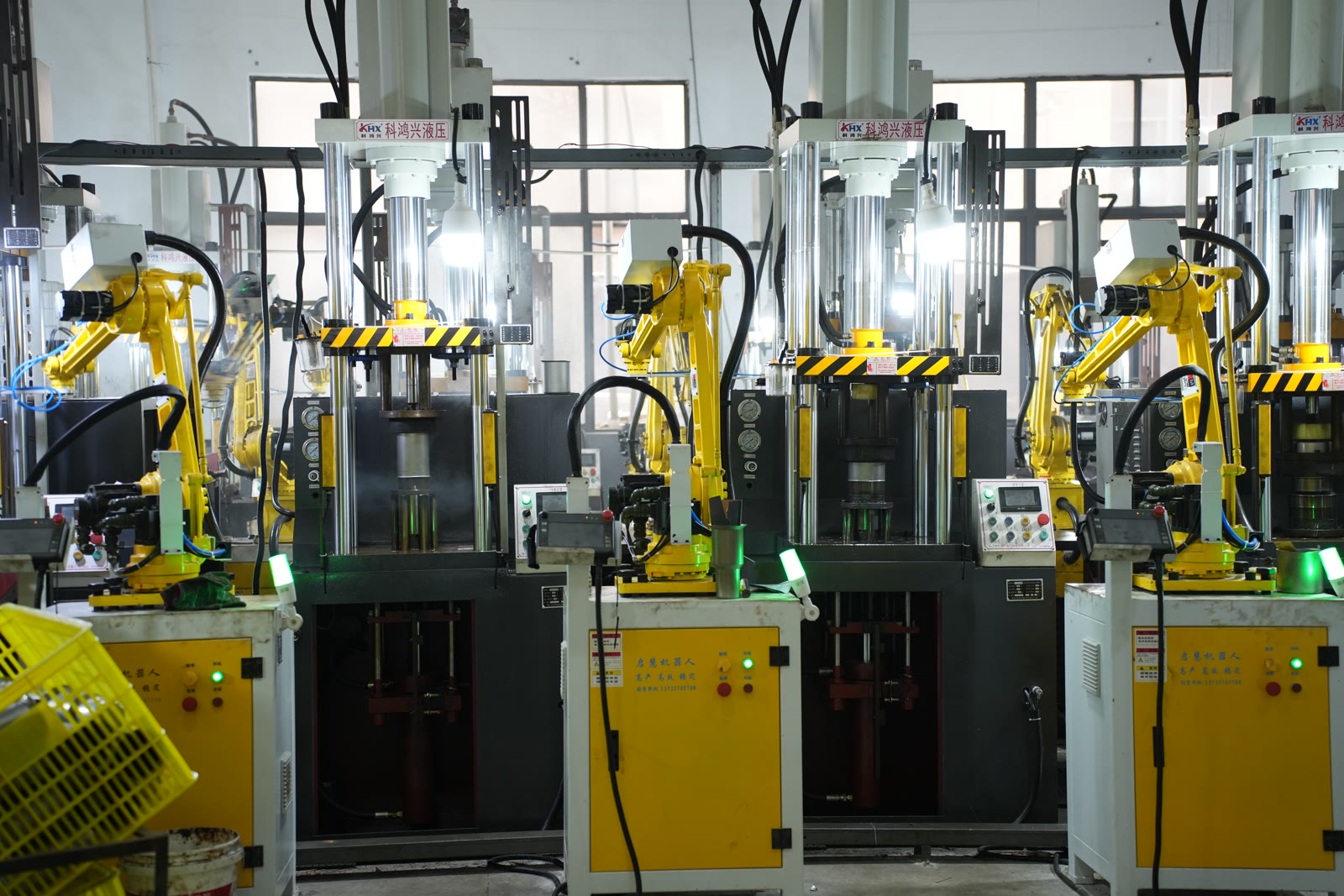
Every double-wall cup, steel or titanium, is TIG welded where the inner and outer walls join. On stainless steel, the shielding gas flowing from the torch nozzle protects the top of the weld well enough on its own. Titanium cannot be welded that way. The moment titanium reaches welding temperature it reacts aggressively with oxygen, nitrogen, and hydrogen in the surrounding air — so the back side of every seam also has to be purged with argon using a trailing shield, not just the front. Skip that back-purge and the weld oxidizes and discolors (welders call this "sugaring"), which is not just cosmetic: a contaminated titanium weld becomes brittle and can crack or leak months later, long after it passed a same-day inspection.
| Welding factor | 304 Stainless Steel | Grade 1 Titanium |
|---|---|---|
| Shielding requirement | Front-side shielding gas is sufficient | Front AND back trailing argon shield required |
| Contamination sensitivity | Tolerant of brief air exposure | Reacts with O2/N2/H2 within seconds at weld temp |
| Failure if shielding fails | Slightly weaker weld, usually still functional | Brittle, discolored weld — cracks or leaks later |
| Tooling wear (cutting/drawing) | Standard carbide tool life | Faster wear — low thermal conductivity concentrates heat at the edge |
| Typical weld cycle time | Baseline | 1.5-2x longer per seam |
This is the piece most consumer-facing comparison articles skip entirely, because it is a production-floor detail, not a spec sheet number. But it is the actual answer to "why is this so expensive" — it is not a premium-brand tax, it is the real cost of a weld that has to be done correctly the first time.
Raw Material Cost: Titanium vs 304 vs 316, Per Kilogram
Before any labor or tooling cost, the material itself sets a floor under the price. As of 2026, CP Grade 1 titanium sheet runs $15-40 per kg depending on gauge and finish, against $2.50-5 per kg for 304 stainless and a similar range for 316. That is a 5-8x gap on raw material alone, before welding time, tooling wear, or the hand-finishing that titanium's spray and hammered textures require.
| Material | Raw sheet cost (per kg, 2026) | Typical 300ml cup finished cost driver |
|---|---|---|
| 304 Stainless Steel | $2.50-3.00 | Baseline — standard tooling, standard weld cycle |
| 316 Stainless Steel | $3.50-5.00 | +15-25% over 304 — added corrosion resistance, no welding change |
| Grade 1 Titanium | $15-40 | +300-500% over 304 — argon back-purge welding, faster tool wear, slower cycle |
This is why we tell buyers to be skeptical of any titanium quote that sits close to steel pricing. The raw material cost alone makes that mathematically difficult unless the gauge has been thinned down well past what a durable cup needs, or the "titanium" is a thin plated or coated layer over a steel or aluminum core rather than solid Grade 1 stock — ask for a magnet test (real titanium is non-magnetic, same as 304) and a mill certificate as a first check.
Grade 1 vs Grade 2 vs Grade 5 — Why Drinkware Only Uses Grade 1
"Titanium" is not one material. The commercially pure grades (1, 2, 3, 4) differ mainly by oxygen content, which trades ductility for strength; Grade 5 is a different category entirely, alloyed with aluminum and vanadium for aerospace strength.
| Grade | Type | Ductility / Formability | Relative Strength | Typical Use |
|---|---|---|---|---|
| Grade 1 | Commercially pure (lowest O2) | Highest — best deep-draw formability of any grade | Lowest | Cup bodies, flasks — anything deep-drawn from sheet |
| Grade 2 | Commercially pure | High, handles repeated flexing well | Moderate | Clips, hinges, high-flex hardware |
| Grade 5 (Ti-6Al-4V) | Alloy | Low — resists forming, hard to deep-draw | Highest | Aerospace, medical implants, high-load fasteners |
Grade 1 can be pressed and deep-drawn into a cup shape more easily than any other titanium grade, which is exactly why it dominates drinkware. If a supplier quotes Grade 5 for a cup body, that is a red flag rather than a premium signal — Grade 5 resists forming, costs more to machine, and offers strength properties a drinking vessel has no use for. It usually means aerospace-grade offcuts being repurposed, not a drinkware-specific process. Our titanium line runs 99.98% Grade 1 pure titanium for exactly this reason: it is the correct material for the job, not the most expensive one available.
Titanium vs 304 vs 316 Stainless Steel Tumbler: Full Comparison
| Property | 304 Stainless | 316 Stainless | Grade 1 Titanium |
|---|---|---|---|
| Density | ~8.0 g/cm3 | ~8.0 g/cm3 | ~4.5 g/cm3 (45% lighter) |
| 300ml unit weight | ~280-320g | ~280-320g | ~180g |
| Taste neutrality | Very good, faint metallic note possible with acidic drinks | Better than 304, still not fully inert | Fully inert — zero metallic taste |
| Corrosion resistance | Good for general use | Better — added molybdenum resists chlorides/salt | Immune to corrosion in normal use |
| Wholesale price range (300-500ml) | $4-10 | $6-14 | $25-65 |
| Best for | Mainstream retail, promotional drinkware | Marine/coastal markets, premium mainstream | Premium gifting, health-focused, EDC/outdoor brands |
If your buyers already trust our 304 vs 316 breakdown for choosing between steel grades, treat titanium as a third tier above both — not a replacement, a capsule line that sits at a different price point entirely.
MOQ, Wholesale Pricing & the Trading-Company Markup Trap
Raw titanium mills in China typically only sell in 3,000-5,000 piece minimums, which is why most "titanium cup suppliers" you find online are not titanium factories at all — they are trading companies or steel-drinkware factories that buy from a mill and resell with a 20-30% markup, or dedicated titanium-gear factories with a MOQ too high for most brands testing a new SKU.
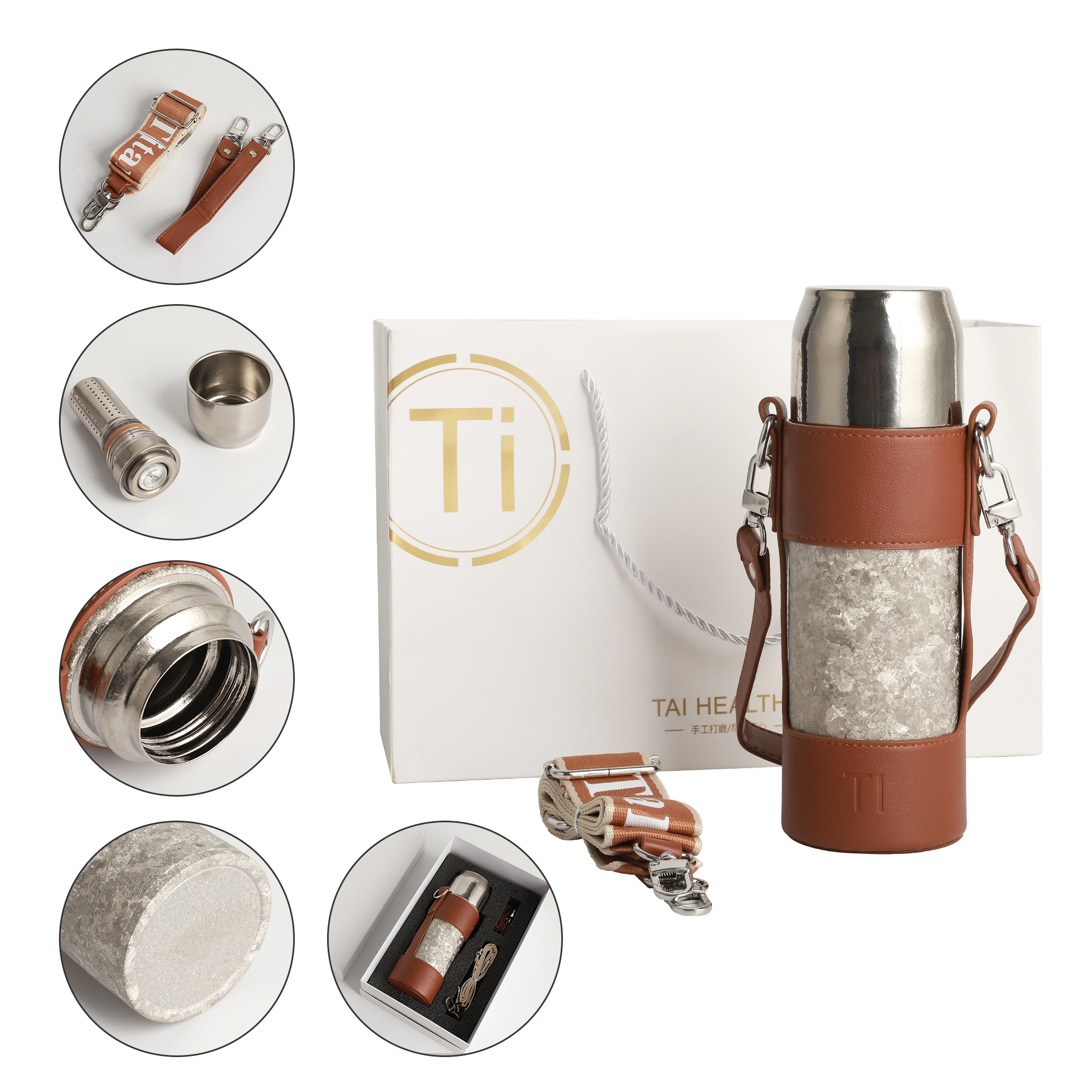
We hold Grade 1 sheet and tube stock in-house specifically so we can offer a 50-piece MOQ on existing molds without passing a raw-mill minimum down to you. Current pricing:
| Product | Capacity | MOQ | Wholesale Price |
|---|---|---|---|
| Colorful spray titanium flask | 300ml (10oz) | 50 pcs | $25-45 |
| Hammered titanium flask, leather sleeve | 500ml (17oz) | 50 pcs | $35-65 |
The practical checkpoint for any titanium quote you receive elsewhere: if it lands noticeably below this range at similar volumes, ask what gauge sheet is used and request a mill certificate confirming Grade 1 purity — raw material cost puts a real floor under legitimate pricing, and a quote that undercuts it usually means thinner metal, a lower purity blend, or a plated/coated composite rather than solid titanium.
Who Should Add Titanium to Their Product Line (and Who Shouldn't Yet)
Titanium is not a replacement for a steel catalog — the 5-8x raw material gap cannot be absorbed into mainstream retail price points. Where it does work well:
- Corporate gifting — a $35-65 wholesale titanium flask in a gift box supports the kind of premium positioning a $150+ executive gift needs, where our corporate gift tumbler guide covers the branding side.
- Outdoor, EDC, and camping brands — the 45% weight saving is a genuine functional benefit for gear that gets carried, not just held.
- Health-focused retail — buyers actively avoiding any metallic taste or corrosion risk, willing to pay for it.
Most of our brand customers run titanium as a small, high-margin capsule collection — 1 to 3 SKUs — sitting above a much larger steel and powder-coated catalog that carries the bulk of their volume. If you are still building out your core steel line, start with our first-order guide before adding a premium tier on top.
Quality Control: What We Check Before a Titanium Cup Leaves Our Line
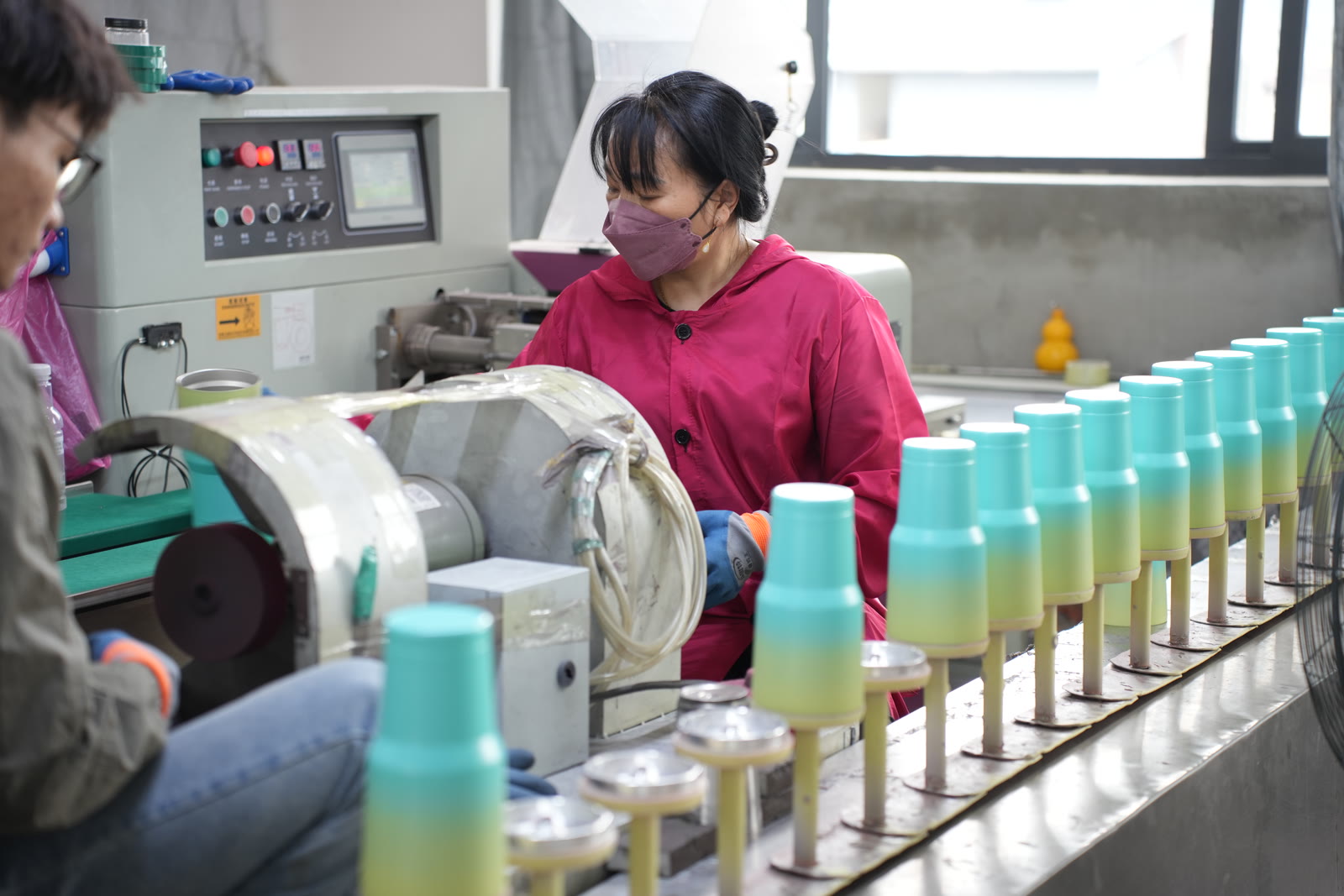
Beyond the standard vacuum and weight checks we run on every double-wall product, titanium adds two checks that steel does not need: a weld discoloration inspection under bright light, since a properly argon-shielded weld should stay a consistent silver-gray with no straw, blue, or gray "sugared" tint at the seam, and a mill certificate cross-check confirming the sheet stock used matches the Grade 1 purity spec on the PO, not a mixed lot. Neither of these shows up in a standard AQL 2.5 inspection, which is worth asking any supplier about directly if titanium is a new category for them, the same way we cover for steel vacuum failures in our vacuum failure guide.
Care & Cleaning: Does Titanium Need Anything Different From Steel?
Day-to-day cleaning is identical to steel — warm water, mild soap, and a soft brush for the lid threads and gasket, the same routine we cover in our stainless steel cleaning guide. Titanium's corrosion immunity means you can skip one worry entirely: unlike some lower-grade steel finishes, there is no risk of pitting or rust bloom from leaving a titanium flask wet or from acidic drinks sitting overnight. The one real difference is the finish, not the metal. A crystalline spray coat or a hammered texture is a surface treatment, not a coating that can chip the way powder coat can — but abrasive scouring pads will still dull a spray finish's color depth over time, so the same "no steel wool" rule that applies to our powder-coated tumblers applies here. Dishwashers are generally safe for the metal itself, though we still recommend hand-washing gift-tier pieces to protect the leather sleeve and gift-box finish long enough to matter for a corporate gifting program.
Get a Titanium Cup Quote
Send us your target capacity, finish (crystalline spray or natural hammered texture), and quantity, and we will confirm MOQ, lead time, and a landed cost estimate for your market.
Request a Titanium Cup Quote — Response Within 12 Hours →
Related guides: Titanium Cups & Flasks Catalog | 304 vs 316 Stainless Steel Tumbler Guide | Drinkware Manufacturer Certifications & Factory Audits | Custom Mold & Tooling Cost Breakdown | First Order From China, Step by Step